Something shifts when you walk into a wedding with twenty people in the room instead of two hundred. You can hear the vows. You can see the couple’s faces during them. You actually get to talk to everyone there — not a rushed hug in a receiving line, but a real conversation over dinner with people who matter.
I’ve been to both kinds. The large ones are often beautiful. But the small ones are the ones I remember in detail — what was said, what was eaten, what the light looked like, who cried and why.
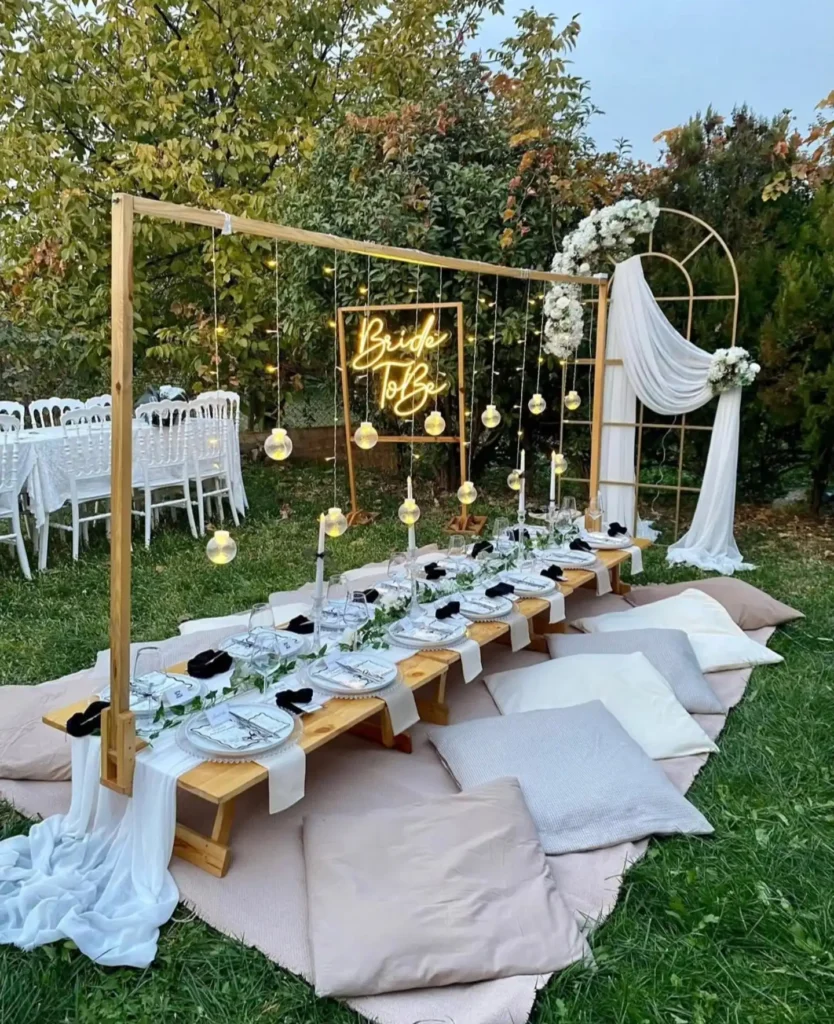
A small wedding isn’t a compromise. For a lot of couples, it’s the smarter, braver, more intentional choice. Here are 33 small wedding ideas — venues, ceremony touches, décor, food, personal details, and planning — for creating an intimate day that feels exactly as significant as it is.
What Counts as a Small Wedding: Guest Count Guide
| Category | Guest count | Notes |
|---|---|---|
| Elopement | 2–10 guests | Couple + witnesses + closest family only |
| Micro wedding | 10–30 guests | Immediate family and closest friends |
| Intimate / small wedding | 30–60 guests | Extended close circle |
| Medium wedding | 60–100 guests | The transition point where logistics change |
| Large wedding | 100+ guests | Traditional scale; different planning approach |
This article is written for the 10–60 guest range — micro through intimate — where the specific advantages of going small are most felt.
Small Wedding Budget Breakdown vs Traditional Wedding
| Category | Small wedding (30 guests) | Traditional wedding (120 guests) |
|---|---|---|
| Venue | $500–$3,000 | $5,000–$15,000 |
| Catering (per head) | $60–$150 | $80–$180 |
| Florals | $500–$1,500 | $3,000–$8,000 |
| Photography | $2,000–$4,000 | $3,000–$6,000 (same cost) |
| Attire | $500–$3,000 | $500–$3,000 (same cost) |
| Favours | $50–$200 | $300–$1,200 |
| Total estimate | $6,000–$15,000 | $25,000–$55,000 |
The savings come primarily from venue, catering volume, and florals. Photography, attire, and music cost roughly the same regardless of guest count.
Small Wedding Venue Ideas
The venue choices available to a small wedding are entirely different from what works for 150 people — and almost all of them are better.
1. Restaurant private dining room
A private dining room at a restaurant you love is one of the most underrated small wedding venue ideas available. The catering is handled, the room is already beautiful, the staff are professional, and the atmosphere is warm and intimate by design. Many restaurants offer private room hire for surprisingly low fees when you commit to a minimum spend on food and drinks. It also removes half the logistical complexity of a wedding at a stroke.
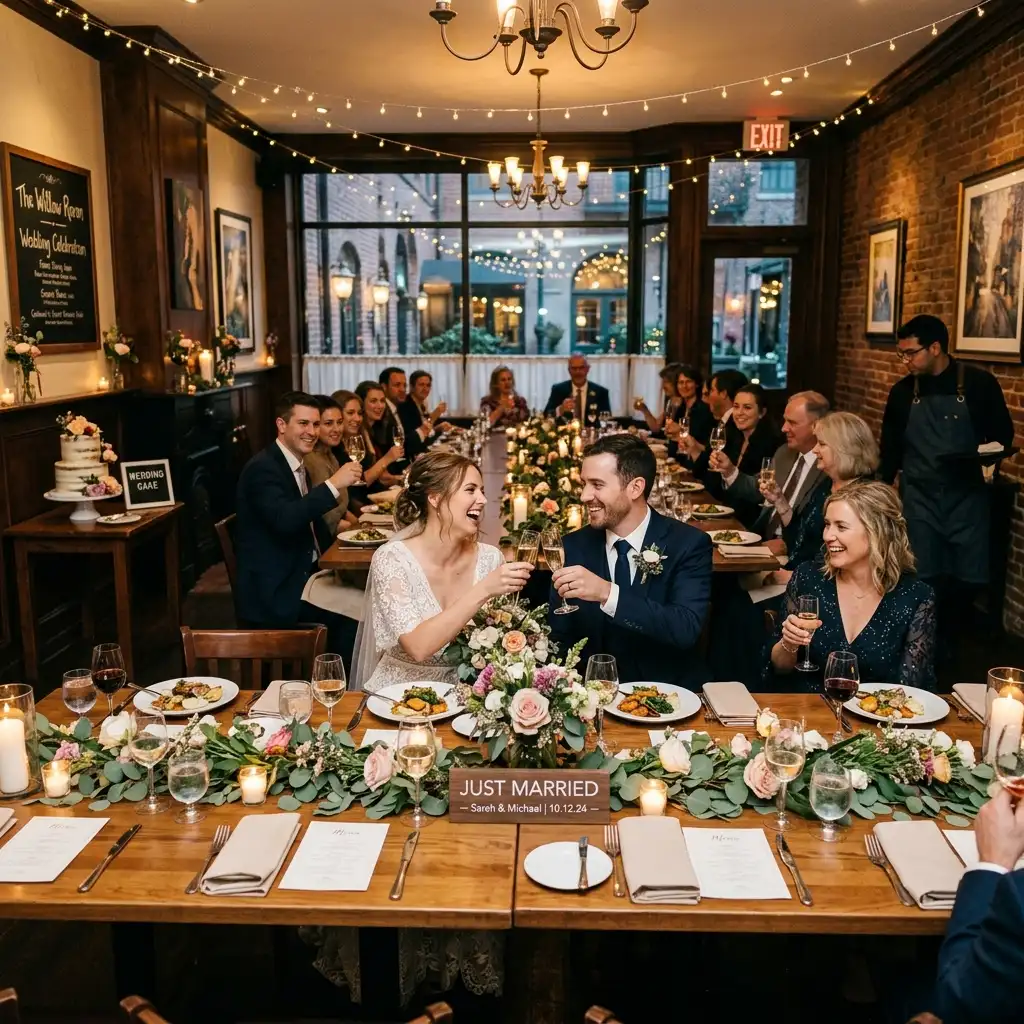
Best for: 10–40 guests Cost estimate: $500–$2,000 room hire; food and drinks additional Bonus: No catering logistics, no venue styling from scratch
2. Winery or vineyard cellar
A winery cellar or barrel room offers stone walls, low lighting, and an atmosphere that no hired venue can replicate. Many wineries offer small wedding packages that include exclusive use of the cellar and tasting room, wine for the reception, and in-house catering. The setting does almost all the work — you need very little additional decoration.
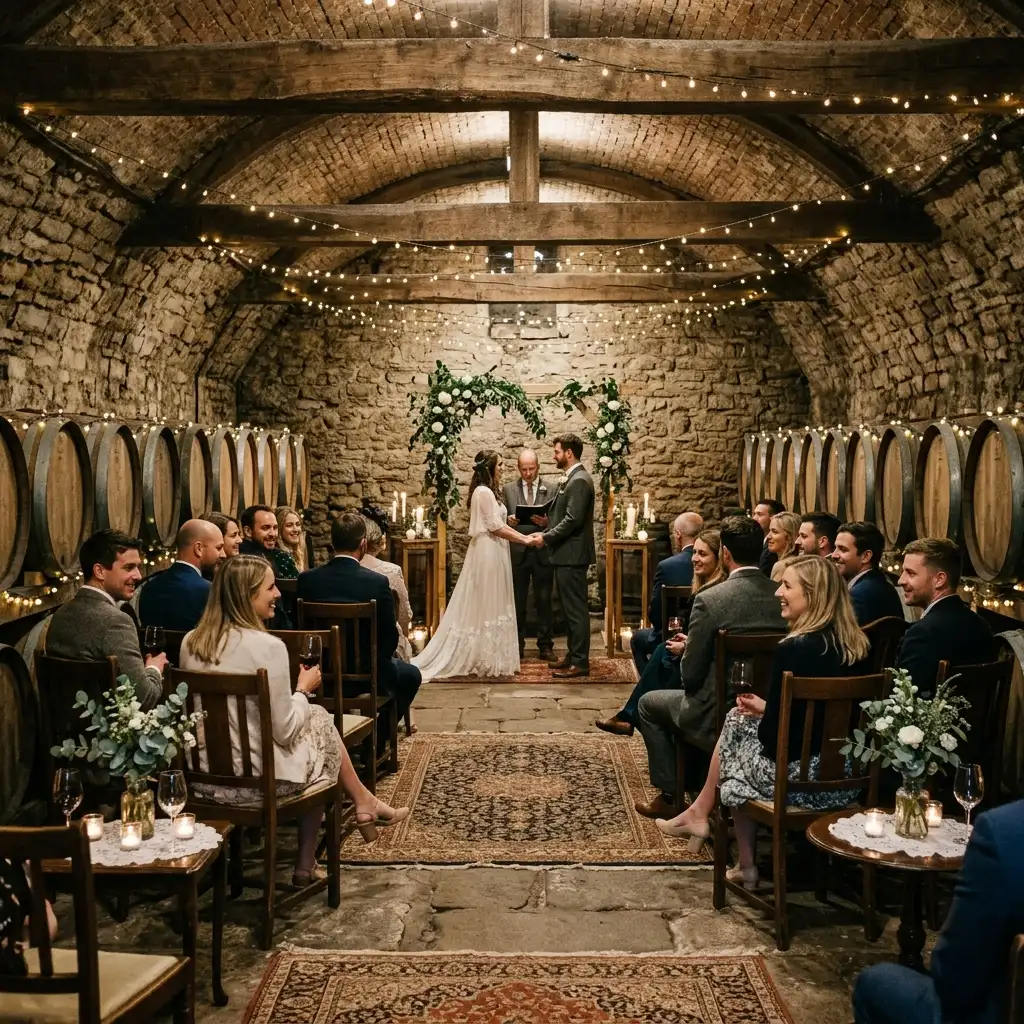
Best for: 15–50 guests Cost estimate: $2,000–$6,000 all-inclusive packages available Bonus: Built-in drinks story; beautiful photography in the barrel room
3. Botanical garden or greenhouse
A botanical garden or private greenhouse offers lush greenery, natural light, and an atmosphere that feels genuinely special without requiring a single decoration. Many botanical gardens offer exclusive hire for small weddings outside public opening hours. The backdrop for ceremony and portraits is unmatched.
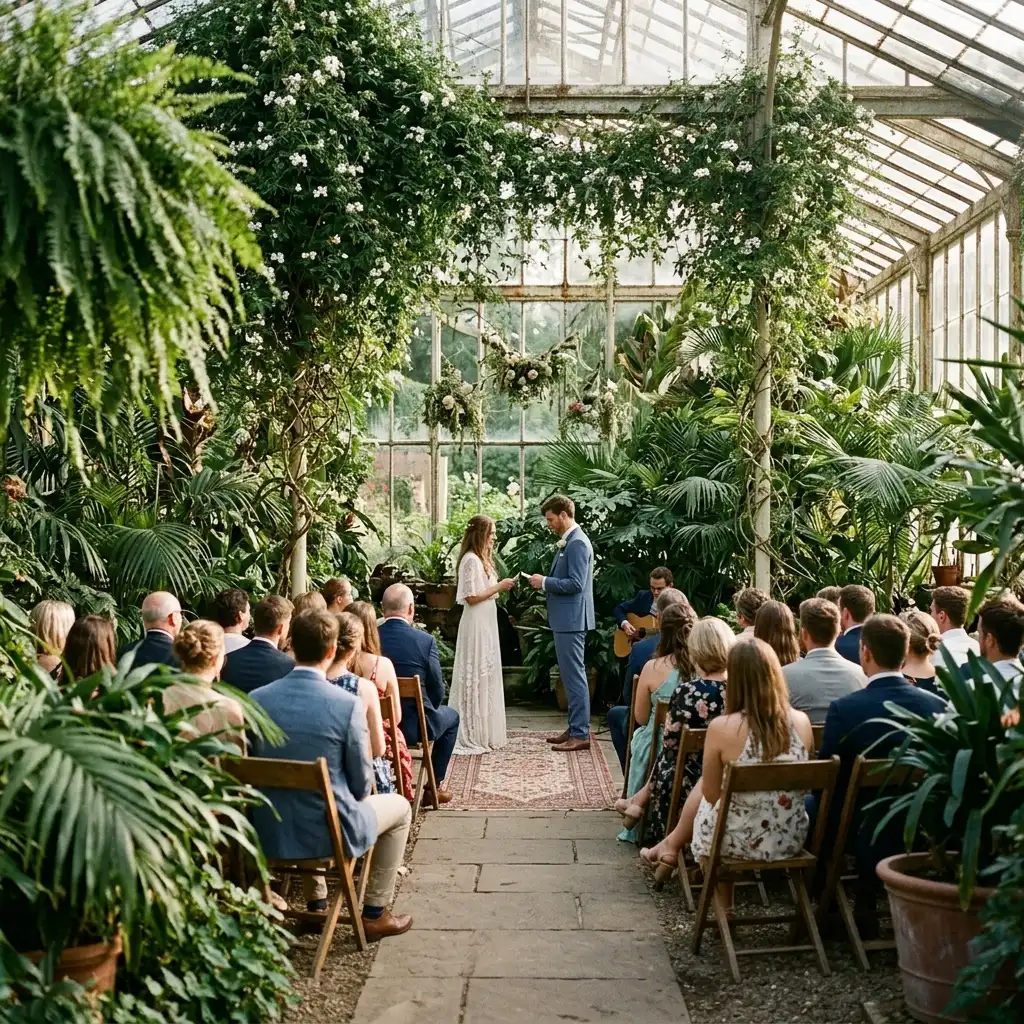
Best for: 10–40 guests Cost estimate: $800–$3,000 for exclusive hire Bonus: Zero decoration budget needed — the plants do everything
4. A house that means something
A parent’s home, a grandparent’s property, the house where the couple first lived together. There is no hired venue in the world that carries the emotional weight of a space that’s already part of your story. The ceremony happens in the garden where someone grew up. The reception is in a room where family has gathered for decades. That meaning is felt by every guest in the room. See backyard wedding decor ideas for your big day.
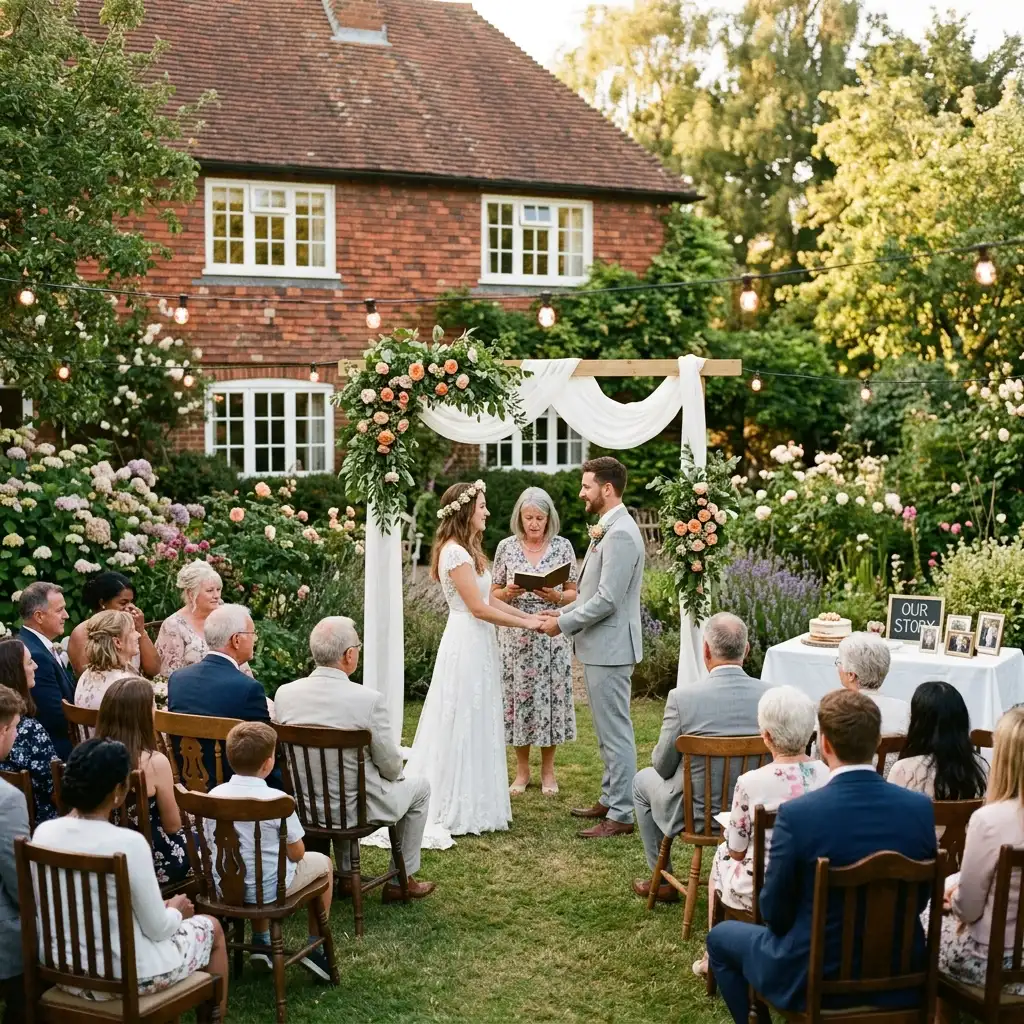
Best for: 10–50 guests Cost estimate: Near zero for the space; logistics (tent, toilets, power) additional Bonus: Irreplaceable personal significance
5. National park or nature reserve ceremony
A permit for a ceremony in a national park, on a beach, in a forest clearing, or at a scenic lookout costs a fraction of any hired venue and provides a backdrop that no venue can manufacture. Combine it with a restaurant dinner afterward for the reception. The ceremony in nature, reception in warmth — a small wedding structure that works beautifully.
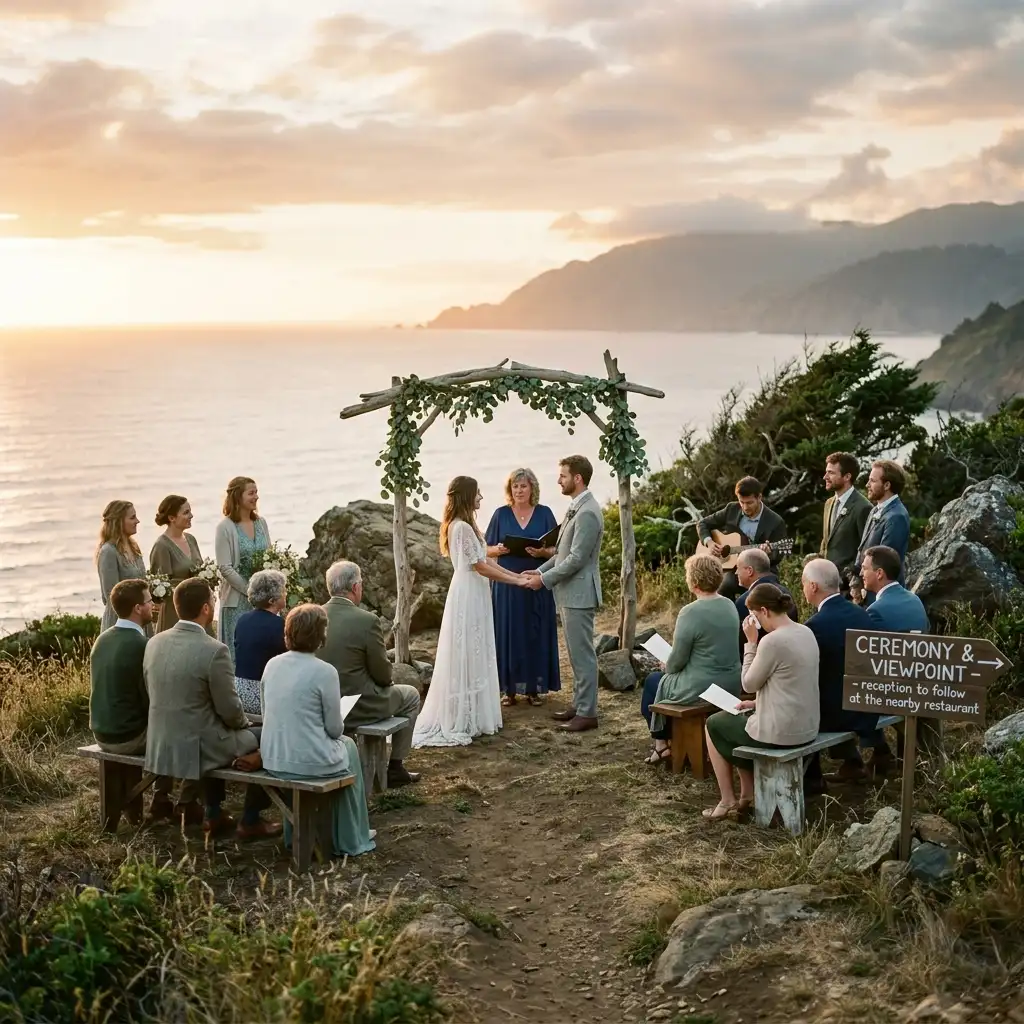
Best for: 2–30 guests (permits often have limits) Cost estimate: $50–$500 for permit; dinner additional Bonus: The most dramatic photography possible; no decoration needed
Small Wedding Ceremony Ideas
With a small guest count, the ceremony can be more personal, more flexible, and more genuinely emotional than anything a large wedding can achieve.
6. Write your own vows
With twenty people watching rather than two hundred, writing and reading your own vows becomes less terrifying and more meaningful. The intimacy of a small wedding is exactly the right context for personal vows. Every person in the room knows you well enough to understand the specific things you’re promising. That shared knowledge makes the vows land differently.
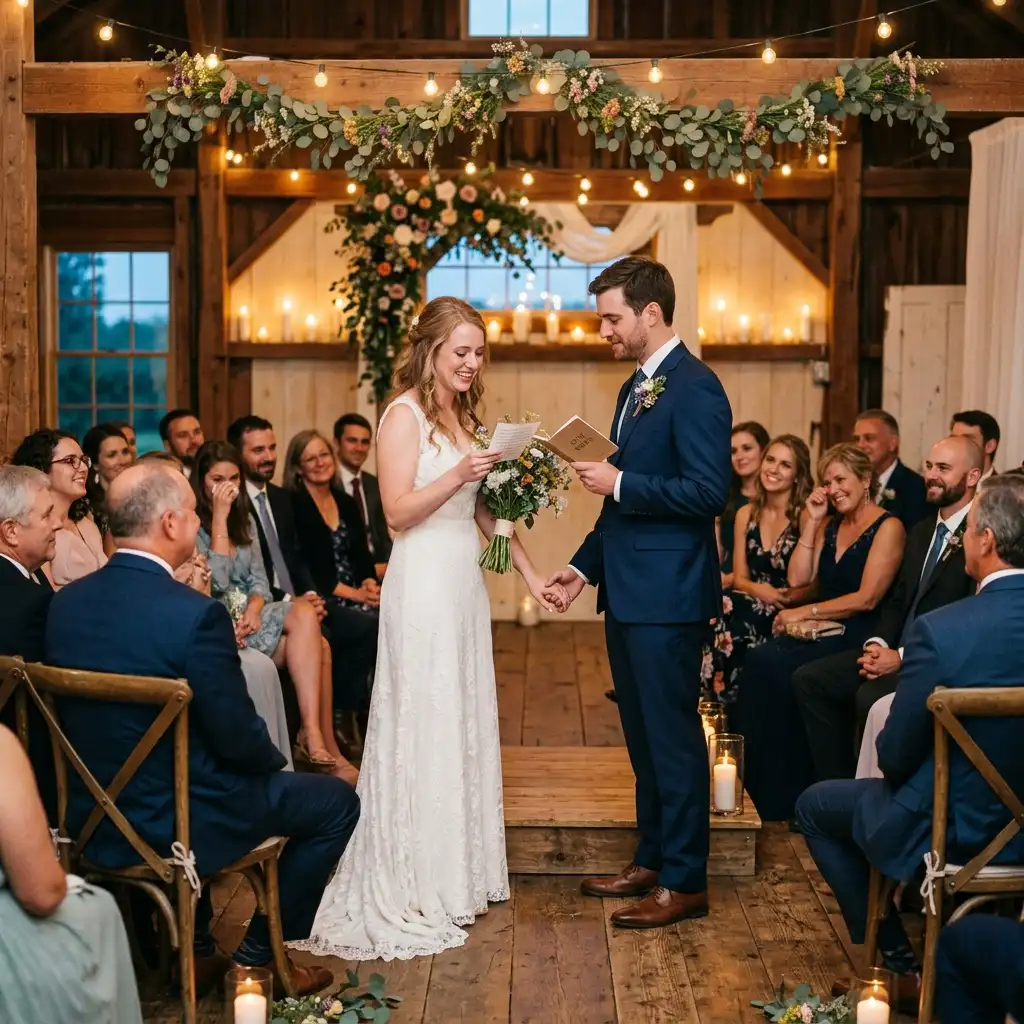
Tip: Write independently, share with each other the night before so you can sleep. Don’t read them for the first time at the altar.
7. Ask a friend or family member to officiate
In many countries and states, a friend or family member can become a registered celebrant for a day — or speak the words at a ceremony where a registered celebrant handles the legal paperwork separately. Having someone who genuinely knows and loves the couple speak the ceremony changes the entire quality of the experience. It becomes something specific and true rather than something performed.
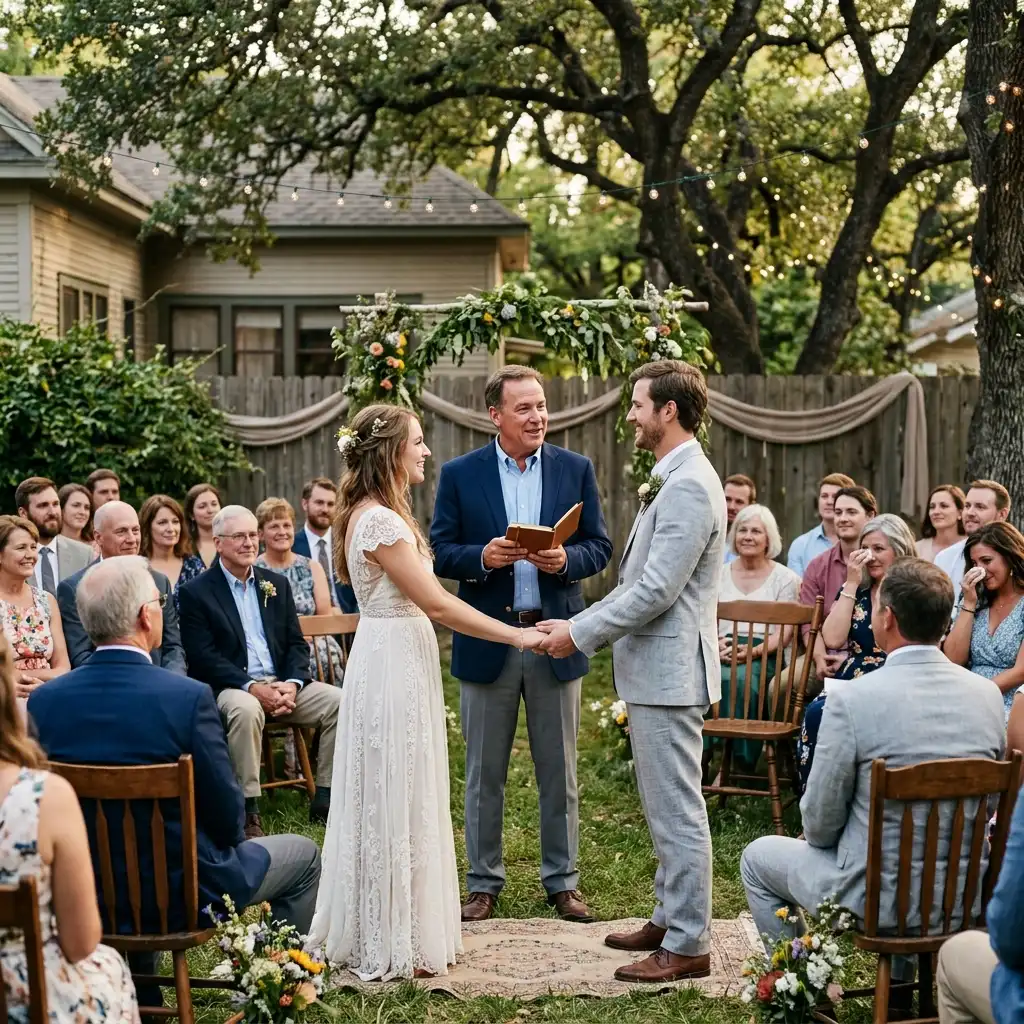
Tip: Choose someone who is comfortable speaking publicly and give them clear guidance on length and tone.
8. A ceremony in the round
Instead of a traditional aisle with guests on either side, arrange chairs in a circle or oval around the couple. Everyone is equally close. Everyone has the same view. The couple can make eye contact with every person in the room during the ceremony. It’s a small structural change that completely transforms the feeling of being witnessed.
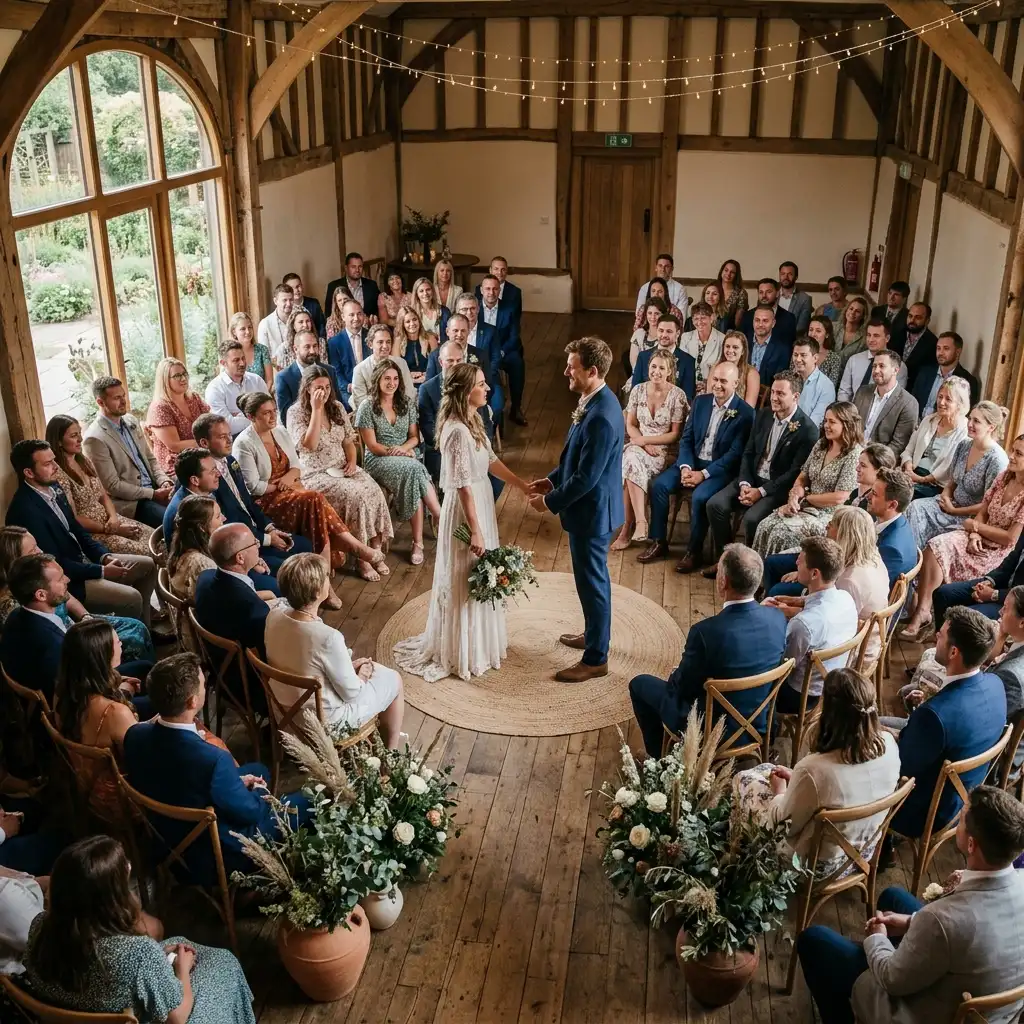
Best for: Up to 40 guests — beyond that the circle becomes too large
9. Readings from people in the room
Invite two or three guests to read something meaningful during the ceremony — a poem, a passage from a book, a song lyric, a piece of writing by someone in the family. In a small wedding, these readings feel personal because the people giving them are personally chosen and everyone in the room knows why. In a large wedding, they can feel like a programme item. In an intimate one, they feel like a gift.
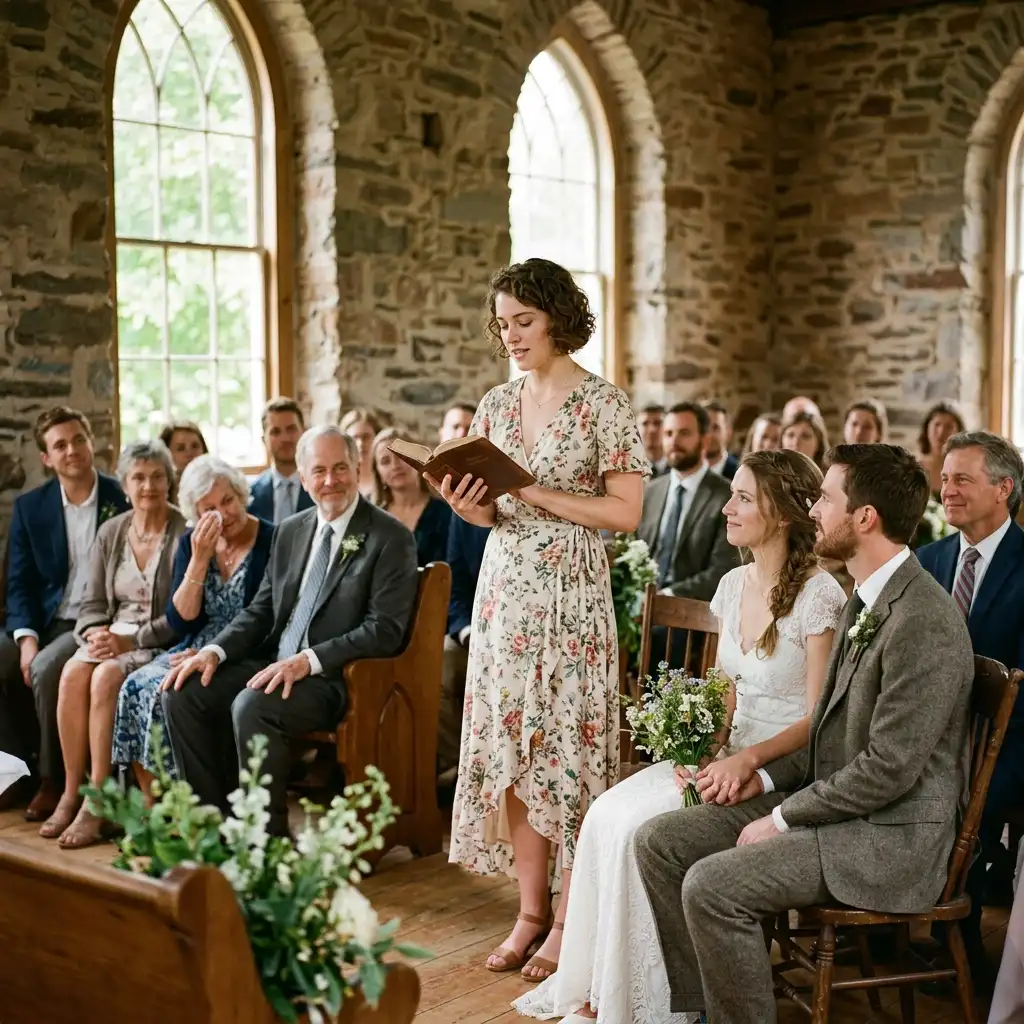
Tip: Brief the reader in advance. Two minutes is enough. Three is the ceiling.
10. A unity ritual that means something to you specifically
Unity rituals — planting a seed together, mixing sand from two locations, lighting a candle, writing letters to seal in a box — work better in small weddings because the moment can breathe. There’s no back row losing interest. Choose something that genuinely connects to your relationship rather than the most-pinned option on the internet.
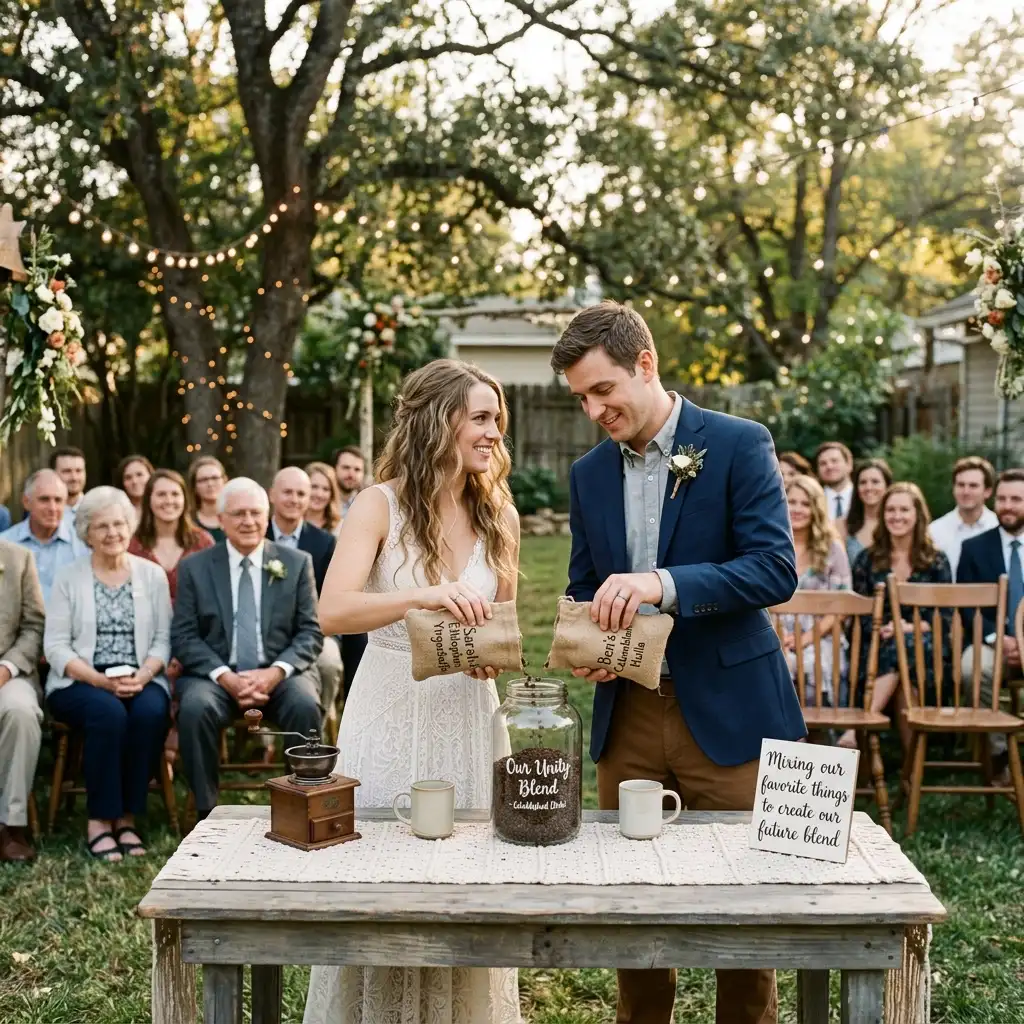
Tip: Explain the significance briefly to guests before you do it. The meaning matters as much as the act.
Small Wedding Décor and Atmosphere Ideas
A small wedding lets you spend more per head on décor — which means you can choose quality over quantity in a way that large weddings rarely can.
11. One long dining table instead of rounds
A single long table for all your guests is one of the most powerful small wedding ideas available. It physically places everyone at the same meal. No table feels more important. No one is at the back. Conversation flows up and down the length. It photographs beautifully and creates the feeling of a family dinner rather than a formal event — which, for a small wedding, is exactly right.
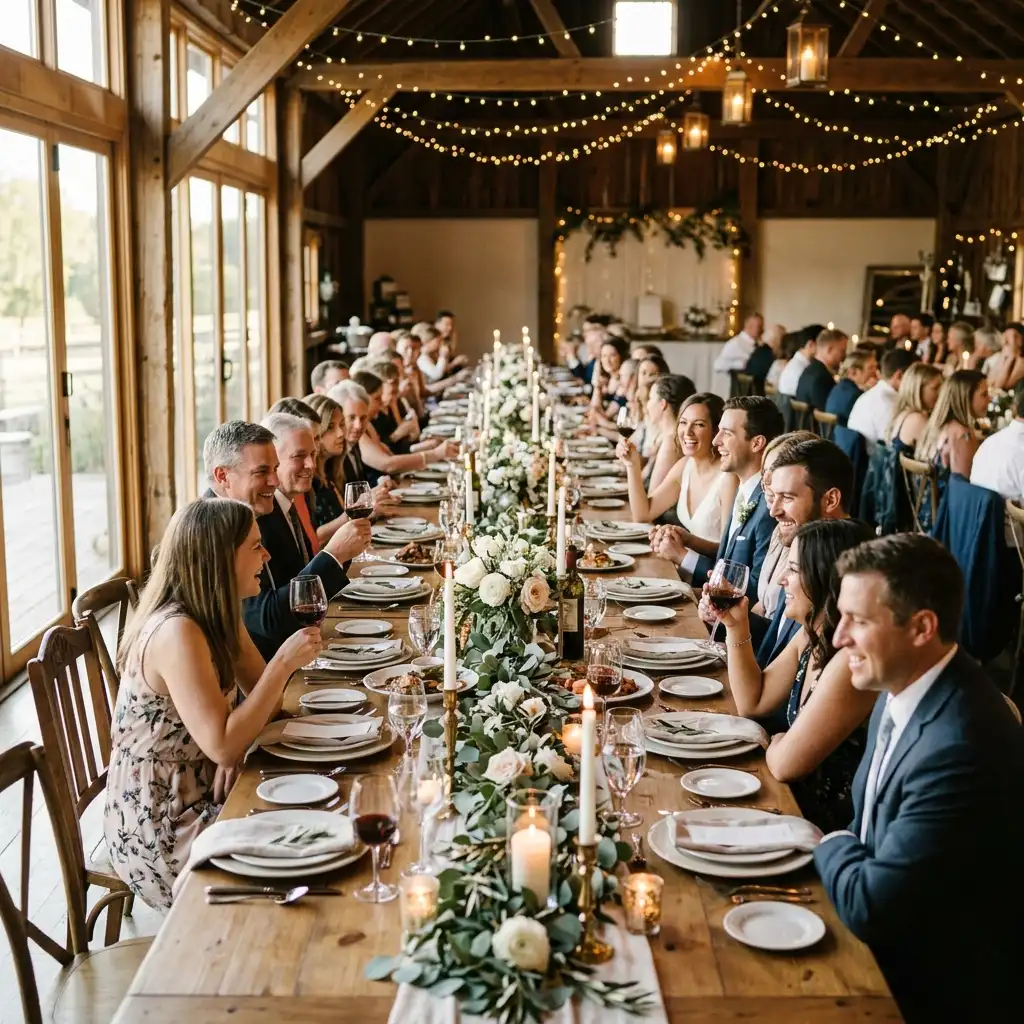
Styling tip: A long greenery and candle runner down the centre with mismatched vessels and wildflowers is all you need.
12. Invest in extraordinary florals for one centrepiece
With a small guest list, you don’t need twenty centrepieces. You need one or two that are genuinely extraordinary. Take the budget you’d have spread across twenty tables and concentrate it on a floral installation above the dining table, a dramatic altar arrangement, or a single sweeping centrepiece that becomes the visual heart of the room. Guests will remember it.
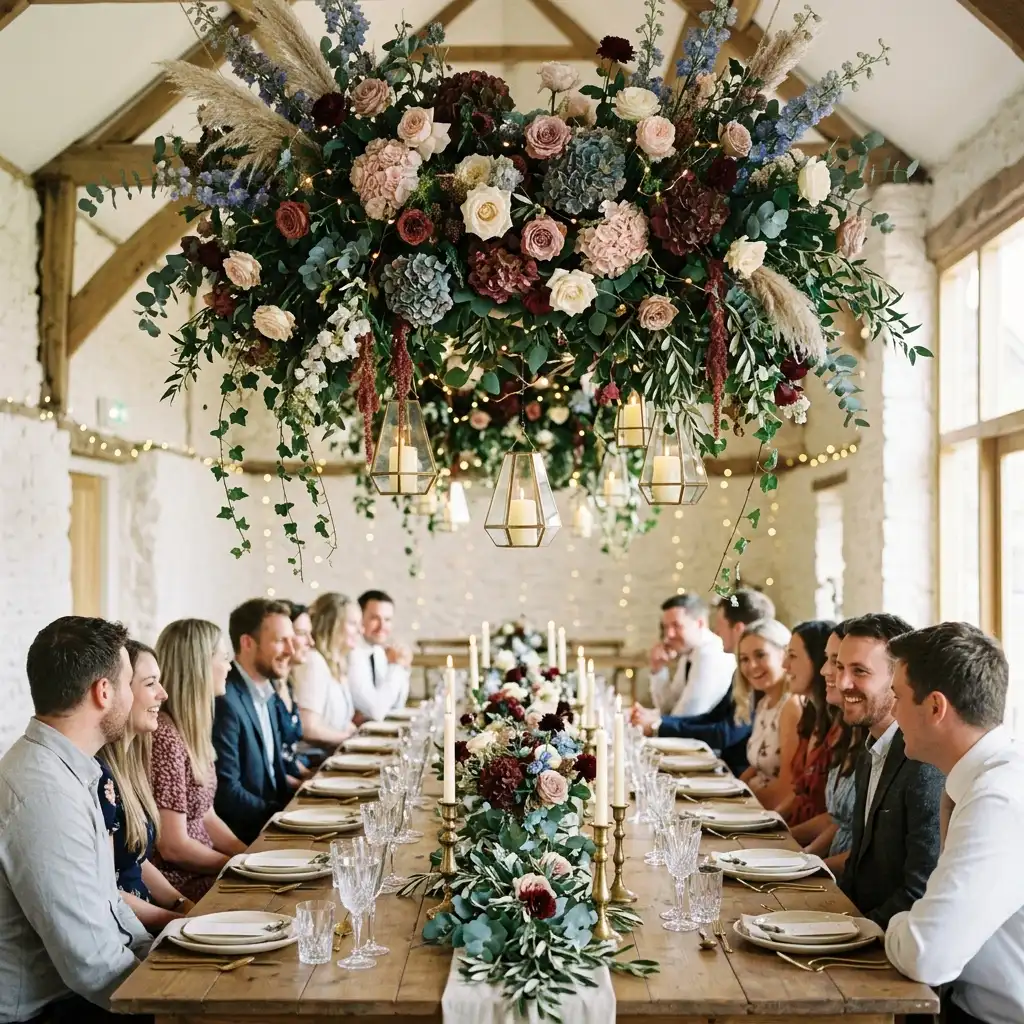
Cost estimate: $300–$800 for one statement floral piece (versus $1,500–$3,000 spread thin across twenty tables)
13. Personalised place settings for every guest
With thirty guests instead of one hundred and twenty, personalising each place setting becomes achievable. A handwritten note at each seat. A small gift chosen specifically for that person. A pressed flower from the wedding florals. A printed menu with their name at the top. Each of these gestures takes five minutes per guest to prepare and creates a moment of genuine recognition that large weddings can never offer.
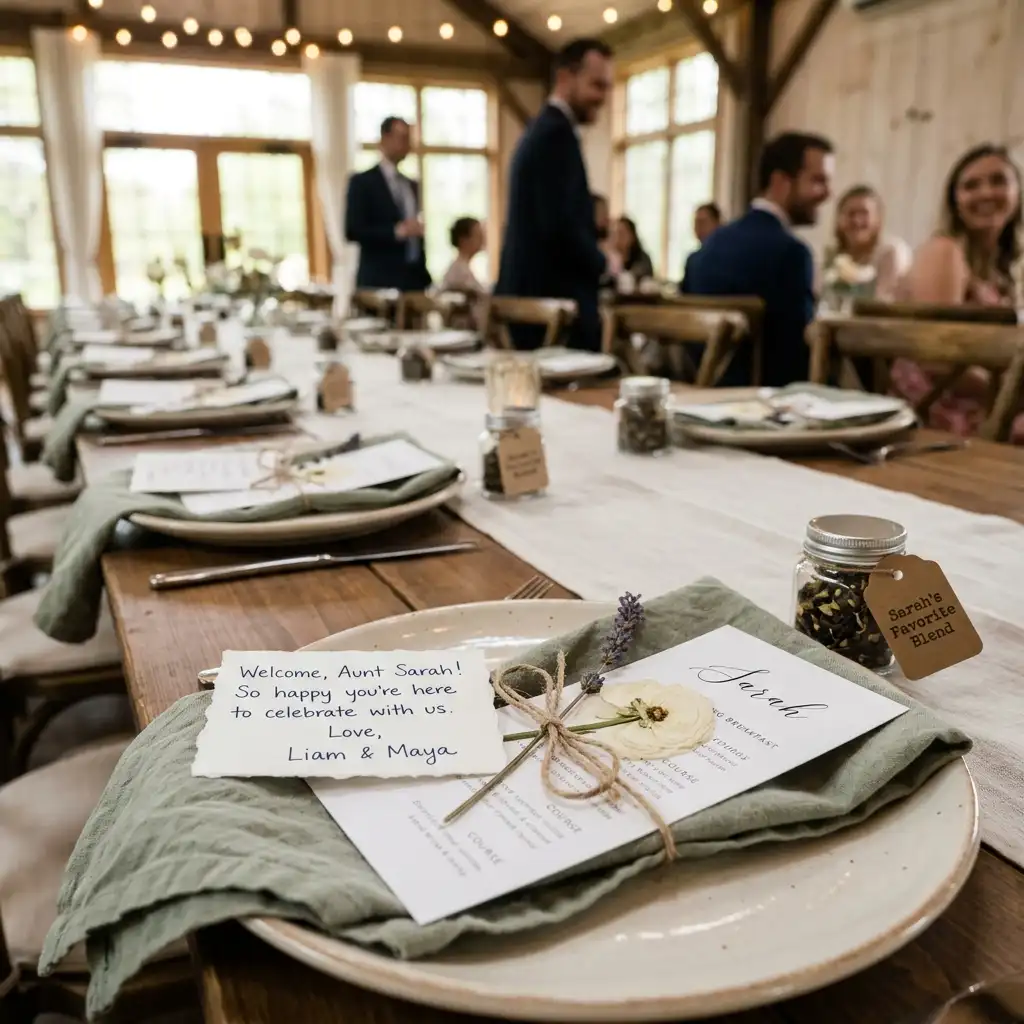
Cost estimate: $2–$10 per personalised element
14. Candles everywhere
Candlelight is always beautiful. In a small, intimate room, it’s transformative. Cover every surface with candles of different heights — pillars, tapers in candlesticks, tea lights in glass holders. The warmth of candlelight on twenty faces at a long table is one of the most beautiful things a wedding can look like. And candles cost almost nothing compared to florals.
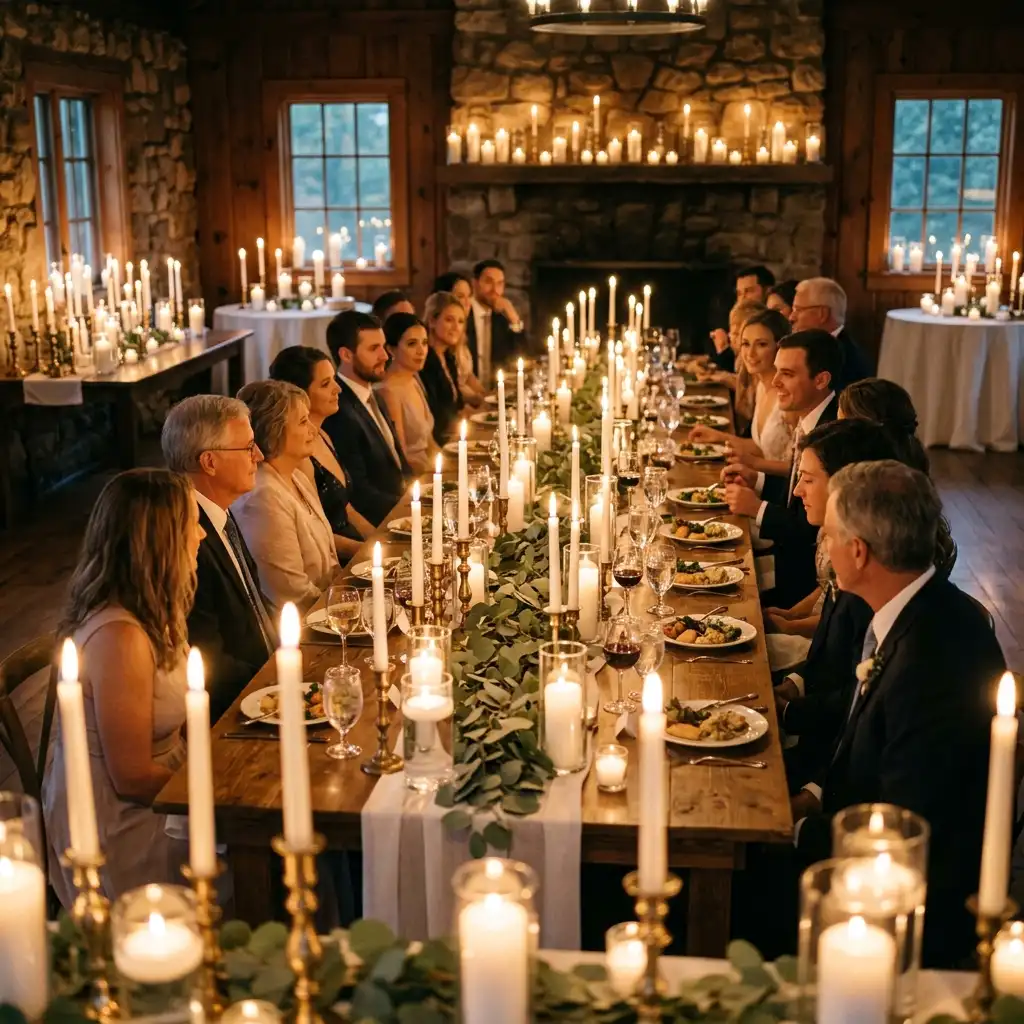
Cost estimate: $50–$150 for a full candlelit reception Safety note: Check venue rules; use LED candles where open flames aren’t permitted
15. A meaningful playlist instead of a DJ
For a small, intimate reception, a carefully curated playlist played through a quality speaker often feels more appropriate than a DJ. Choose songs that mean something to the couple and the people in the room. Let the music be background to conversation rather than the focus of the event. The playlist can tell the story of the relationship — early songs from when they met, songs from significant trips, songs everyone in the room knows.
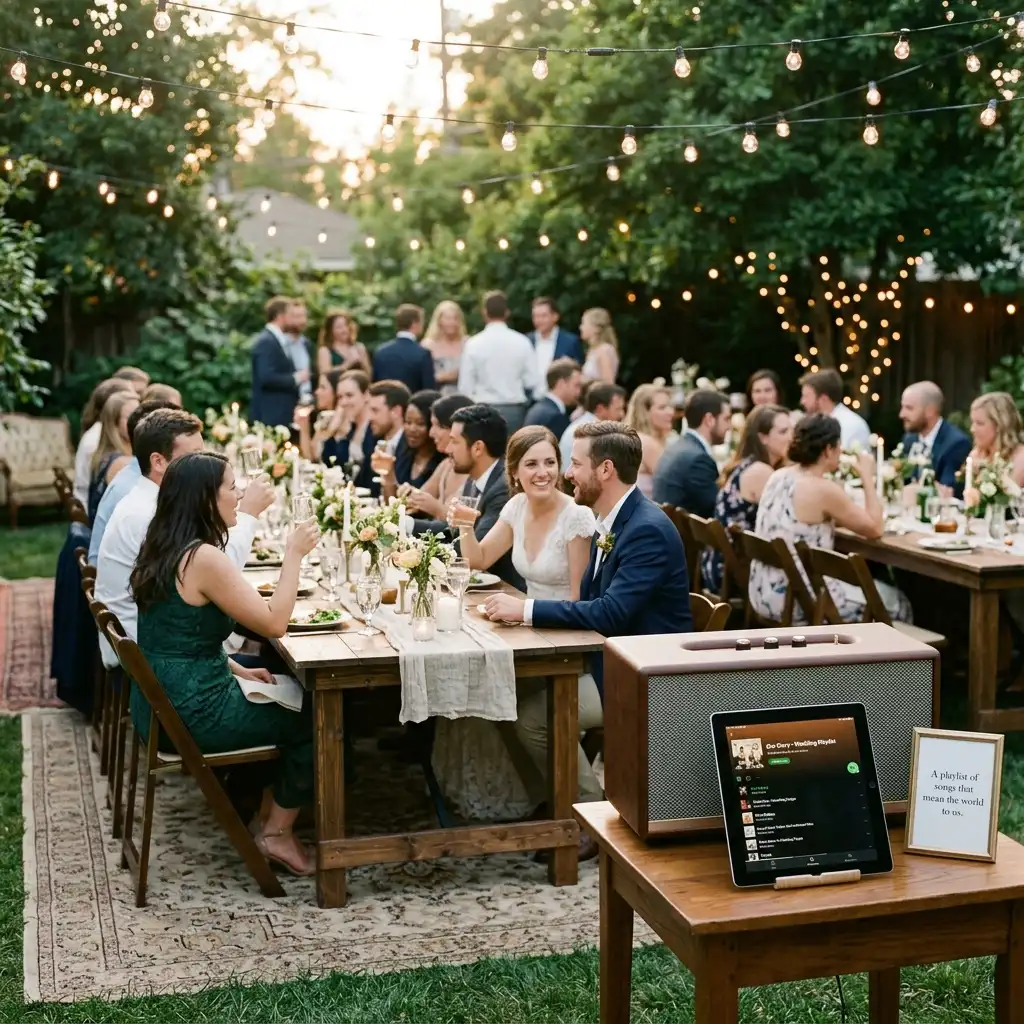
Cost estimate: Free (Spotify or Apple Music); quality speaker hire $50–$150
What You Can Upgrade With a Smaller Guest List
This is one of the most practically useful tables for couples considering a smaller wedding.
| Element | Standard (120 guests) | Upgraded (30 guests, same budget) |
|---|---|---|
| Catering | Buffet or set menu | Degustation or fine dining experience |
| Florals | One small centrepiece per table | One dramatic installation + lush table |
| Favours | Generic item, $3 each | Meaningful personalised gift, $15 each |
| Photography | 8-hour coverage, one photographer | 10-hour coverage, two photographers |
| Venue | Large hired hall | Boutique venue, private restaurant, winery |
| Stationery | Printed flat cards | Letterpress, custom illustration, wax seals |
| Transport | Self-arranged | Vintage car or bus for all guests |
| Honeymoon | Budget constrained | Significantly more available to spend |
Small Wedding Food and Dining Ideas
Food is where small weddings can really shine. With fewer people, you can offer something genuinely extraordinary.
16. A degustation or long-table dinner
Book a restaurant or hire a private chef for a degustation-style dinner — multiple small courses over two to three hours. It’s a dining experience that guests would pay to have at a restaurant, delivered at their friend’s wedding. The meal becomes the event. Course by course, toast by toast, the evening unfolds at its own pace. This is the most powerful food idea for a small wedding and it’s only possible because of the guest count.
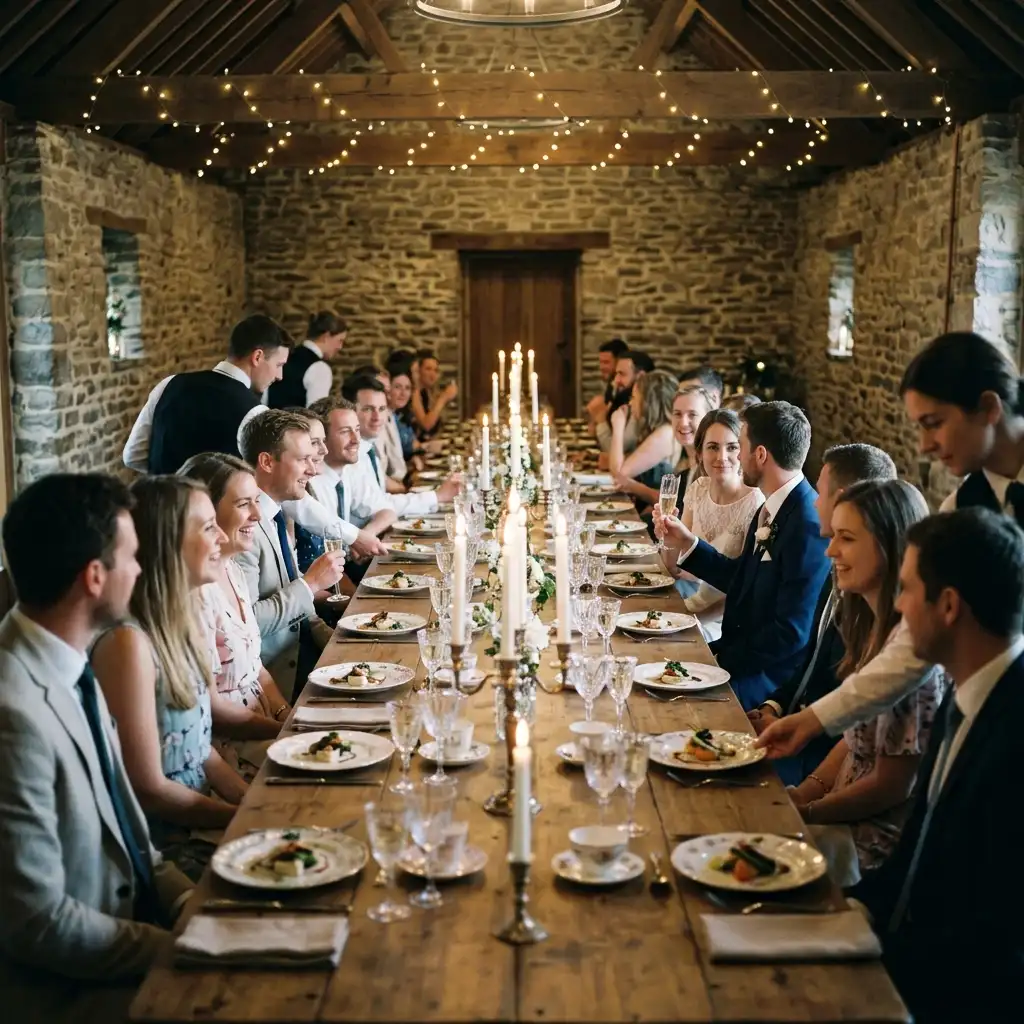
Cost estimate: $100–$200 per head Best for: 10–30 guests
17. A family-style feast
Rather than plated service or a buffet, serve food in large shared dishes down the centre of the long table — roasted meats, seasonal salads, bread baskets, shared desserts. Family-style dining is inherently intimate. Passing dishes, sharing plates, and helping yourself creates a warmth that plated service can’t replicate. It also reduces the need for formal waiting staff.
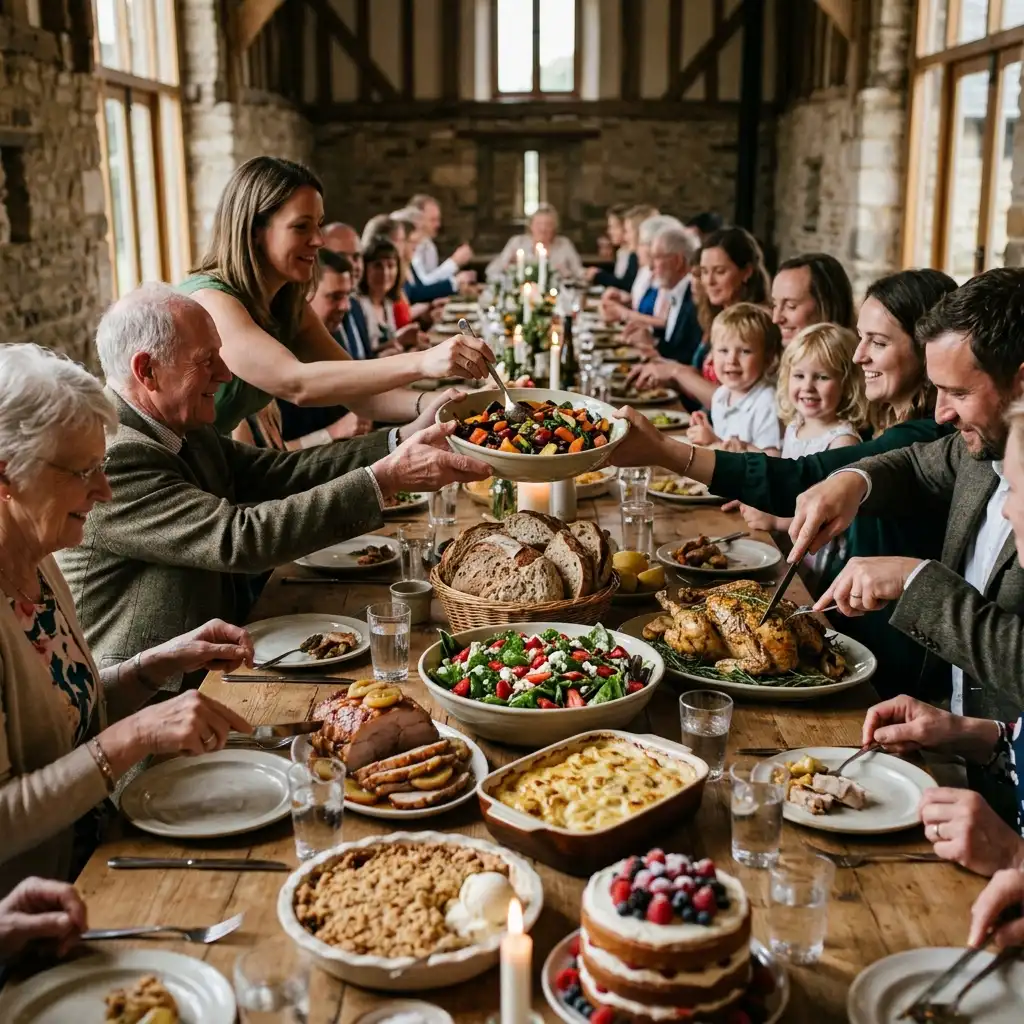
Cost estimate: $50–$100 per head Best for: 20–60 guests
18. Hire a private chef for the day
A private chef who cooks at the venue — whether that’s a house, a hired space, or a garden — creates a dining experience that’s completely personalised. The menu is designed around the couple’s tastes, the dietary needs of every guest are known in advance, and the quality is restaurant-level. For 20–30 guests, a private chef often costs less than restaurant catering.
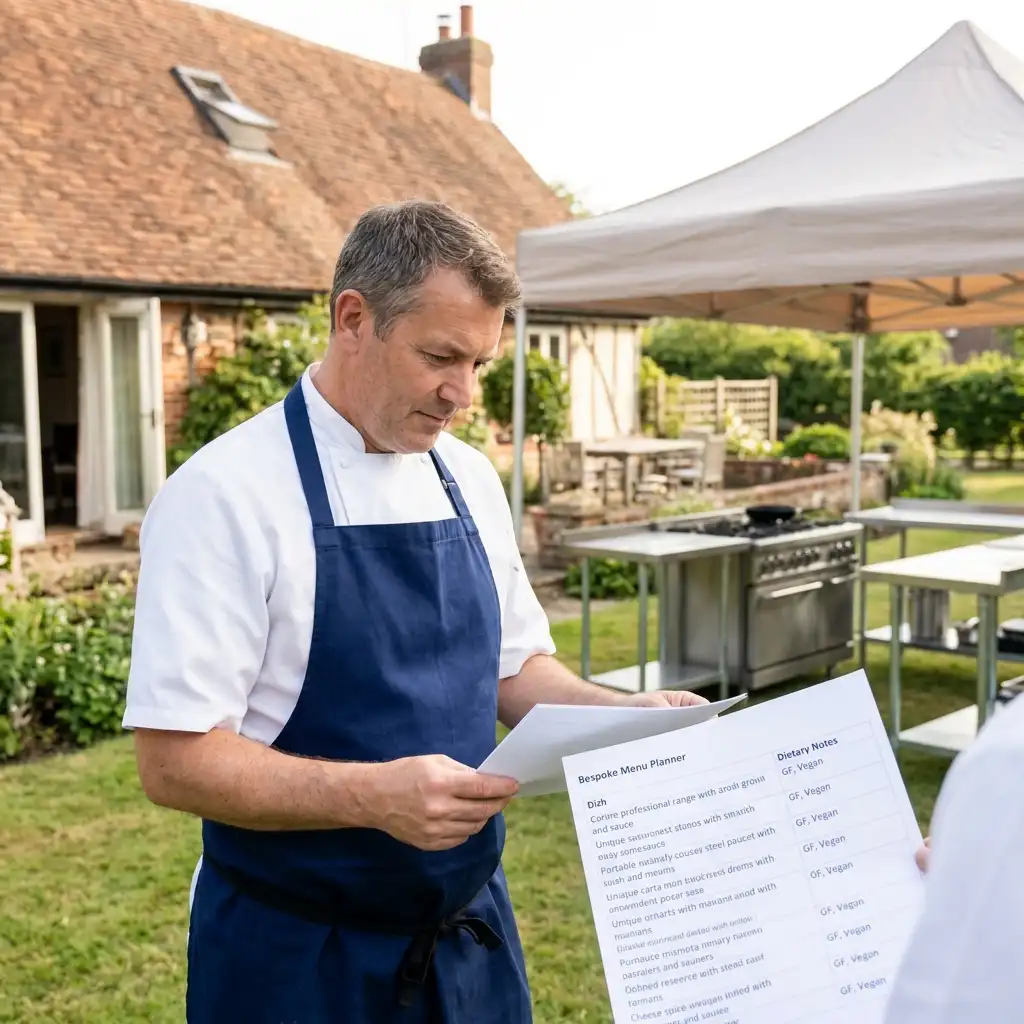
Cost estimate: $800–$2,500 for 20–30 guests (chef’s fee plus ingredients) Best for: 10–40 guests
19. A cake that’s actually for everyone
With thirty guests, a wedding cake doesn’t need to be a towering five-tier structure designed to feed two hundred. It can be a single beautiful layer from a local baker — the one you actually love the taste of, in the flavour you actually want, decorated exactly as you choose. Or three individual cakes in different flavours. Or a dessert from a bakery that means something to the couple. Small weddings free you from the performative aspects of a large wedding cake.
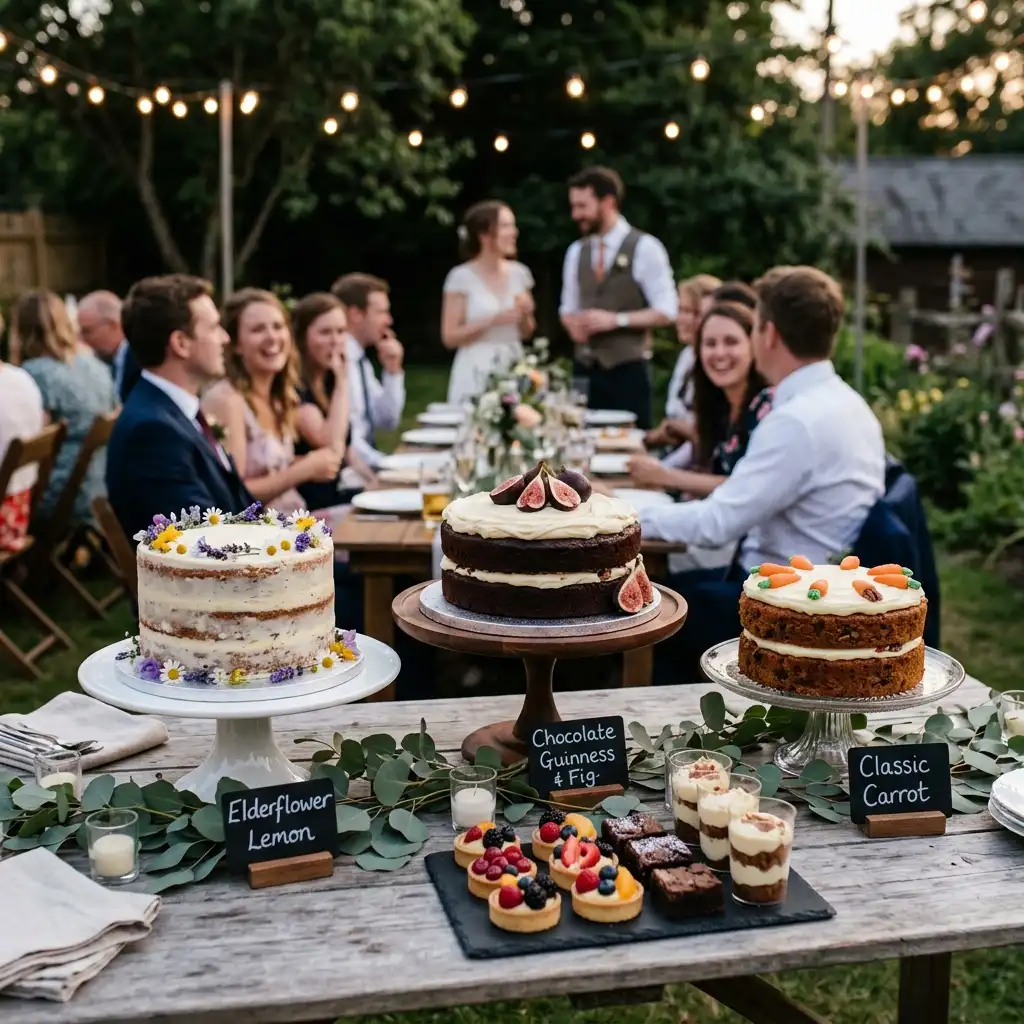
Cost estimate: $150–$500 for a beautiful single or double tier Versus: $800–$2,500 for a large tiered cake for a big wedding
20. A signature cocktail named for the couple
With a small guest list, you can afford to spend a little more on each drink and offer something genuinely creative. Work with a bartender or mixologist to create a signature cocktail — named for the couple, referencing something specific about them, made with a spirit or ingredient that means something. Present it on a handwritten card at each place setting. It’s the kind of detail that guests mention for years.
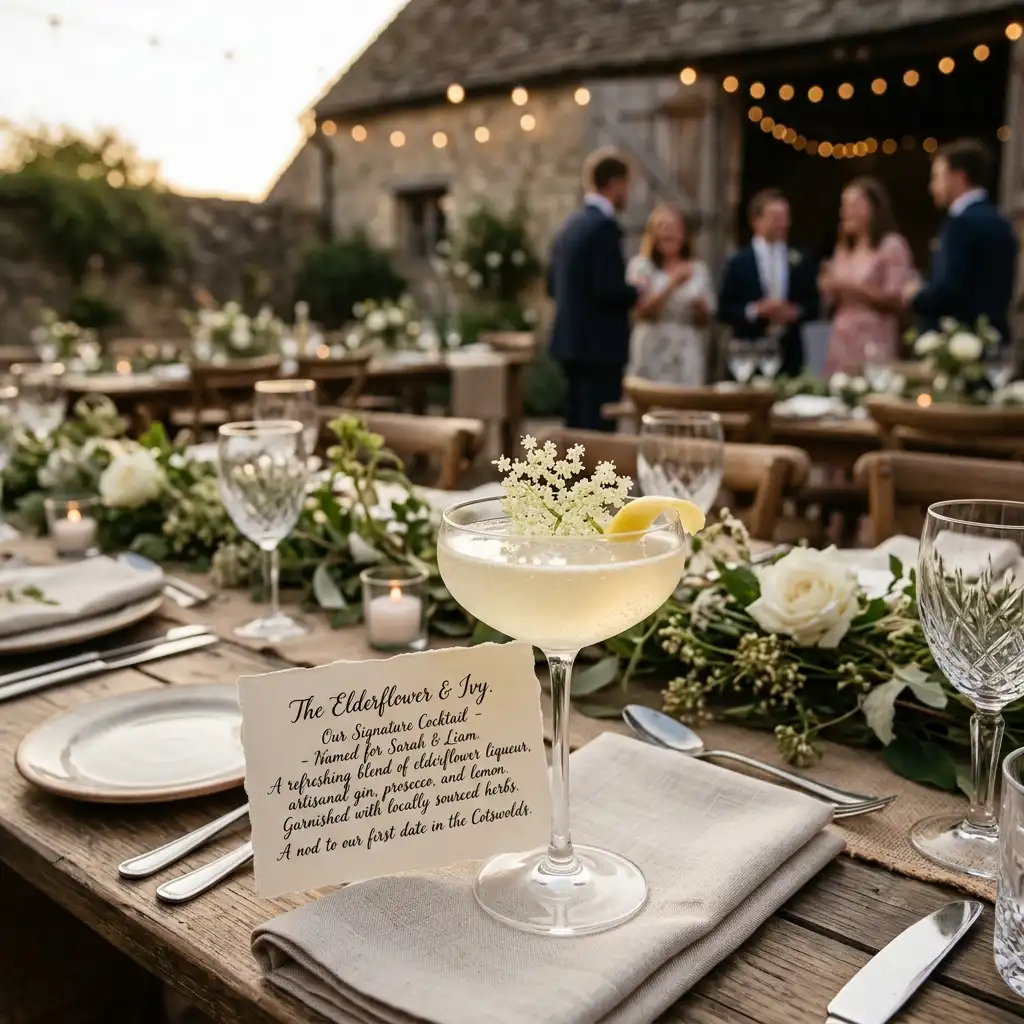
Cost estimate: $15–$30 per head for a full drinks package including signature cocktail
Personal Touch Ideas for Small Weddings
The smaller the wedding, the more space there is for genuine personalisation. These ideas only work because everyone in the room is close enough to understand the reference.
21. A memory table with photos and objects
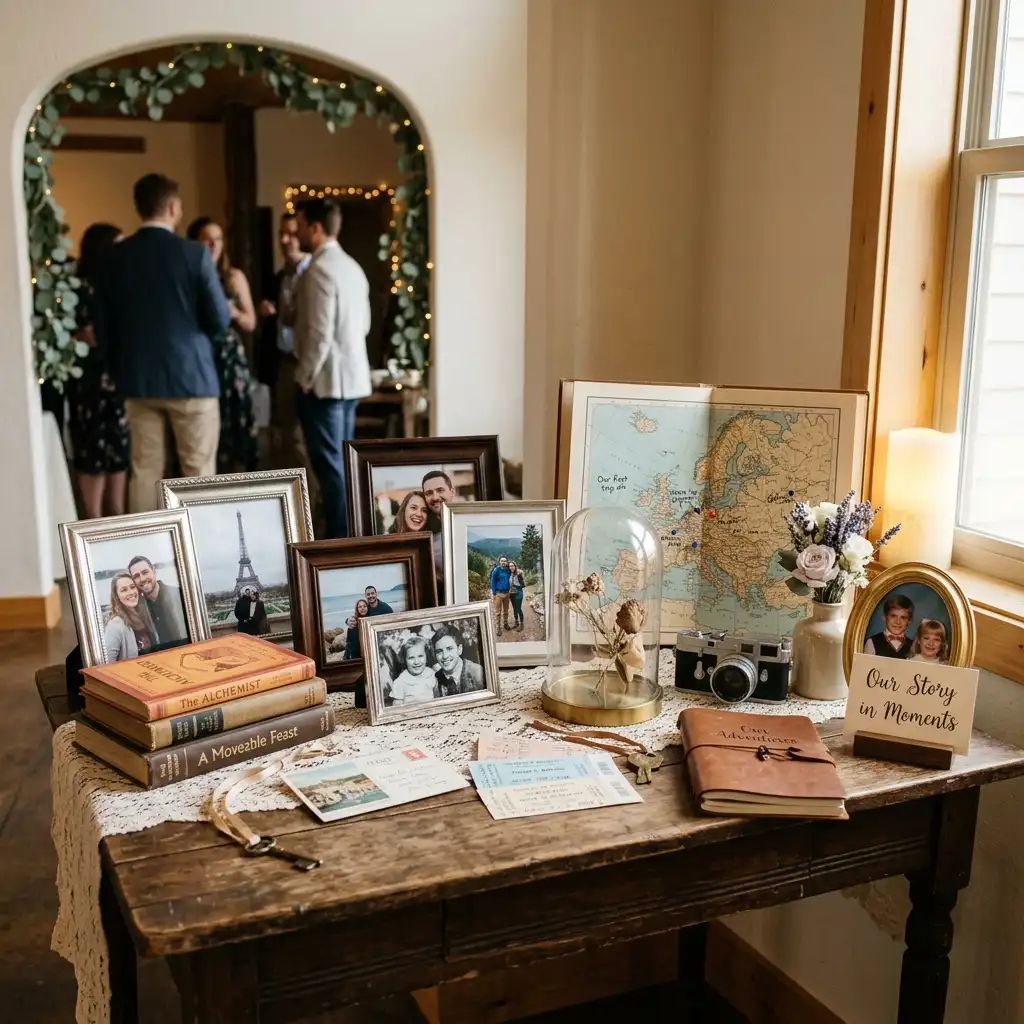
Set up a table near the entrance with photos and objects that tell the story of the couple — childhood photos, travel mementos, meaningful books, a map of significant places, items from early in the relationship. In a small wedding, every guest knows enough of the story to understand what they’re looking at. The table becomes a conversation piece and a celebration of the relationship’s specific texture.
22. A handwritten letter to each guest
Write a short personal letter to each guest — or each family unit — and place it at their seat or include it in a small envelope with the place card. One paragraph that says specifically why this person is in the room. What they mean to you. A specific memory. It takes several hours to write thirty letters and it is one of the most moving things a couple can do at a small wedding. Guests keep these.
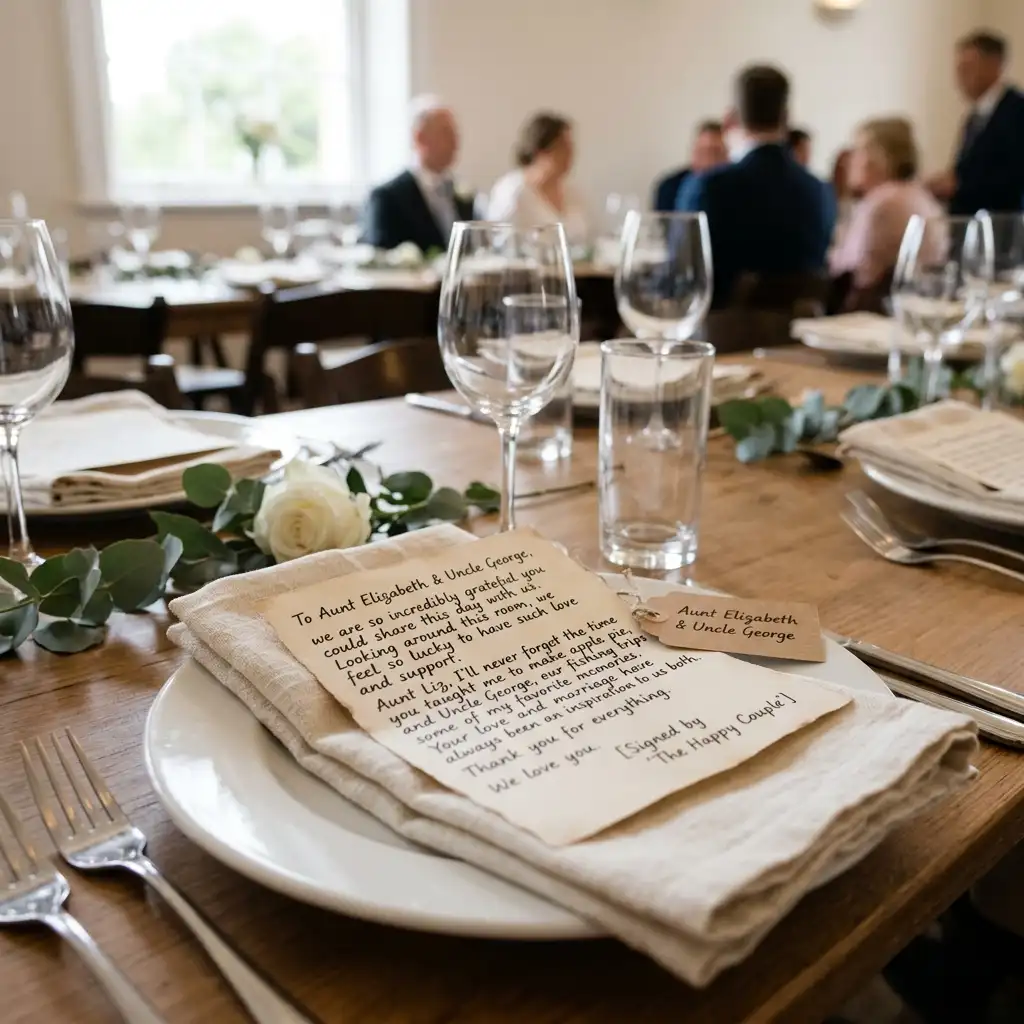
Time investment: 3–5 hours for 30 letters Cost: Stationery only
23. An unplugged ceremony with a professional photographer
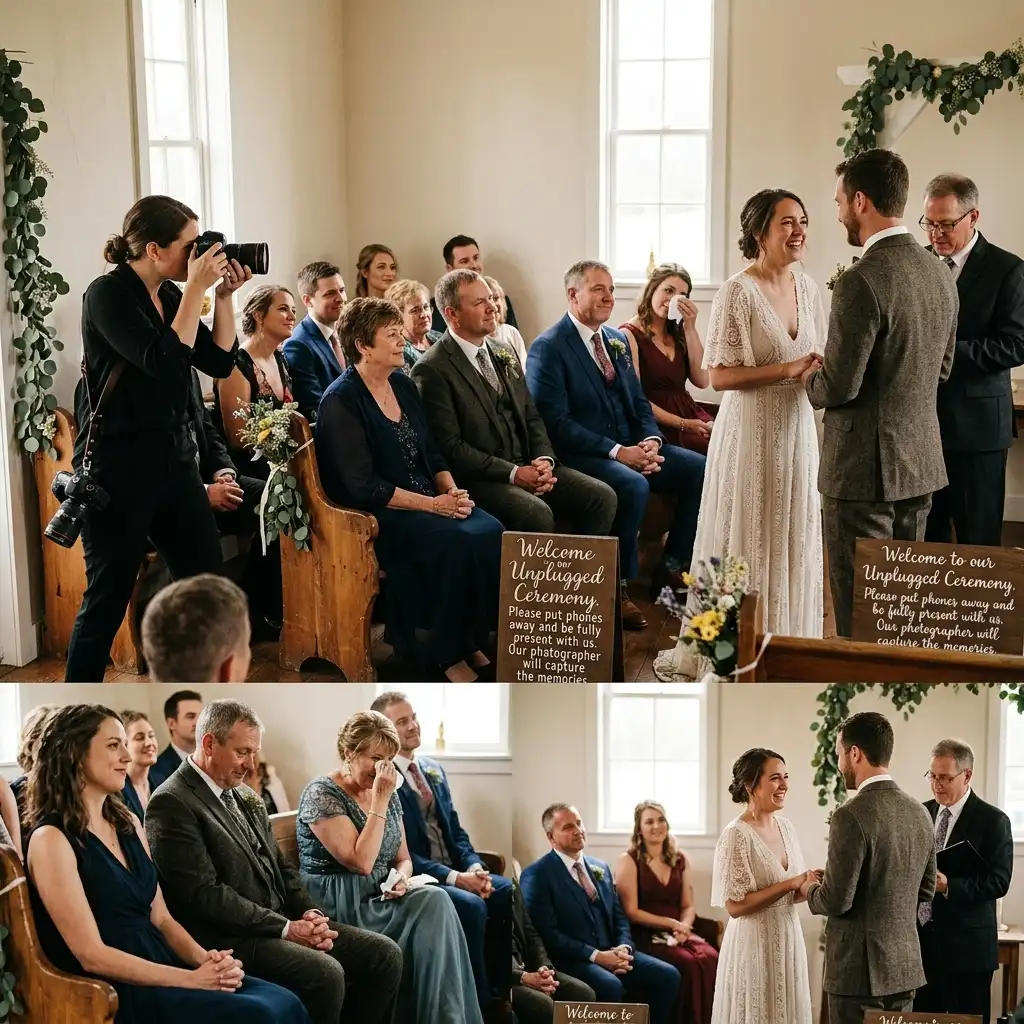
Ask guests to put phones away for the ceremony — in an intimate setting with twenty people, every face turned toward a phone screen is a distraction that a large wedding can absorb but a small one cannot. The professional photographer captures everything. Guests are fully present. The ceremony exists in the room rather than on a screen. This is one of the most meaningful requests a couple can make of their small guest list.
24. A toast from every table (or every person)
At a wedding with twenty to thirty guests, you can invite every person who wants to speak to give a short toast. Set a two-minute limit, have the celebrant manage the flow, and let the evening become a series of genuine testimonies from everyone who loves the couple. At a large wedding this would take all night. At a small one it takes forty minutes and it is extraordinary.
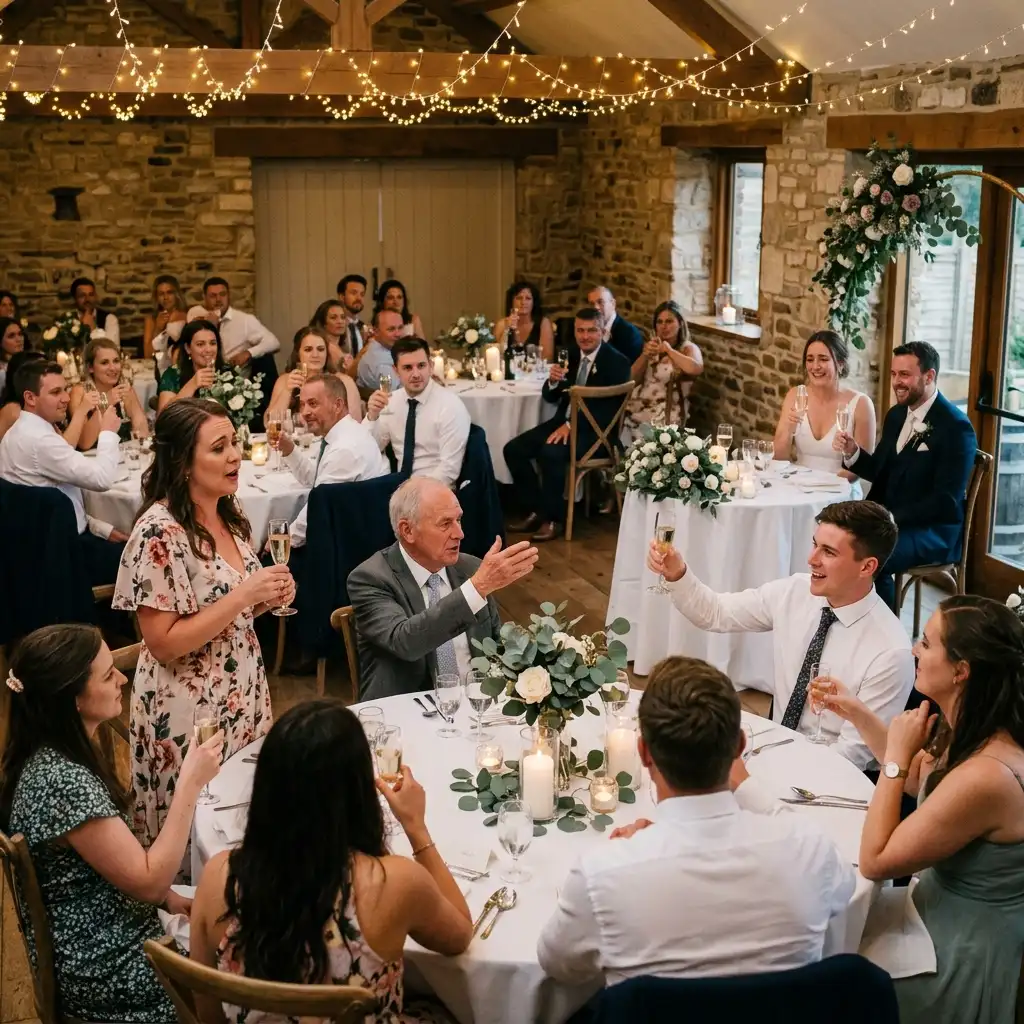
Tip: Give people advance notice so they can prepare something. Spontaneous toasts are often less good than people think they’ll be.
25. A guest book that’s actually filled in
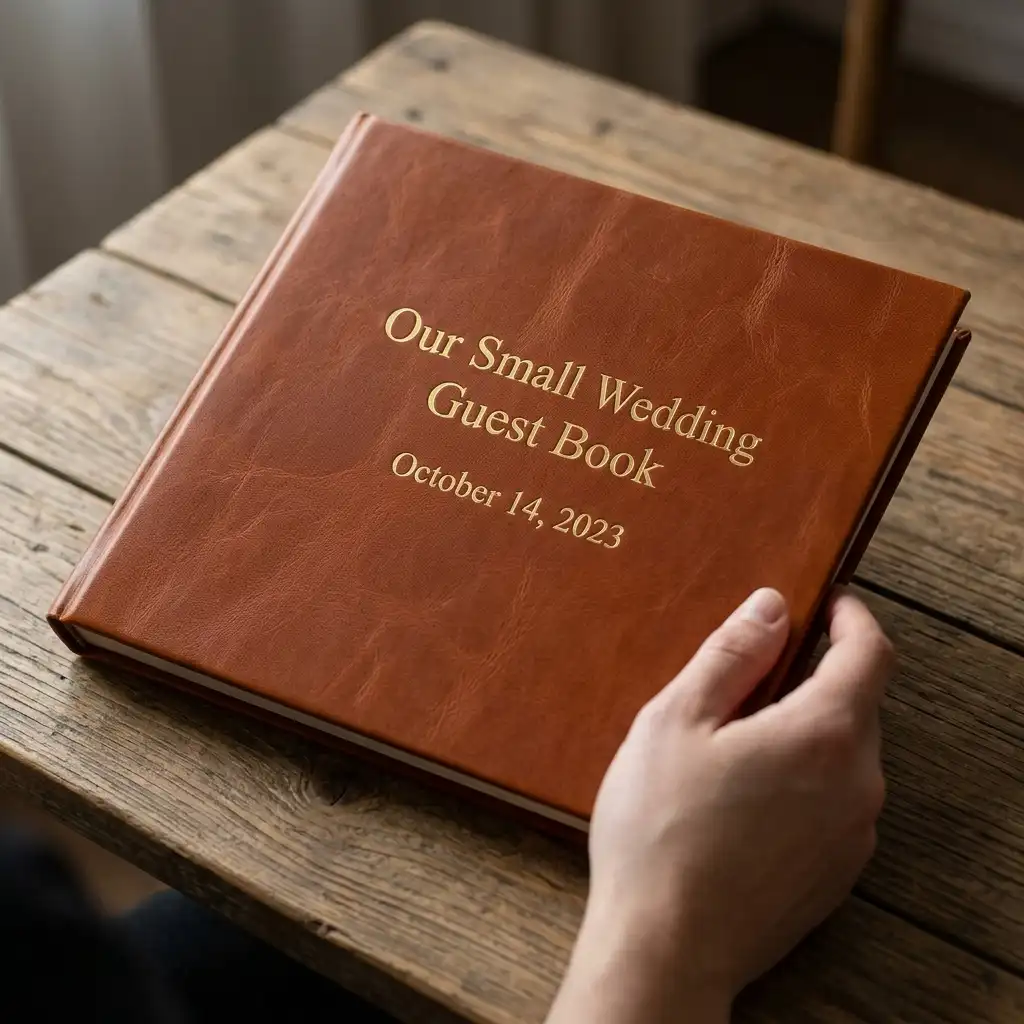
At a large wedding, the guest book table gets bypassed by two thirds of guests in the chaos. At a small wedding, you can ensure every single person writes something. Pass a beautiful book around during dinner. Ask your celebrant to prompt guests to write in it before the night ends. Thirty entries from thirty people who genuinely know you — this is a book you’ll read every anniversary.
Small Wedding Guest Experience Ideas
Every guest at a small wedding has a fundamentally different experience to a large one. These ideas lean into that.
26. Assign a host for out-of-town guests
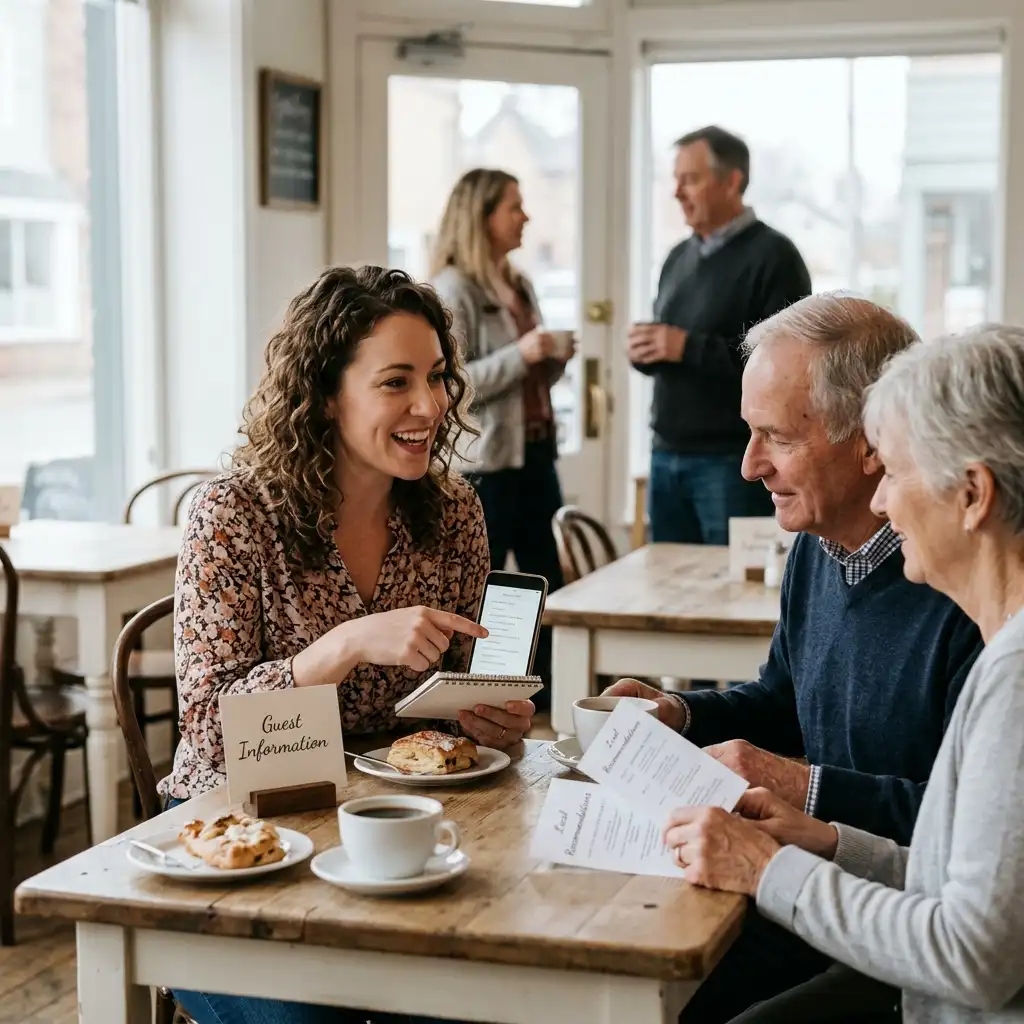
Appoint a local friend or family member as the unofficial host for guests who’ve travelled — someone who can recommend restaurants, arrange transport, organise a group breakfast the morning after. At a large wedding, out-of-town guests often feel anonymous. At a small one, they’re part of a tight group and a little shepherding makes them feel genuinely looked after.
27. A welcome dinner the night before
For a very small wedding, a casual welcome dinner the night before — a restaurant booking or a home dinner — brings everyone together before the day itself. Guests arrive already relaxed and connected. The wedding day starts with a room full of people who’ve already had a chance to find each other. It removes the tension of a formal event where some guests don’t know each other.
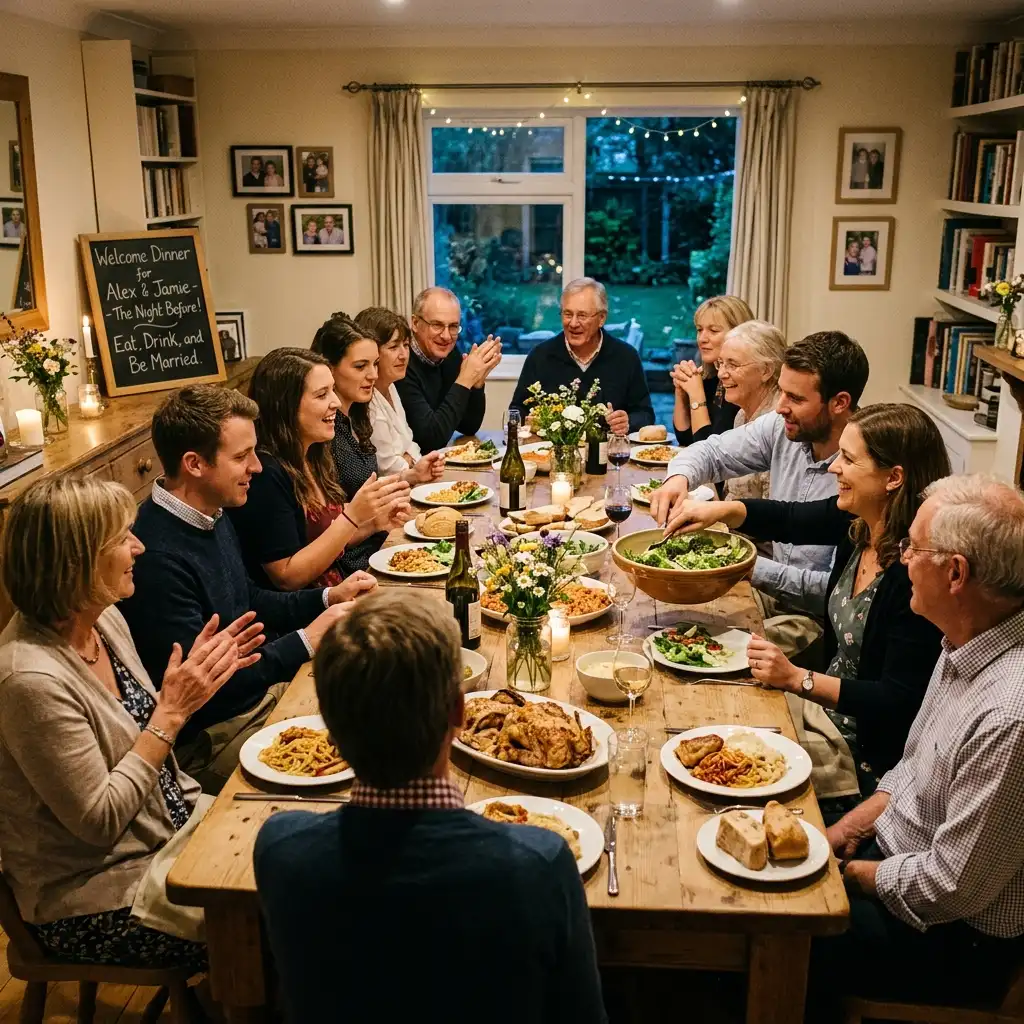
Cost estimate: $30–$80 per head for a casual dinner
28. A group activity the day after
A shared brunch, a guided walk, a winery visit, a beach day — organising something for guests the morning after the wedding extends the celebration and gives people who’ve travelled a reason to linger. It also gives the couple a chance to spend time with their guests in a relaxed setting after the intensity of the wedding day itself.
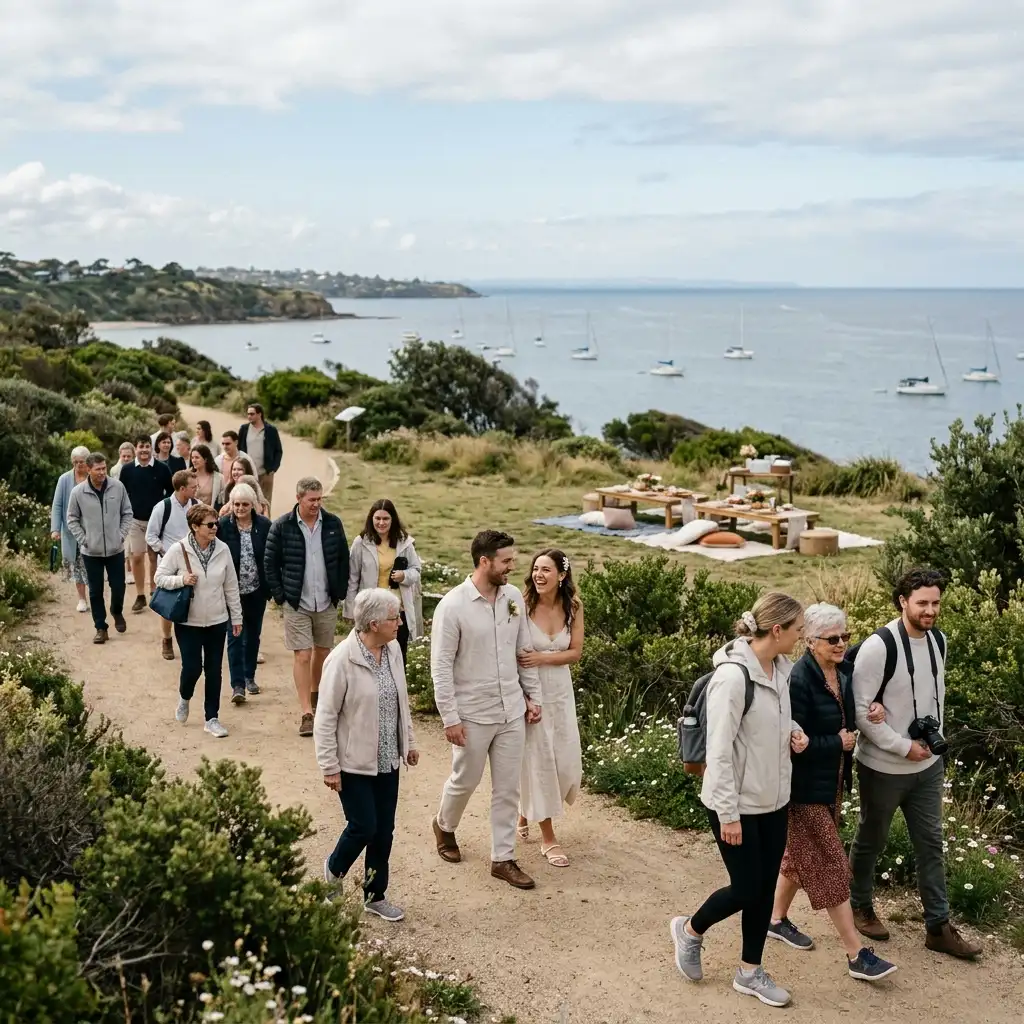
Cost estimate: $20–$60 per head
29. A seating arrangement that creates connection
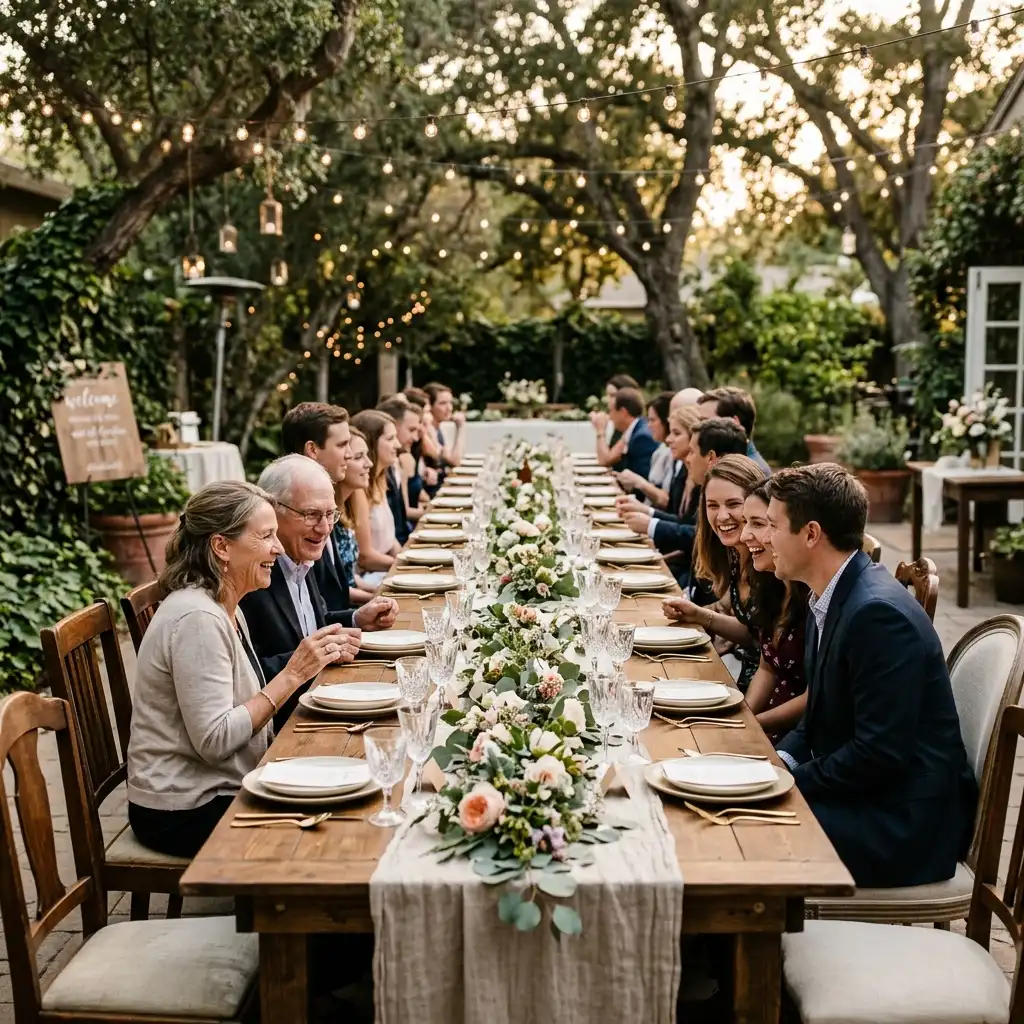
With thirty guests, you have complete control over who sits next to whom. Use that. Think carefully about which guests don’t know each other but would love each other. Which conversations could you create by putting two specific people next to each other? The seating plan at a small wedding is one of the most powerful tools you have and it deserves more than an hour of thought.
Budget and Planning Ideas for Small Weddings
30. Set a per-head budget and work backward
The most useful planning framework for a small wedding is a per-head budget rather than a total figure. Decide what you want to spend per guest — $200, $350, $500 — and multiply by your guest count. That total is your working budget. Allocate it by category. When you’re tempted to add something, ask what you’d remove or reduce to pay for it. This framework keeps small weddings from accidentally growing into medium-sized ones.
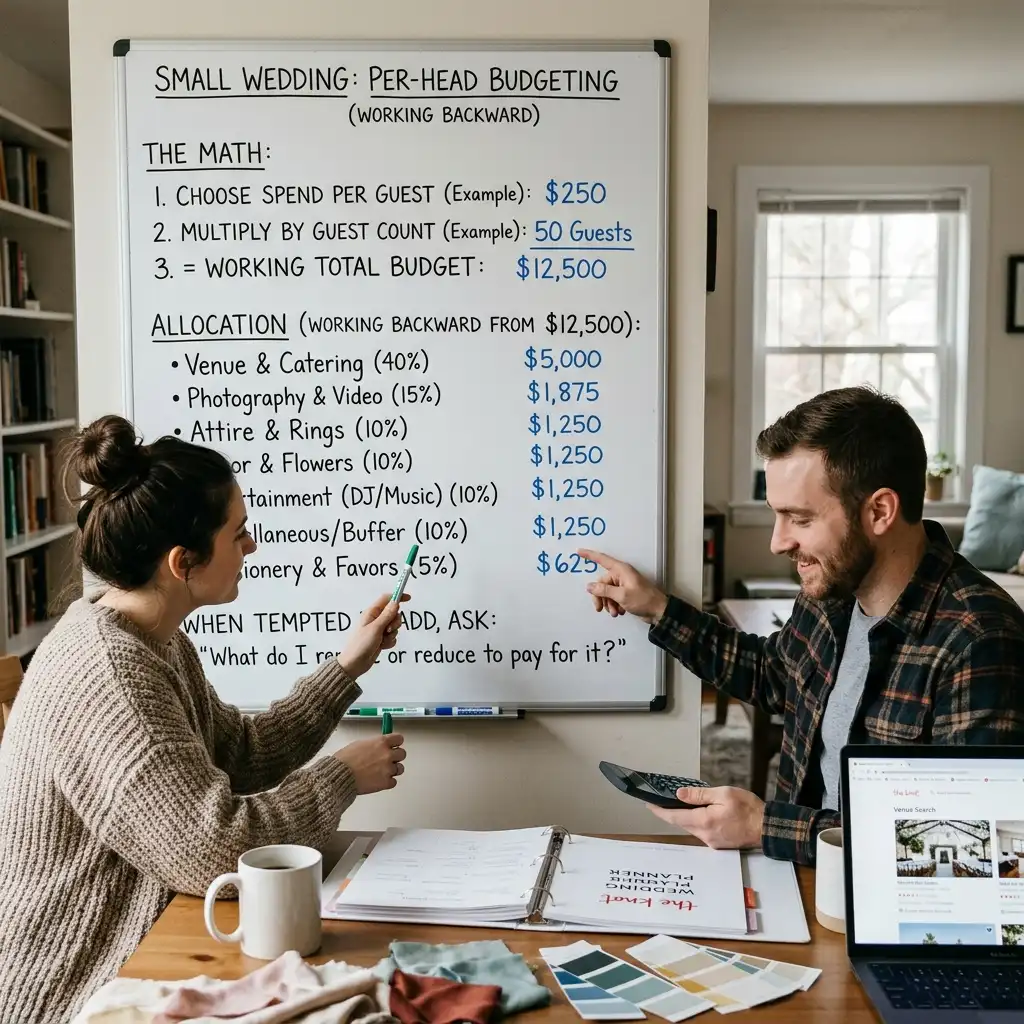
Example: 30 guests × $400 per head = $12,000 total budget
31. Invest in photography as if the guest count were larger
Photography is the one element of a wedding that costs roughly the same regardless of guest count and delivers value for the rest of your life. Don’t reduce the photography budget because the wedding is small. If anything, a small wedding gives a photographer more access and more intimacy — the resulting images are often more beautiful precisely because there’s more space for the photographer to work.
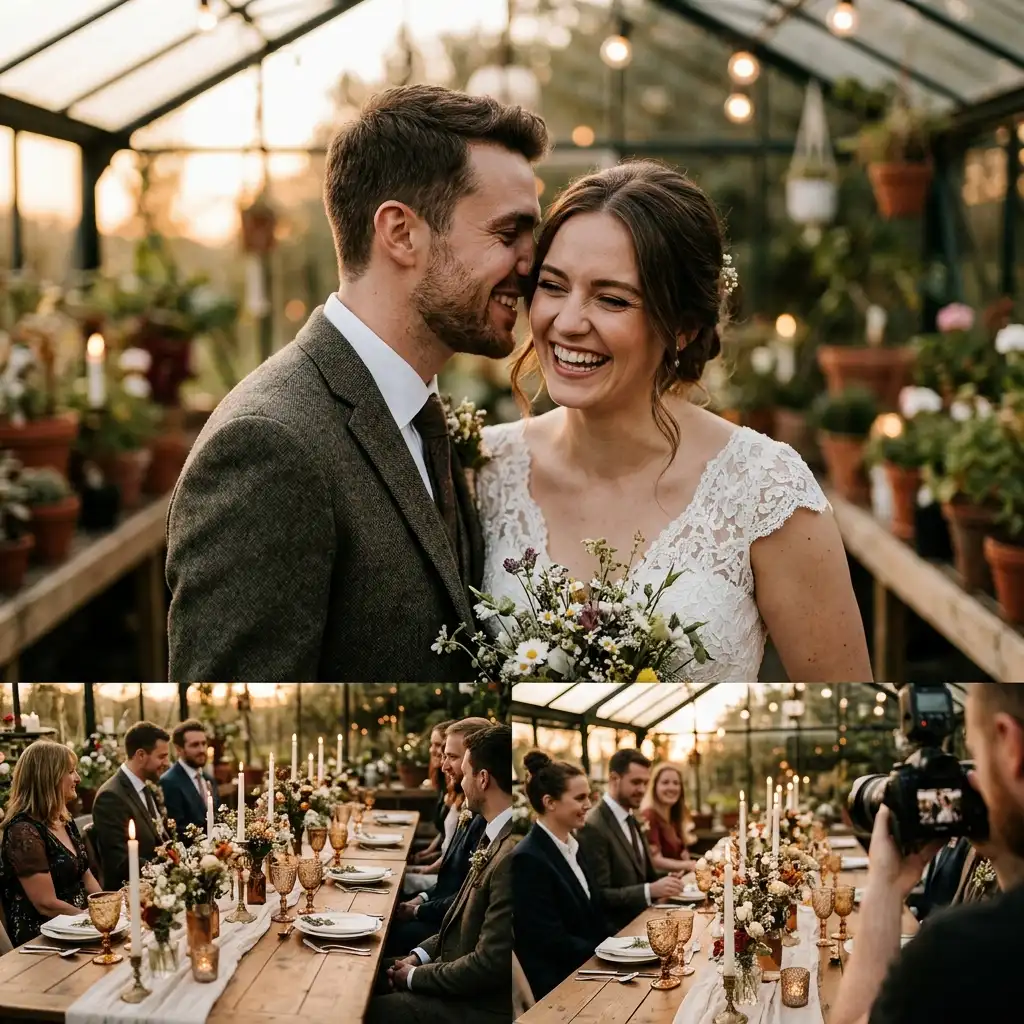
Cost estimate: $2,000–$5,000 for a quality photographer; the same as for a large wedding
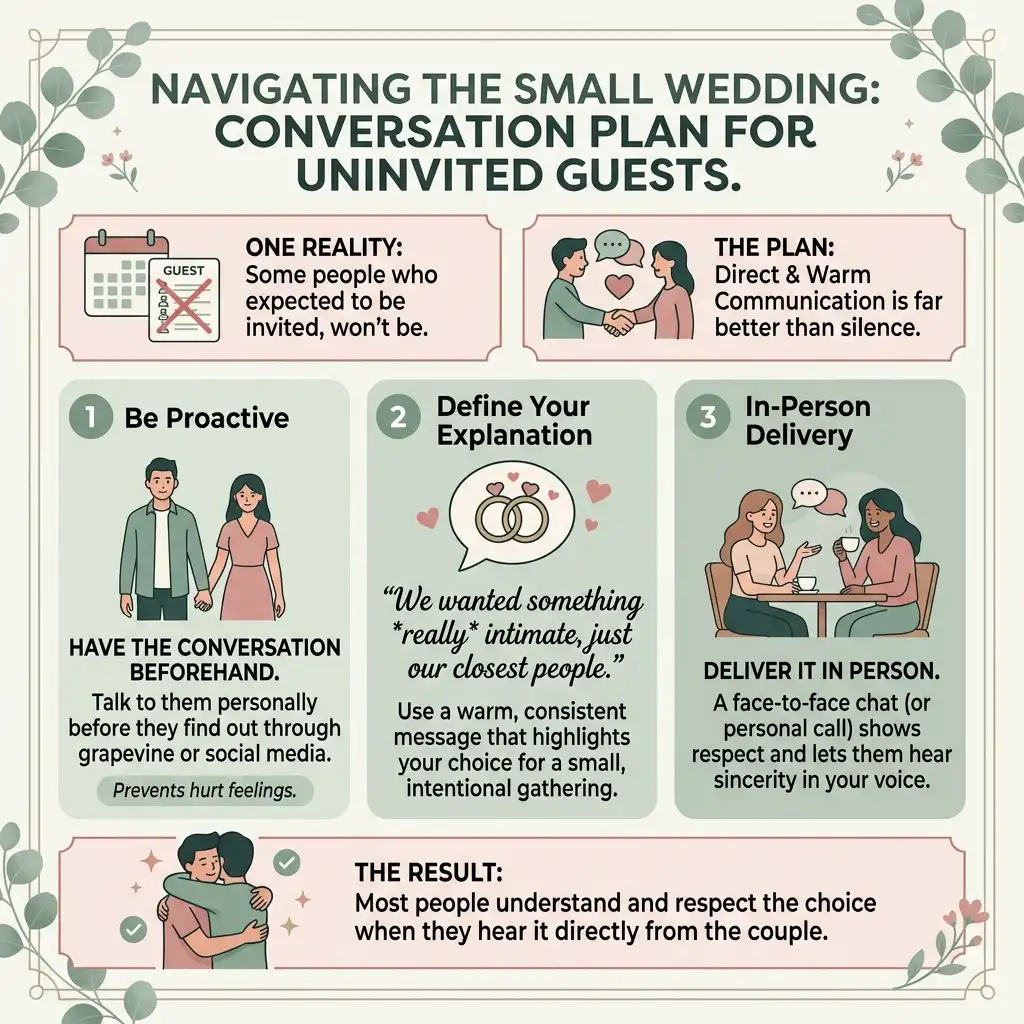
32. Send save-the-dates earlier for destination or travel-heavy guest lists
A small wedding often involves guests who need to travel — because the intimate guest list means people are coming from further away. Send save-the-dates six to twelve months in advance for destination or travel-heavy small weddings. Give guests the time to make it work. Losing two people from a guest list of twenty is a proportionally larger absence than losing ten from two hundred.
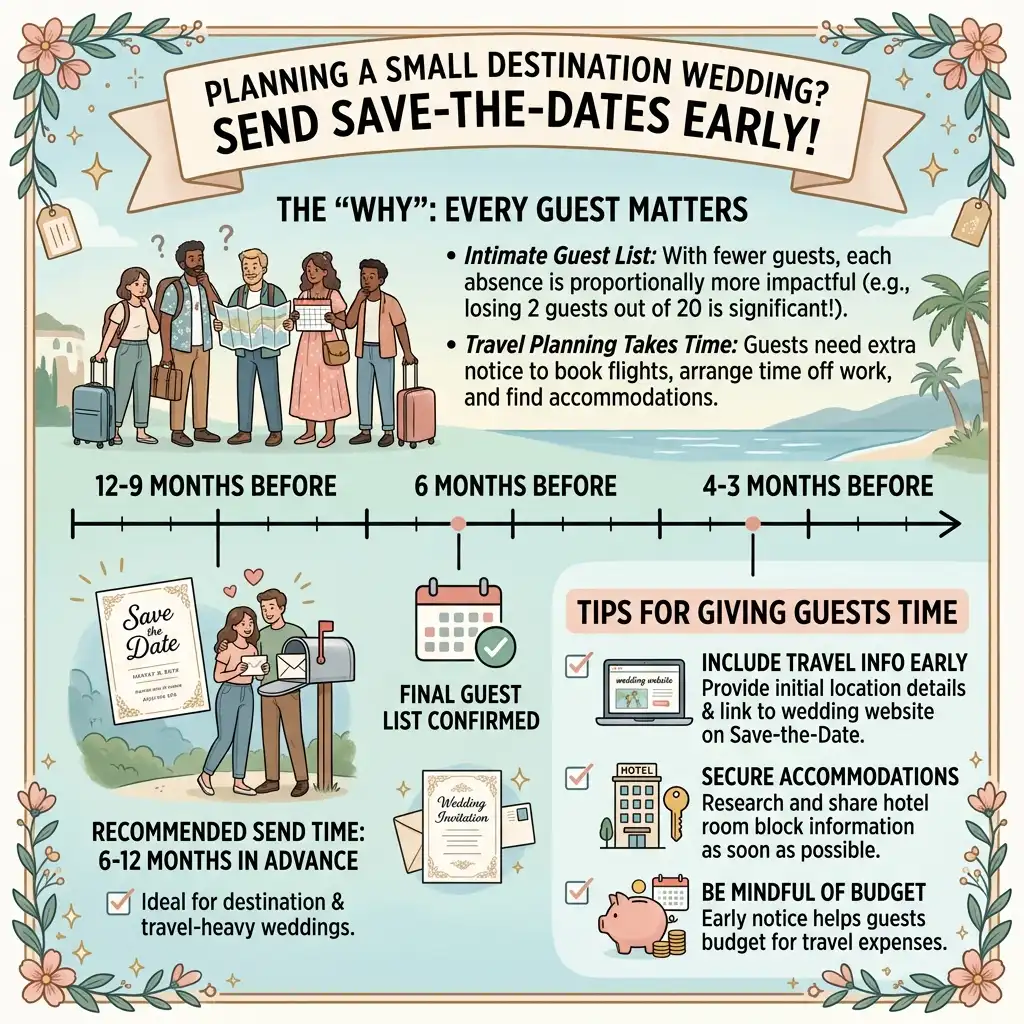
33. Plan for the post-wedding conversation
One of the realities of a small wedding that nobody mentions: some people who expected to be invited won’t be. Have a plan for those conversations before the wedding. A brief, warm explanation — “we wanted something really intimate, just our closest people” — delivered in person before they find out another way is far better than letting it become a source of hurt. Most people understand and respect the choice when they hear it directly from the couple.
Small Wedding Planning Timeline
| Months before | What to lock in |
|---|---|
| 12 months | Guest list, venue, date, celebrant |
| 9 months | Photographer, caterer or restaurant, accommodation for guests |
| 6 months | Florals, music, attire, invitations sent |
| 4 months | Menu finalised, seating plan drafted, personal elements planned |
| 2 months | Final guest confirmations, personalised touches completed |
| 1 month | Run-sheet finalised, supplier confirmations sent |
| 1 week | Final details, rest |
DIY vs Hire for Small Weddings
| Element | DIY | Hire / Buy | Recommendation |
|---|---|---|---|
| Centrepieces | ✓ Strongly recommended | Optional | DIY is more personal and affordable |
| Florals | Partial DIY possible | Florist for key pieces | Hybrid — DIY greenery, buy statement flowers |
| Catering | Only for very small groups | Recommended for 20+ | Hire a chef or restaurant for 20+ guests |
| Photography | ✗ Never | ✓ Always | Too important to compromise |
| Music / PA | ✓ Playlist viable | Optional | Curated playlist works well for intimate settings |
| Stationery | ✓ DIY possible | Beautiful if bought | DIY is meaningful; invest in good paper |
| Venue styling | ✓ DIY strongly recommended | Optional | Personal touches matter more than hired styling |
| Transport | ✓ Self-arranged | Optional | Hire for destination or multi-location days |
Small Wedding Venue Ideas by Style and Guest Count
| Venue type | Best guest count | Style | Approximate cost |
|---|---|---|---|
| Private restaurant / dining room | 10–40 | Elegant, modern | $500–$2,000 hire |
| Winery / cellar | 15–50 | Rustic, romantic | $2,000–$6,000 |
| Botanical garden / greenhouse | 10–40 | Garden, romantic | $800–$3,000 |
| National park / scenic location | 2–30 | Natural, dramatic | $50–$500 permit |
| Home / backyard | 10–60 | Personal, intimate | Logistics costs only |
| Boutique hotel suite | 10–30 | Luxe, intimate | $1,000–$4,000 |
| Art gallery or studio | 15–50 | Modern, creative | $1,000–$3,500 |
| Farm or rural property | 20–60 | Rustic, relaxed | $1,500–$5,000 |
A note on the pressure to go bigger
Almost every couple planning a small wedding will face it at some point — the quiet pressure, from family or from their own internalised expectations, to add more people. To make it bigger. To make it feel more like “a real wedding.”
Here is the thing worth knowing: the couples I’ve spoken to who kept their wedding small have almost universally said they’d do it again the same way. The couples who let it grow past their instincts sometimes wish they hadn’t.
A small wedding isn’t a lesser version of a wedding. It’s a different kind of day — one where the people in the room all genuinely belong there, where you remember what everyone said to you, where the food was extraordinary because you could afford it to be, where the photographs show the faces of people you actually know.
That’s not a compromise. That’s a decision.
Frequently Asked Questions
What counts as a small wedding?
A small wedding is generally defined as a guest list of 10 to 60 people, though the terminology varies. An elopement typically involves just the couple and up to 10 guests including witnesses. A micro wedding is usually 10 to 30 guests — immediate family and the very closest friends. An intimate or small wedding sits between 30 and 60 guests. A medium wedding starts at around 60 and a traditional large wedding is 100 or more. The practical planning implications change significantly at each threshold — particularly around venue options, catering style, and the degree of personalisation possible.
How much does a small wedding cost?
A small wedding for 20–30 guests typically costs between $6,000 and $15,000. The main cost categories are venue ($500–$3,000 for a boutique or private space), catering ($60–$150 per head), photography ($2,000–$4,000), florals ($500–$1,500 when concentrated rather than spread across many tables), and attire ($500–$3,000). The savings compared to a large wedding are significant — primarily in catering volume, venue hire, and florals. Photography, attire, and music cost roughly the same regardless of guest count. For a micro wedding of 10–15 guests, total costs can come in under $5,000 without sacrificing quality on the elements that matter most.
How do you plan a small intimate wedding?
Planning a small intimate wedding follows the same broad sequence as any wedding — venue, date, celebrant, photographer, catering, attire, florals, stationery — but the decisions are made in a different order of priority. Start with the guest list and keep it honest: decide who genuinely belongs in the room and commit to that number before you book anything. Once the guest count is fixed, choose a venue appropriate to that number — which opens up options unavailable to larger weddings, like private dining rooms, wineries, and boutique spaces. Then allocate budget per head rather than in total to keep spending proportional. Plan the personal touches — handwritten notes, vow writing, personalised place settings — in the months before, not the week before.
What are the real benefits of a small wedding?
The benefits of a small wedding are specific and significant. Budget: the same total spend per couple produces a dramatically higher quality experience per guest at a smaller wedding — better food, better venue, better florals. Presence: at a small wedding, the couple actually spends time with every guest rather than briefly greeting two hundred people in a receiving line. Memory: couples with small weddings consistently report remembering the day in more detail, including specific conversations, moments, and emotional beats. Stress: fewer guests means simpler logistics, shorter planning timelines, and less coordination. Personalisation: every element of a small wedding can be tailored to the specific couple and the specific people in the room in a way that’s impractical at scale. Finally, meaning: when everyone in the room was specifically chosen, the act of being invited carries more weight for the guest — and the couple knows that everyone there is genuinely there for them.
Are you planning a small wedding? I’d love to hear what kind of day you’re imagining — drop a comment below.