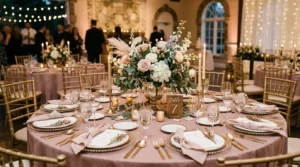
There is a reason round tables have anchored wedding receptions for generations. Something about the shape itself changes the dynamic at a table — no head, no foot, no hierarchy. Everyone faces everyone else.
Conversation flows in all directions rather than up and down a long line. A well-decorated round table feels intimate even in a cavernous ballroom, and generous even when the guest count is modest.
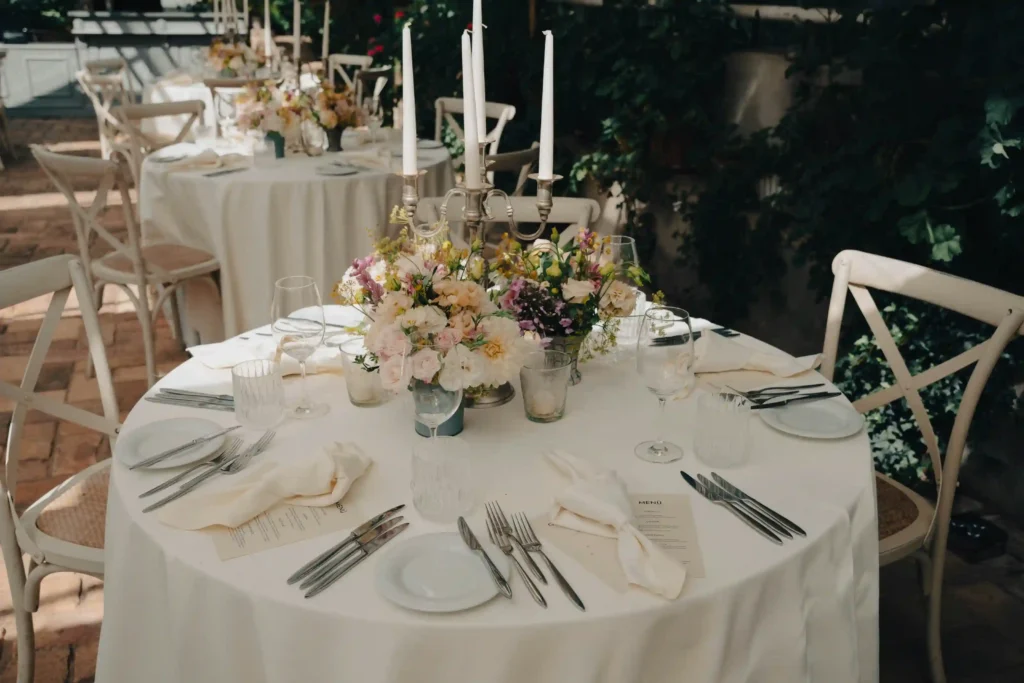
But decorating a circular surface presents its own set of design decisions. The centerpiece placement, the linen choices, the way place settings curve around the edge — all of it requires thinking in arcs and radii rather than straight lines and corners.
When it comes together properly, a round table looks like something from a magazine editorial. When it does not, it can feel cluttered, off-balance, or strangely empty in all the wrong places.
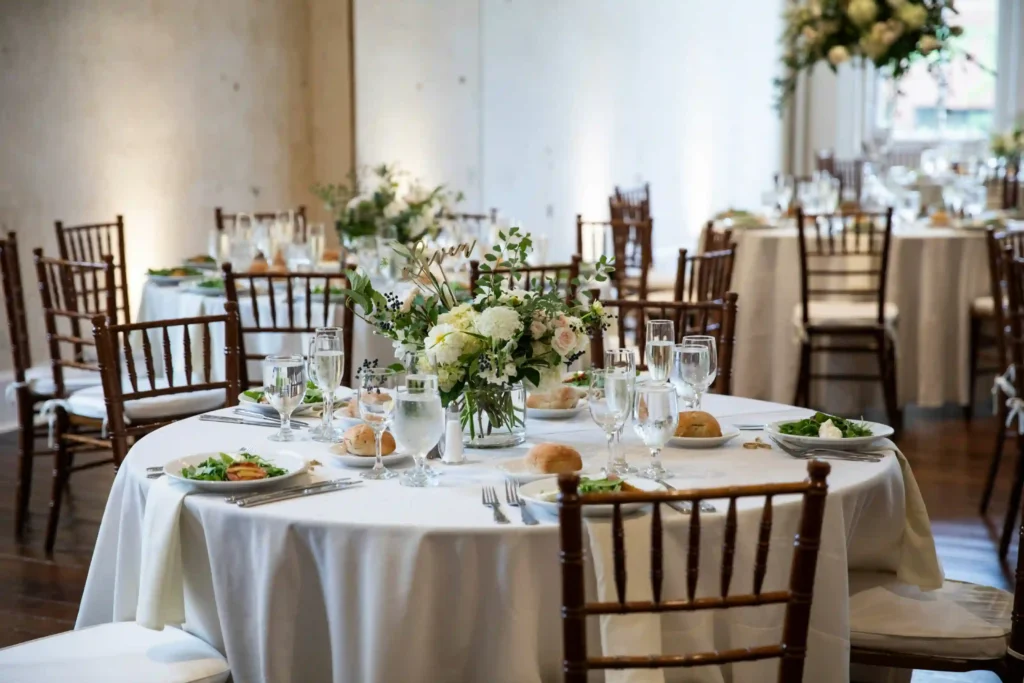
This guide covers everything you need to know to style circular wedding tables beautifully — from centerpiece concepts and linen layering to place setting arrangements, budget strategies, and DIY projects you can genuinely pull off at home.
Why Round Tables Work So Well at Weddings
Before diving into decoration specifics, it is worth understanding why circular tables have such enduring appeal in reception design.
They encourage conversation. At a rectangular table, guests interact primarily with the people directly beside them and occasionally across the narrow width. At a round table, everyone is within comfortable talking distance of everyone else at the table. This matters enormously for guests who do not know many people at the wedding.
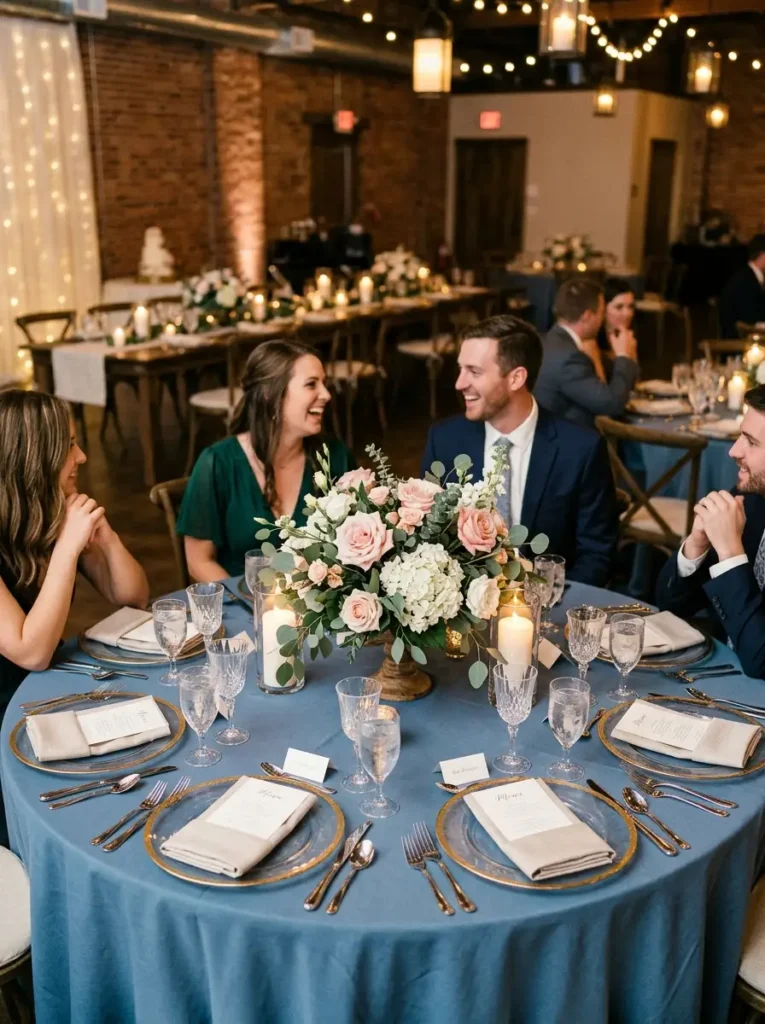
They photograph generously. A camera positioned anywhere in a reception venue can capture a round table from an angle that shows the full decoration — centerpiece, linens, place settings, and the faces of guests — simultaneously. Long rectangular tables can feel flat or one-dimensional in photographs from certain angles.
They scale naturally. A 60-inch round table seats eight guests comfortably. A 72-inch round seats ten. The circular shape distributes seating evenly without the awkward corner seats of a square or the stretched-thin feeling of a very long rectangle. Decorate chairs with aisle decor for more aesthetic view.
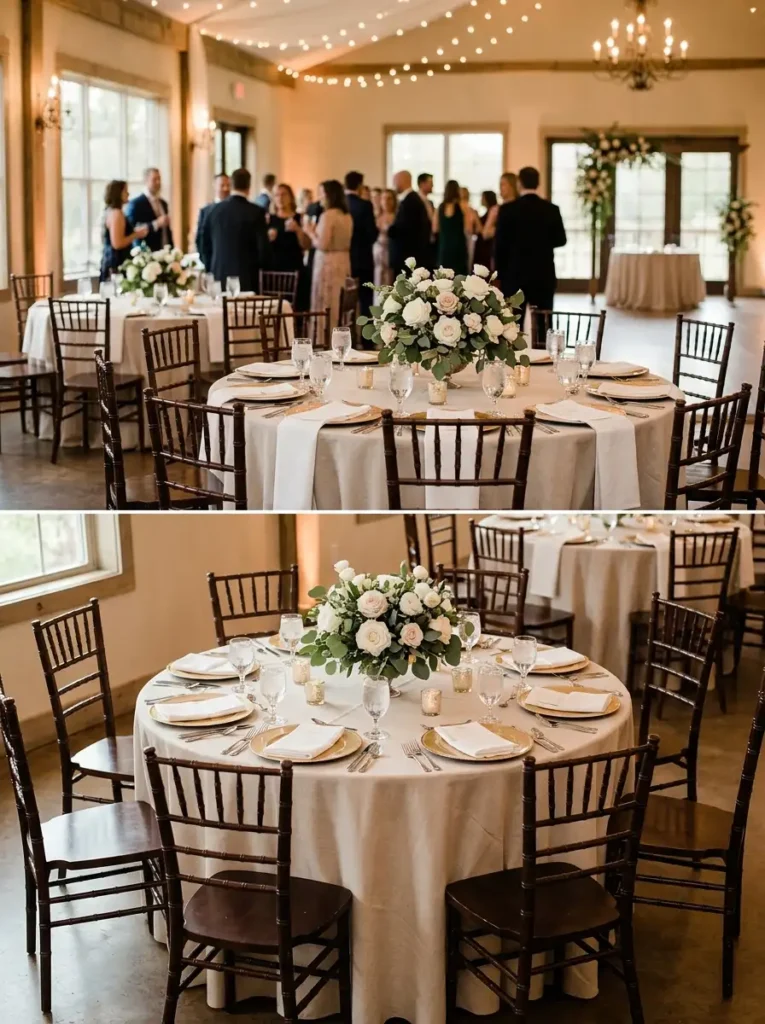
They suit nearly any venue. From intimate barn receptions to grand hotel ballrooms, round tables fit naturally into almost any floor plan without requiring careful arrangement to avoid dead-end seating positions.
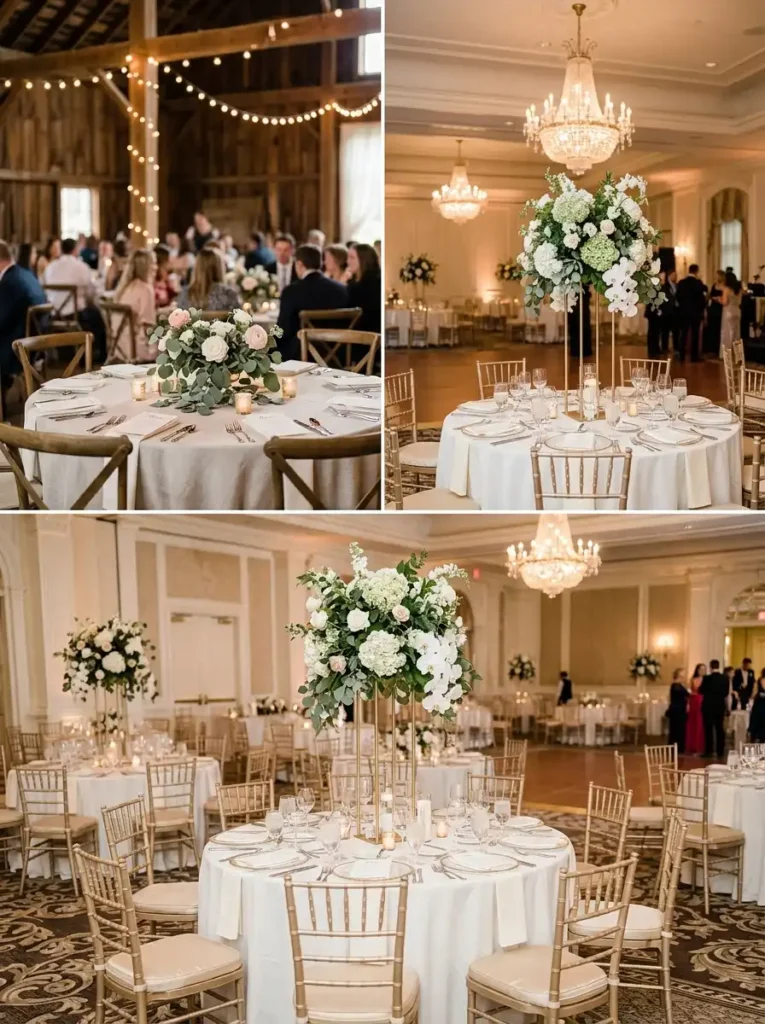
Understanding Your Table Dimensions First
Round wedding tables typically come in three standard sizes, and knowing which size you are working with affects every decoration decision you make.
48-inch rounds seat six guests and are most common at intimate events or for children’s tables. Centerpieces need to be appropriately scaled — a large floral arrangement on a 48-inch table leaves almost no room for place settings.
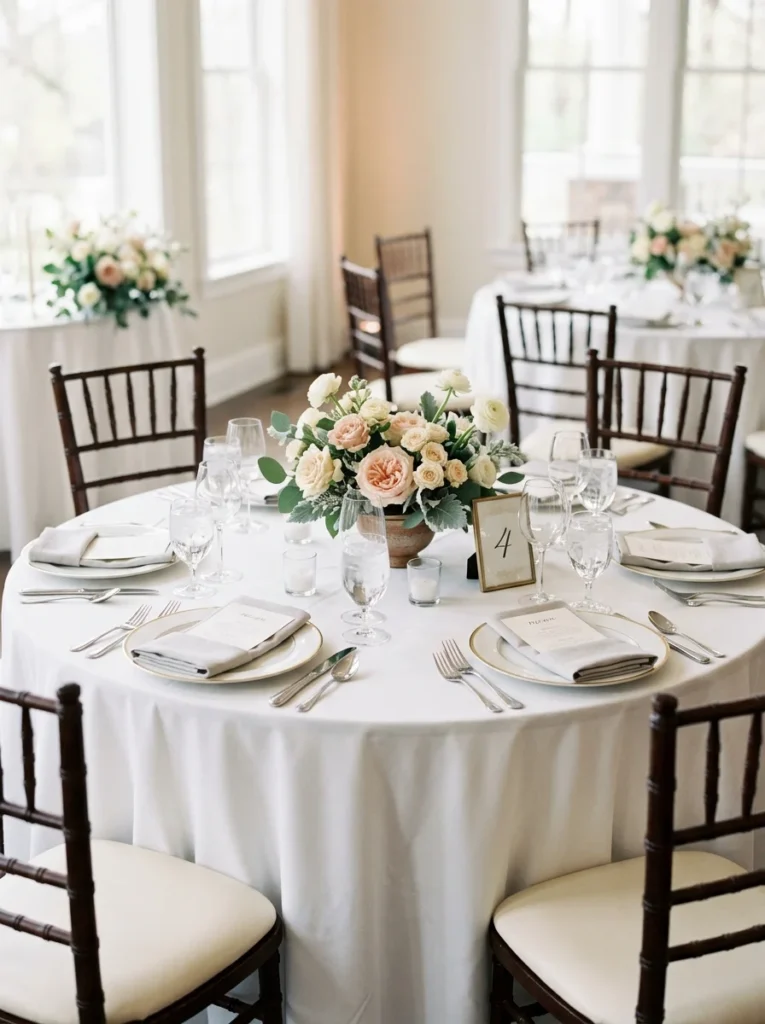
60-inch rounds are the most common wedding reception table and seat eight guests comfortably, up to ten with some elbow-sharing. This is the size most wedding décor advice is calibrated for.
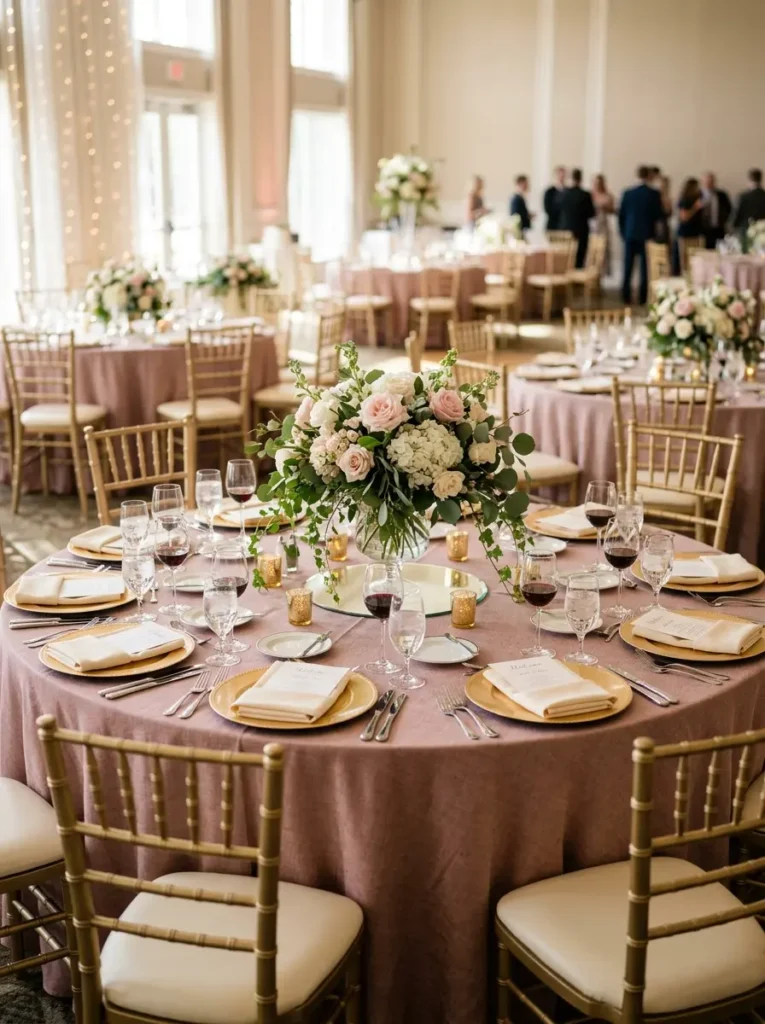
72-inch rounds seat ten to twelve guests and are typically used for larger receptions where guest count efficiency matters. These tables can support larger centerpieces without the arrangement overwhelming the space.
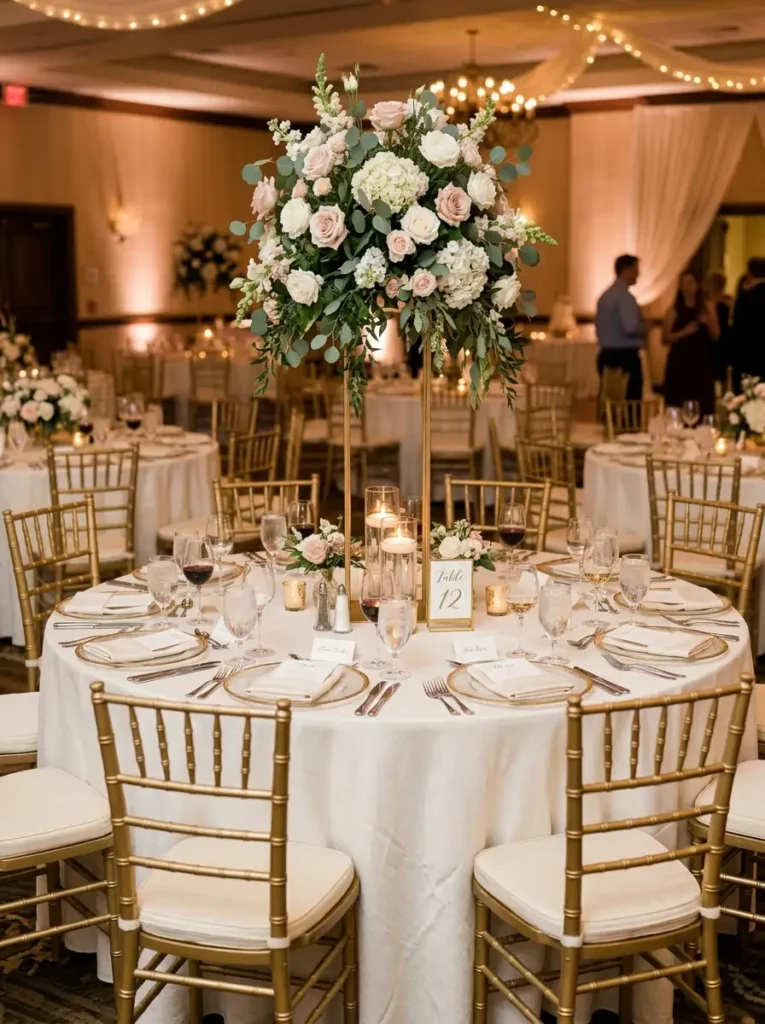
Measure your tables before purchasing linens, ordering florals, or planning centerpiece heights. A linen that drops beautifully to the floor on a 60-inch table may pool awkwardly or fall short on a 72-inch one.
Linen Layering: The Foundation of a Beautiful Round Table
Table linens are the single most impactful decision in round table decoration, and they are almost always undervalued in the planning process. The wrong linen can undermine even beautiful centerpieces. The right linen does half the decorative work before a single flower is placed.
Full-Length Tablecloths
A floor-length tablecloth — one that drops all the way to the ground on all sides — creates a finished, formal look that suits ballroom weddings, elegant garden events, and black-tie receptions. When all tables in a room have floor-length linens, the overall effect is one of deliberate luxury.
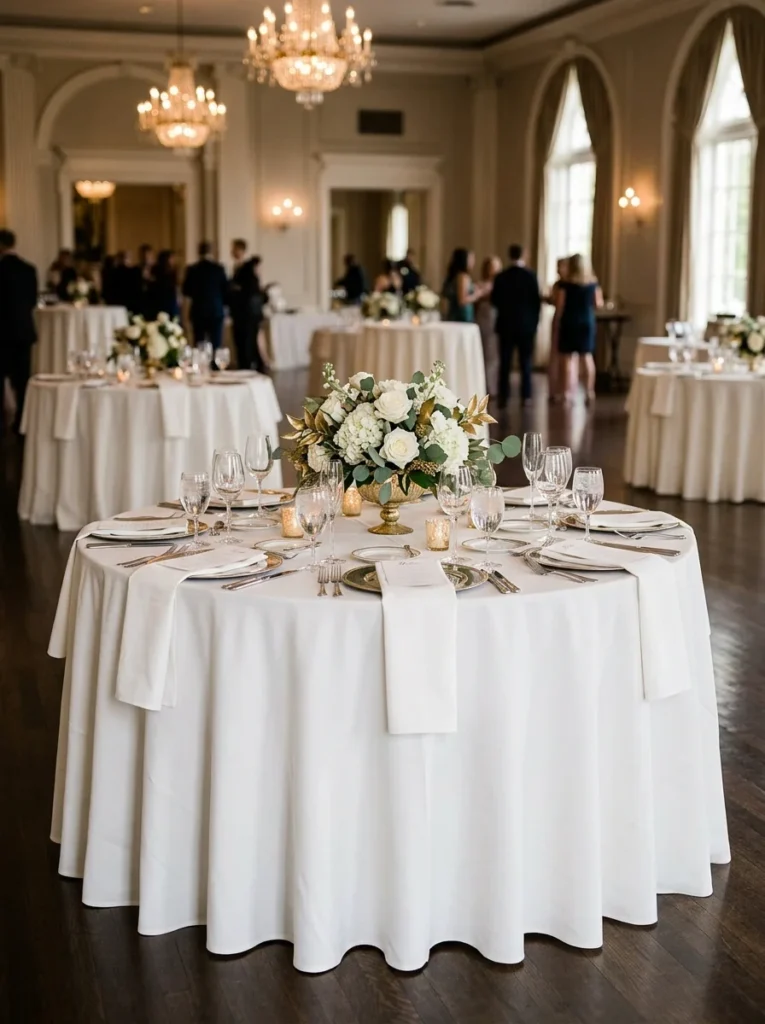
Standard tablecloth drops for a 60-inch round require a 120-inch round tablecloth to achieve a proper floor-length drop. This is worth double-checking with your rental company because the wrong size leaves an awkward gap between the hem and the floor.
Layered Linens
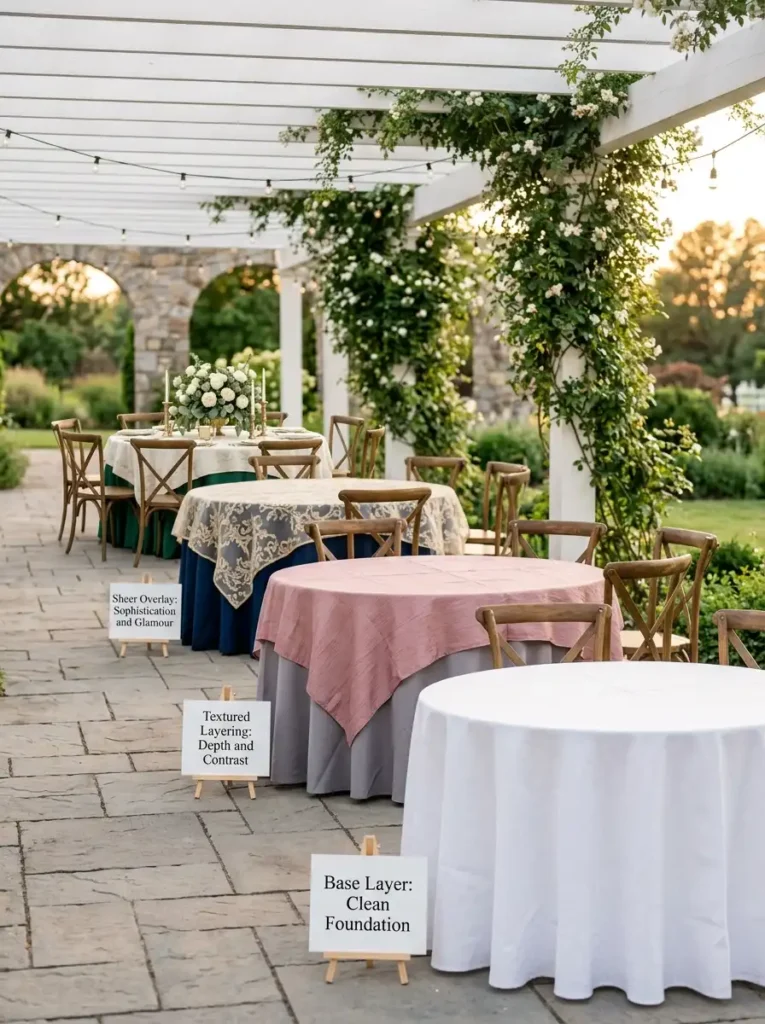
Layering a shorter decorative overlay on top of a full-length base cloth adds texture, color, and visual complexity without requiring elaborate centerpieces to do all the work.
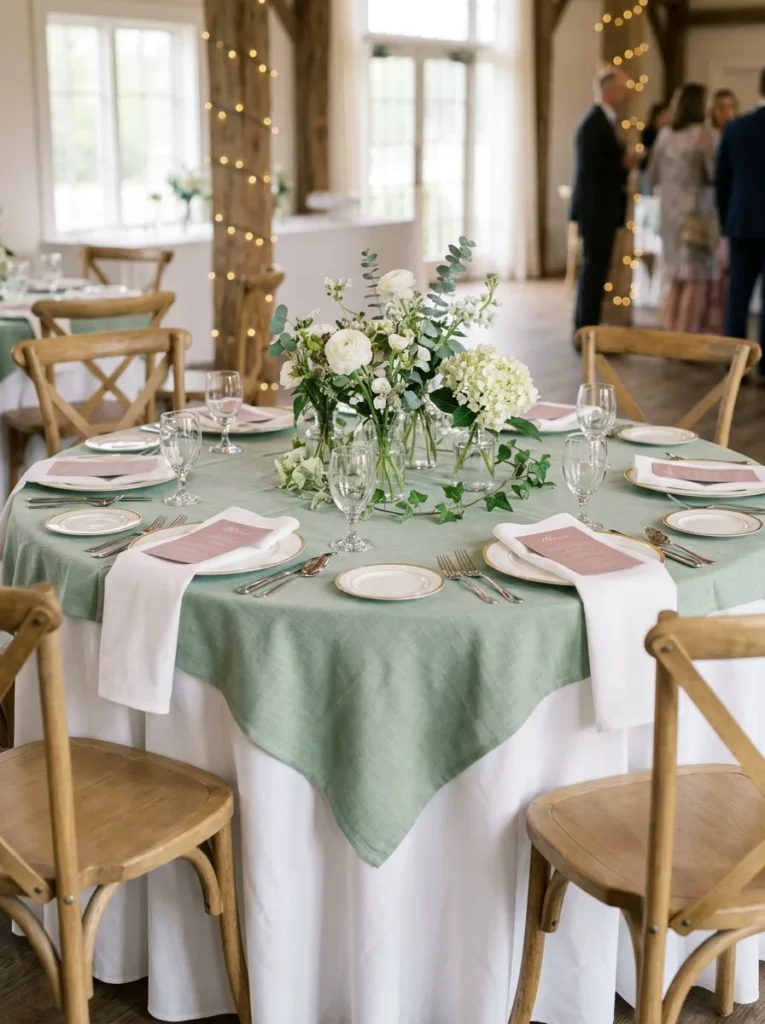
Popular layering combinations:
- White base cloth with a blush or sage overlay — clean, romantic, and extremely versatile
- Ivory base with a champagne sequin overlay — formal and celebratory for evening receptions
- White base with a linen or burlap overlay — relaxed and warm for rustic or outdoor settings
- Neutral base with a patterned or printed overlay — adds personality without requiring colorful florals
The overlay does not need to match the color of the florals — in fact, a deliberate contrast between the linen and the floral palette often produces a more sophisticated result than perfect color matching.
Runner Alternatives on Round Tables
Straight table runners are designed for rectangular tables, but their circular equivalent — a curved table runner, a garland of greenery laid across the diameter of the table, or a cluster of scattered petals radiating from the centerpiece — achieves a similar effect on a round surface.
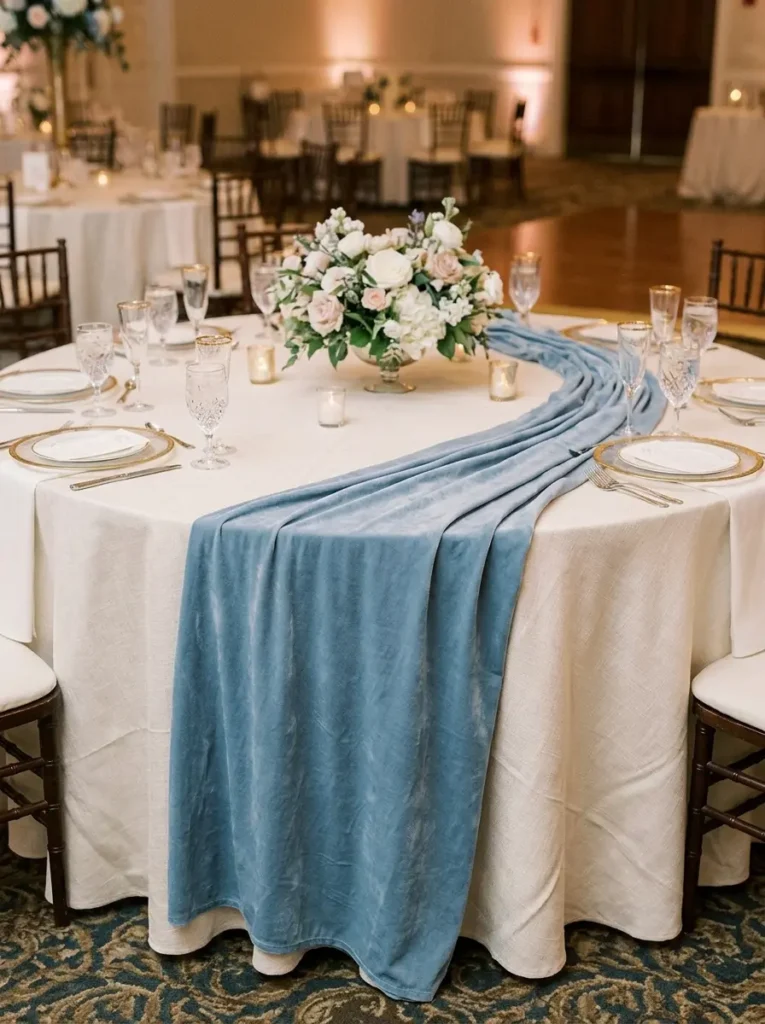
A length of eucalyptus or olive branch garland draped loosely across the table diameter and around the centerpiece base creates a natural, organic feel that suits garden and outdoor weddings particularly well.
Specialty Linens Worth Considering
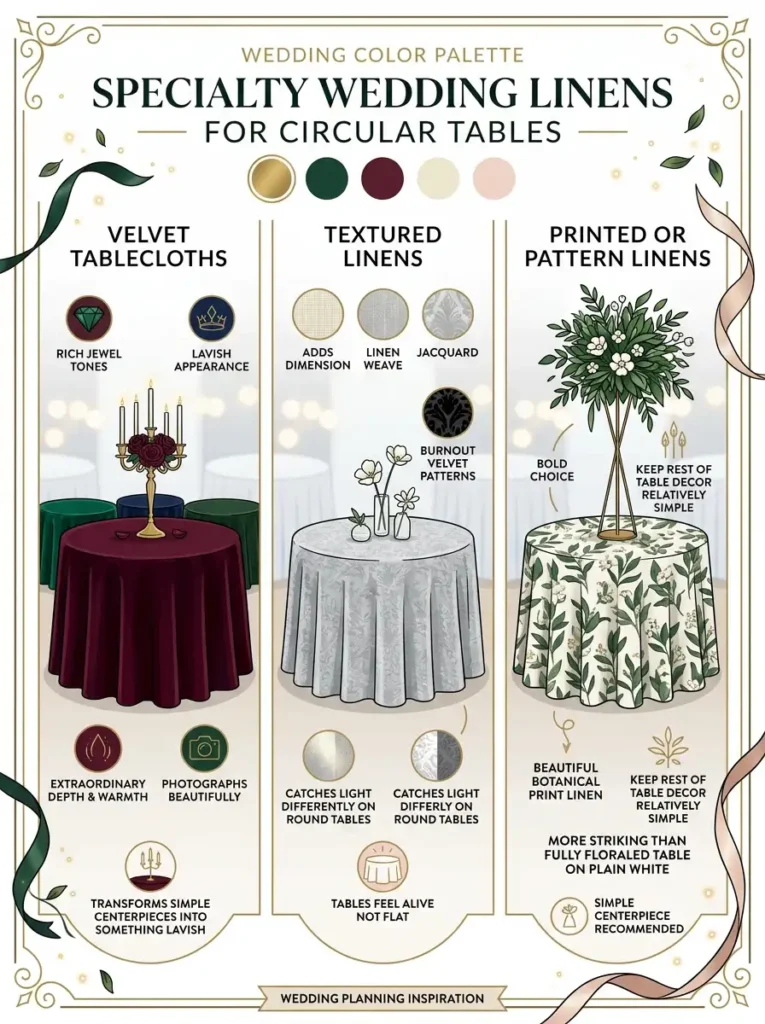
Velvet tablecloths in deep jewel tones — emerald, navy, burgundy, forest green — have a richness that transforms a simple centerpiece into something that looks truly lavish. They photograph with extraordinary depth and warmth.
Textured linens — linen weave, jacquard, or burnout velvet patterns — add dimension even in neutral colors. On a round table, texture catches light differently from different angles, which makes the table feel alive rather than flat.
Printed or pattern linens are a bold choice that works best when the rest of the table decoration is kept relatively simple. A beautiful botanical print linen with a single tall centerpiece can be more striking than a fully floraled table on plain white.
Centerpiece Concepts for Round Tables
The centerpiece is the heart of a round table’s decoration, and on a circular surface it carries more visual responsibility than it would on a rectangular one. There is no linear eye movement to distribute attention — everything leads back to the center.
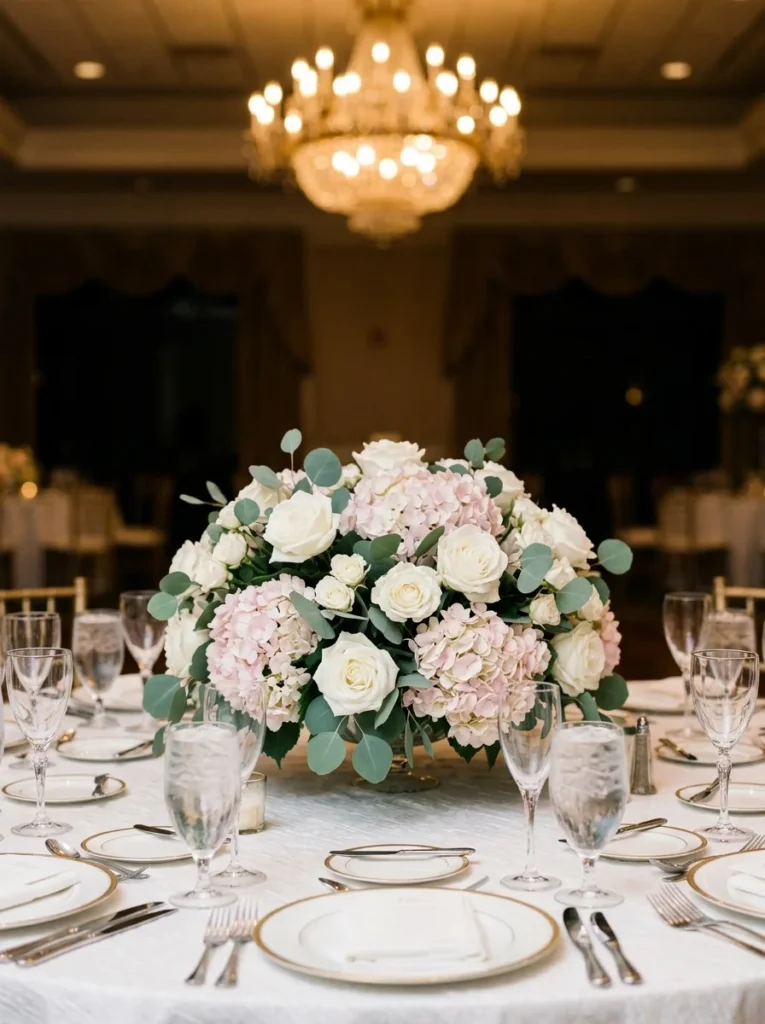
Tall Floral Arrangements
Tall centerpieces on round tables have a grandeur that is hard to match with any other approach. A single arrangement rising 24 to 36 inches above the table surface creates a vertical element that draws the eye upward and makes the entire reception space feel more dramatic.
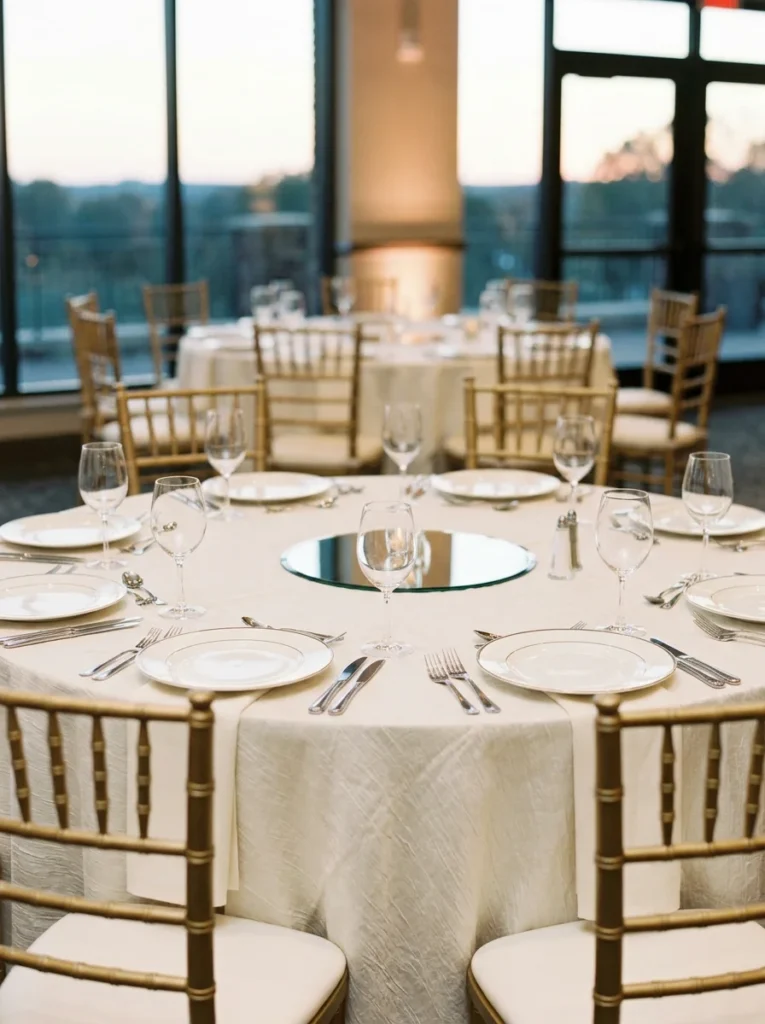
The key to a tall arrangement on a round table is scale. The arrangement needs to be substantial enough at the base to look grounded, not like a single stem wobbling in an oversized vase. A generous arrangement in a tall glass cylinder or urn with a proper proportion — roughly as wide at the base as it is tall — is the right approach.
Best flowers for tall round table arrangements: Garden roses, hydrangea, peonies, lisianthus, and delphinium all create lush volume. Add height with flowering branches — cherry blossom in spring, privet berry in fall, or simply budding branches at any time of year.
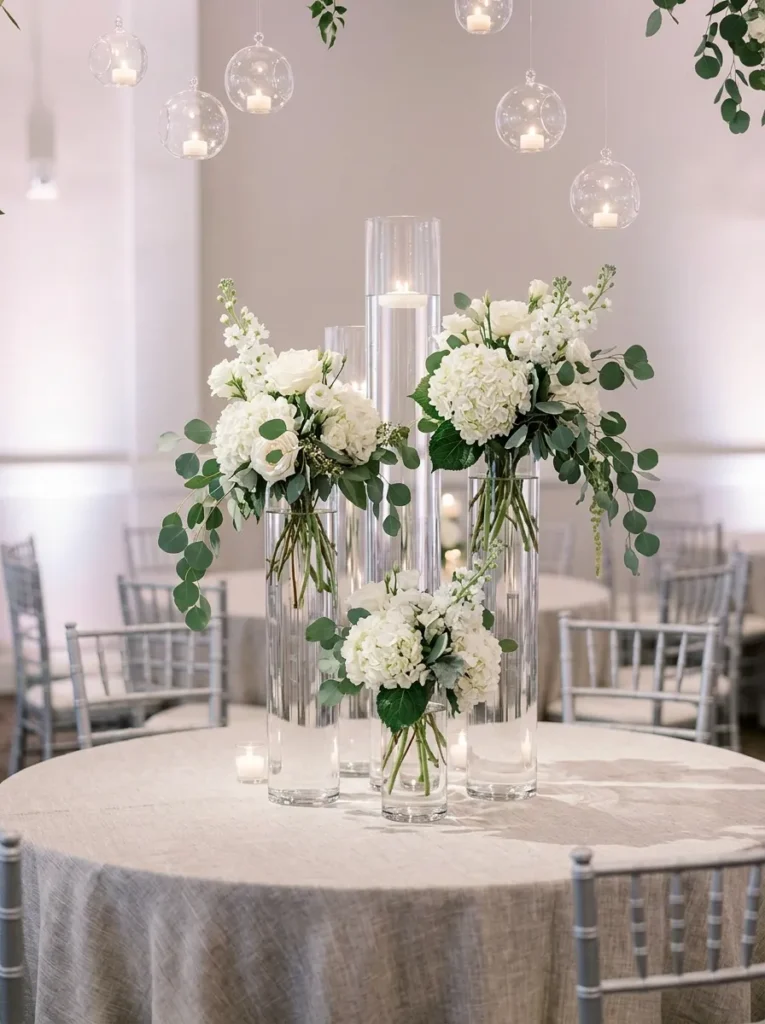
Best vessels for tall arrangements: Clear glass cylinders, mercury glass urns, aged brass vessels, white ceramic columns, and mirrored cube vases all work beautifully on round tables.
Low and Lush Arrangements
Where tall centerpieces make a statement with height, low arrangements make their statement with abundance. A centerpiece that sits at or just below seated eye level — roughly 10 to 14 inches at maximum — allows guests to see and talk to each other across the table while still providing generous visual presence.
Low arrangements work particularly well on round tables because the circular shape allows the arrangement to be viewed from all sides simultaneously. Unlike a tall arrangement where guests at certain seats may primarily see the back of the piece, a low arrangement has no back — it is equally beautiful from every position at the table.
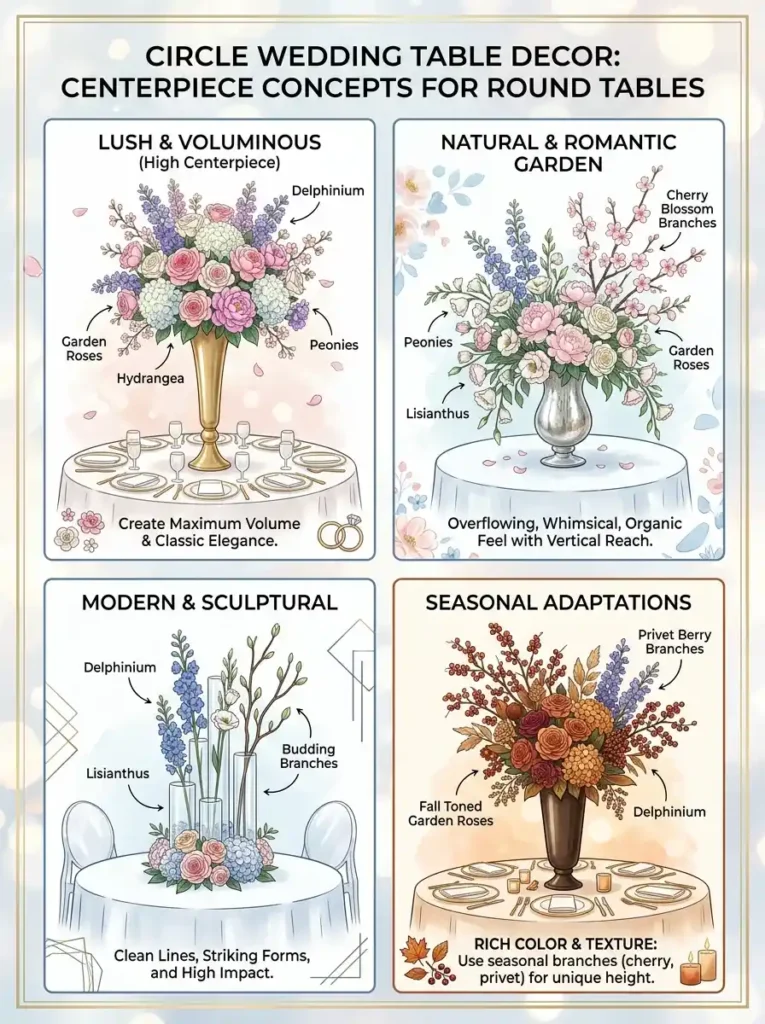
Styles for low arrangements:
- Garden style — a loose, abundant arrangement that spills over the vessel edge in all directions. Uses high-volume flowers like hydrangea, garden roses, ranunculus, and trailing sweet peas or jasmine.
- Compote style — a tighter, more formal arrangement in a footed vessel. Suits traditional and classic wedding aesthetics.
- Cluster style — several small vessels grouped together at the center of the table rather than one large arrangement. Creates a collected, curated look.
Candle-Forward Centerpieces
Not every round table needs a floral centerpiece. Candle-dominant arrangements — particularly arrangements that combine pillar candles in varying heights with small floral accents and greenery — have a warmth and intimacy that pure floral arrangements sometimes cannot match.
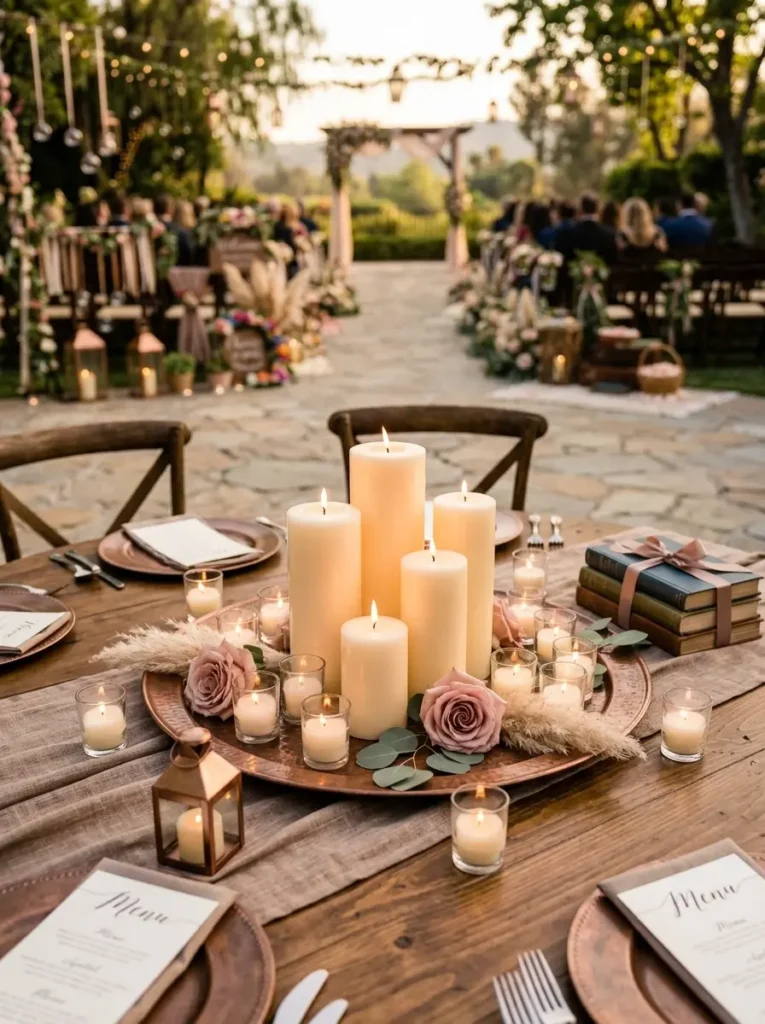
A cluster of three to five pillar candles in graduated heights, surrounded by scattered votives, a few rose heads, and loose greenery creates a dinner party atmosphere that feels genuinely romantic.
For outdoor evening receptions, a candle-dominant centerpiece with hurricane glass covers glows beautifully against the darkening sky in a way no floral arrangement can replicate.
Candle safety note: Check your venue’s open flame policy before committing to candle arrangements. Many venues now require enclosed candles or ban real flames entirely. High-quality flameless LED pillar candles have improved dramatically and are a genuinely good substitute in venues with restrictions.
Greenery and Botanical Centerpieces
For couples who want a lush, garden-immersed look without the cost of high-volume florals, greenery-forward centerpieces use a larger proportion of foliage to create volume, with flowers used more selectively as accent rather than foundation.
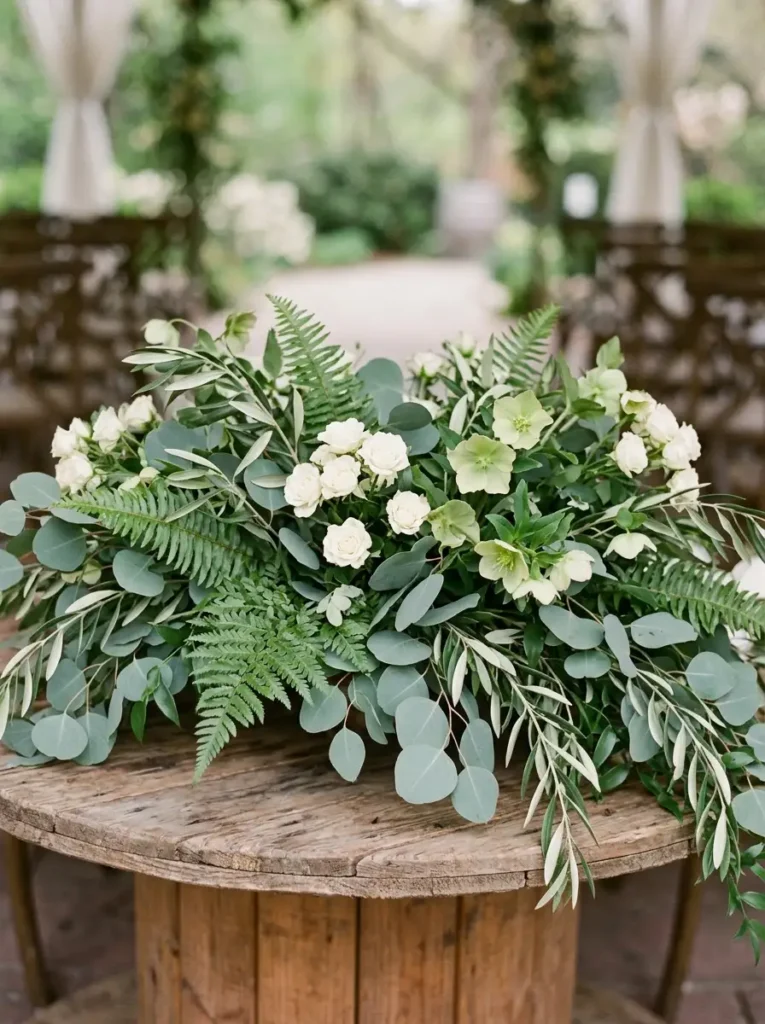
Eucalyptus, fern, Italian ruscus, camellia foliage, and olive branches all create beautiful base structures. Adding 20 to 30 percent florals to a primarily green arrangement still reads as lush and abundant — just in a more architectural, textural way.
Lantern and Non-Floral Centerpieces
Round tables are also well-suited to non-floral centerpiece concepts that use objects rather than arrangements as the visual anchor.
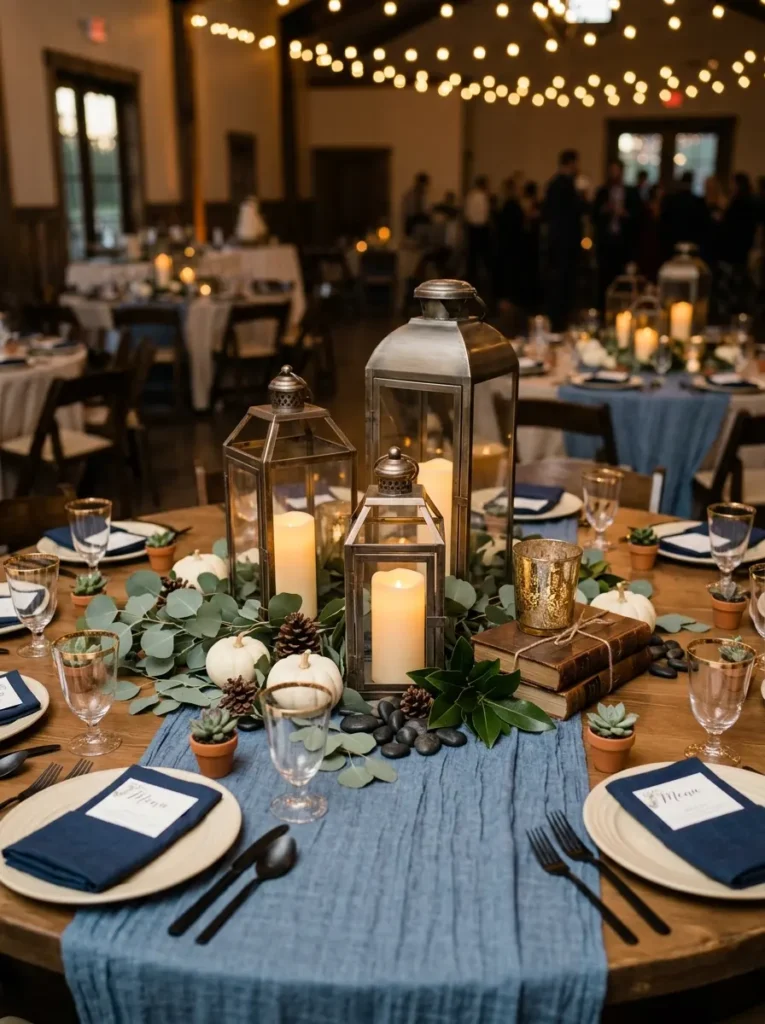
Lantern groupings — two or three lanterns in complementary sizes placed at the table center with small floral accents or greenery around their bases — create a warm, romantic look that requires very little floral budget.
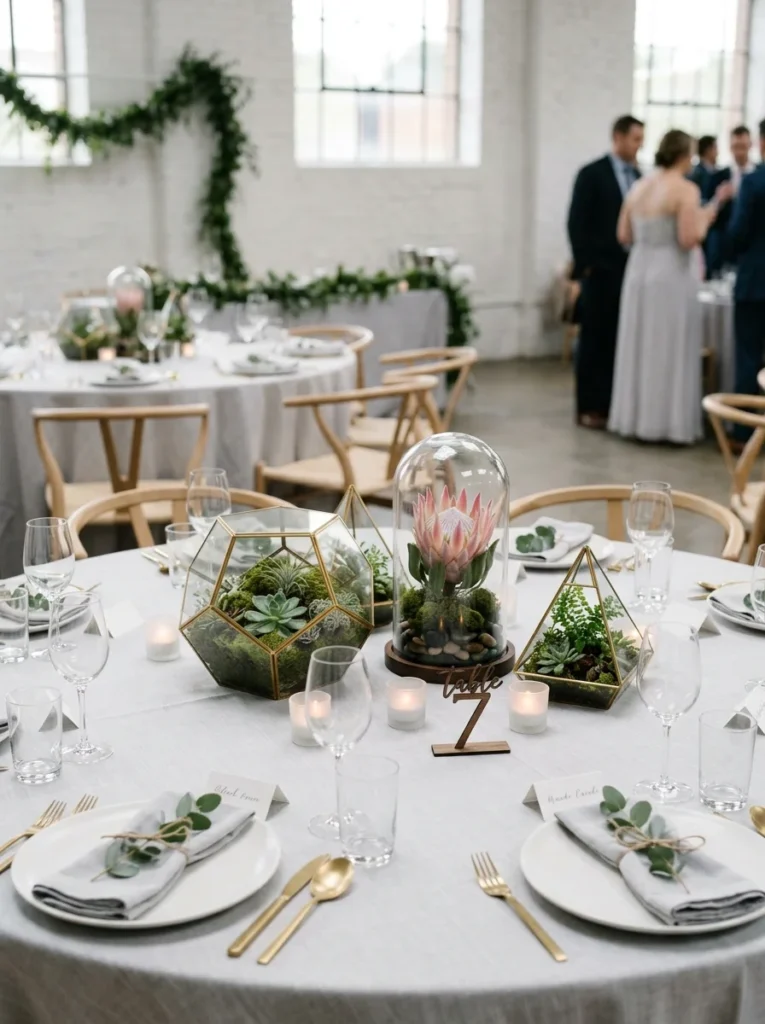
Terrarium installations — glass geometric shapes or bell jar terrariums filled with moss, succulents, or a single dramatic bloom — suit modern and minimalist weddings beautifully.
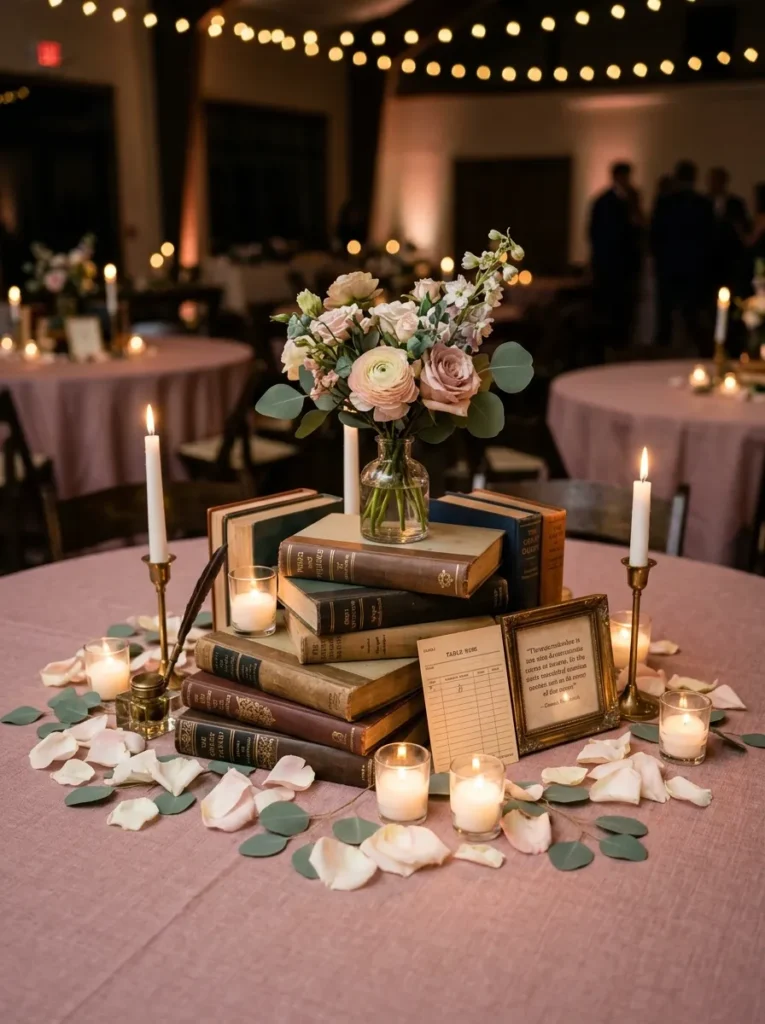
Book stacks and object installations — for literary or theme-forward weddings, a stack of beautiful vintage books topped with a small vase of flowers, surrounded by candles and scattered petals, creates a centerpiece that tells a story.
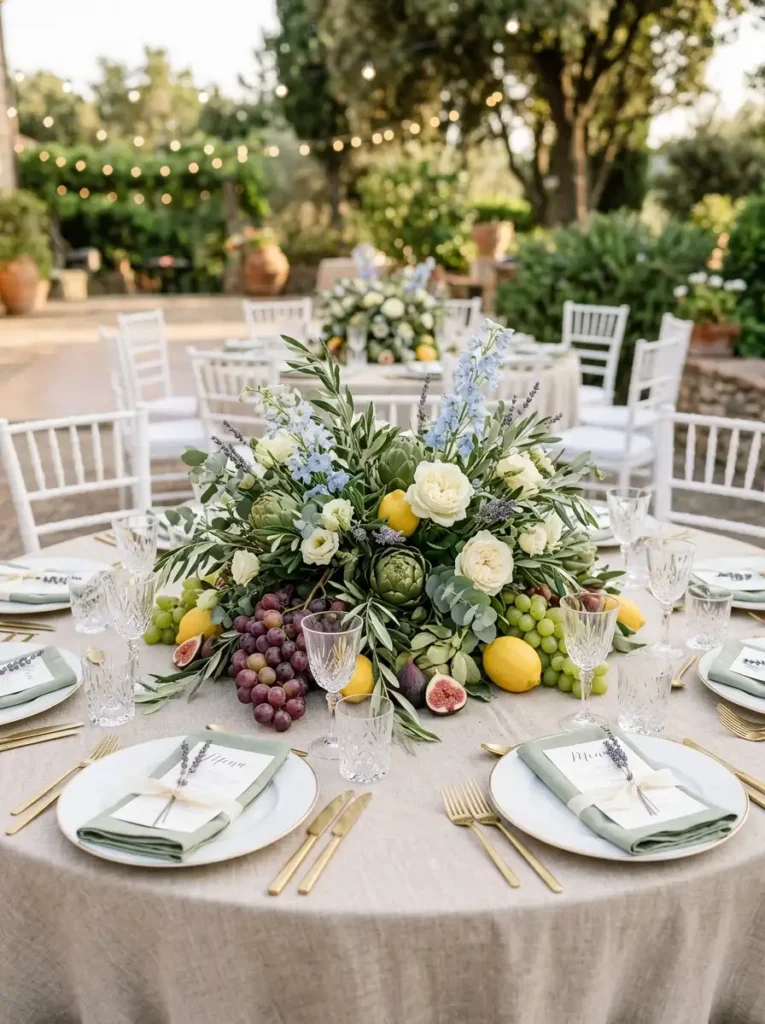
Fruit and botanical arrangements — lemons, figs, grapes, artichokes, and other seasonal produce mixed with greenery and flowers have a lush Mediterranean quality that suits summer outdoor receptions particularly well.
Place Settings on Round Tables
The way place settings are arranged around a round table matters more than most people realize. Each setting should feel equally cared for regardless of where a guest sits.
The Standard Place Setting Layout
Working from the plate outward:
Dinner plate — centered at each position, approximately one inch from the table edge.
Napkin — folded and placed on the dinner plate, or to the left of the forks for a more formal arrangement.
Forks — to the left of the plate. Salad fork on the outside, dinner fork closer to the plate.
Knife and spoon — to the right of the plate. Knife closest to the plate with the blade facing inward, soup spoon to the right of the knife.
Glassware — above the knife position. Water glass directly above, wine glass slightly to the right.
Bread plate and butter knife — above and to the left of the forks if included.
On a round table, place settings naturally curve with the table edge. Resist the temptation to straighten everything into a rigid line — the slight arc of the setting positions is what gives a round table its graceful, flowing character.
Charger Plates
Charger plates — large decorative base plates placed under the dinner plate — add a layer of formality and visual presence to any table setting. Gold chargers are the most popular wedding choice and work with almost any color palette. Silver chargers suit cooler palettes and more modern aesthetics. Hammered metal, rattan, and acrylic chargers all offer different aesthetic feels.
On a round table, chargers have an especially pleasing effect because the circular charger echoes the circular table shape, creating a visual rhythm of concentric circles from the table’s center outward.
Napkin Folds and Presentations
The napkin is a small detail that delivers outsized visual impact because it is literally in the center of each guest’s place setting.
Simple fold options that always work:
- Rectangle fold — the napkin folded into thirds and placed horizontally on the plate. Clean, minimal, modern.
- Pocket fold — a rectangular pocket shape into which you tuck a menu card or sprig of herbs. Practical and polished.
- Bishop’s hat fold — a standing fold that adds height to each place setting. More elaborate but very striking in a row.
- Fan fold — folded into a fan and placed upright in the water glass. Elegant and visible from a distance.
Napkin accents: A single flower stem, a sprig of rosemary or lavender, a small ribbon tie, or a seeded name card tucked into the napkin fold adds a personal touch that costs almost nothing but photographs beautifully.
Name Cards and Seating Markers
On a round table, name cards serve both a practical function (directing guests to their seats) and a decorative one. The style of name card should match the overall aesthetic of the table.
Popular name card formats for round table settings:
Escort cards in small frames — tiny easel-back frames with hand-lettered names look formal and personal simultaneously.
Leaf or petal cards — names written on real leaves (magnolia leaves work beautifully) or cut-paper petal shapes for botanical-themed weddings.
Herb bundles with tags — a small bundle of fresh rosemary, thyme, or lavender with a name tag attached serves as both a place marker and a fragrant favor.
Stone or wood slice cards — guests’ names written on small river stones or thin wood rounds have a natural, tactile quality that guests almost always take home.
Acrylic name cards — clear acrylic rectangles with gold or white lettered names suit modern wedding aesthetics and look striking against any linen color.
Decorative Accents That Complete a Round Table
Beyond the centerpiece and place settings, small decorative accents around the table surface fill visual gaps and create a sense of completion.
Scattered Elements
Loose petals, small votive candles, scattered greenery sprigs, decorative stones, or flower heads placed organically across the table surface between place settings create a sense of generous abundance without requiring additional formal arrangements. This technique works particularly well on round tables because the circular surface distributes these elements naturally in all directions from the center.
Table Numbers and Names
The table number or name sign on a round table is typically placed near the centerpiece, visible from multiple approach angles rather than just one end. Small acrylic stands, miniature easels, or tall wire holders that rise above the centerpiece base all work well.
For themed weddings, table names rather than numbers add personality — song titles, travel destinations, book titles, or meaningful dates all make excellent table naming systems.
Menus
Individual printed menus at each place setting add a layer of formality and help guests navigate any dietary options. On a round table, menus can be tucked into the napkin fold, propped against the water glass, or placed on top of the charger plate beneath the dinner napkin.
Keep menu card design consistent with your overall stationery suite — the paper weight, font choice, and color palette should feel like they belong to the same family as your invitations and other printed materials.
Specialty Accents by Wedding Theme
Romantic classic: Pearl-headed pins in napkins, scattered rose petals, crystal votive holders, gold-rimmed glassware.
Garden and botanical: Pressed flower menu cards, herb bundle name cards, terracotta charger plates, scattered wildflower heads.
Modern minimalist: Geometric votive holders, single-stem bud vases at each setting, matte black flatware, linen napkins with a simple knot.
Rustic and barn: Mason jar votives, burlap napkin rings, wood slice table numbers, sprig of wheat tucked into each napkin.
Coastal: Driftwood accents, sand-dollar name cards, rope napkin rings, sea glass scatter elements.
Maximalist and bold: Layered linen colors, bold floral chargers, tapered candles in jewel-tone holders, abundant scatter petals.
DIY Round Table Decoration Projects
Floating Candle Centerpiece
Fill a large glass cylinder or fishbowl vase with water. Float three to five flower heads (roses or gardenias work beautifully) on the surface alongside two or three floating candles. Add a ring of small votive candles around the base of the vessel. Total cost per table: $8 to $15.
Terrarium Cluster Centerpiece
Purchase three small glass geometric terrariums in different sizes. Fill with a combination of moss, a single small succulent, and a few drops of water to keep moss green. Cluster the three terrariums at the table center and surround with small tea lights. Reusable and zero floral budget required.
Herb and Greenery Runner
Purchase bundles of fresh eucalyptus, rosemary, and olive branches. Lay them flat across the table diameter and around the centerpiece base in a loose, organic arrangement. Add flower heads from grocery store bundles tucked among the greenery for color. Fragrant, beautiful, and extremely affordable.
Lantern and Wildflower Centerpiece
Place a medium lantern at the table center with a battery pillar candle inside. Surround the lantern base with a ring of small bud vases (identical clear glass vials work well) each holding one or two wildflower stems. Scatter a few flower heads and a handful of petals around the bud vases. This centerpiece can be assembled the morning of the wedding in under ten minutes per table.
Book Stack Centerpiece
Collect vintage hardcover books in complementary colors. Stack three to five books at the table center, largest at bottom. Place a small clear vase with three to five flower stems on top. Add a cluster of votive candles around the book base. Suits literary, academic, and eclectic wedding aesthetics beautifully.
Budget Planning for Round Table Decoration
| Element | Budget Range Per Table |
|---|---|
| Linen rental (base cloth) | $8 – $25 |
| Decorative overlay | $10 – $30 |
| Charger plates (rental) | $1.50 – $4 per plate |
| Low floral centerpiece (florist) | $65 – $150 |
| Tall floral centerpiece (florist) | $120 – $300+ |
| DIY greenery centerpiece | $15 – $35 |
| Candle centerpiece (DIY) | $10 – $25 |
| Votive candles (6–8 per table) | $8 – $20 |
| Name cards | $0.50 – $3 per card |
| Printed menu cards | $1 – $4 per menu |
| Scatter elements (petals, stones) | $5 – $15 |
A fully decorated round table for eight guests — linen, chargers, a mid-range florist centerpiece, votives, name cards, and scatter petals — typically costs between $120 and $280 per table at current pricing. DIY-forward approaches can bring that number down to $40 to $80 per table without sacrificing visual impact.
Common Mistakes to Avoid
Centerpieces that block conversation. A centerpiece at exactly seated eye level — roughly 18 to 22 inches above the table surface — is the worst possible height. Go either clearly below (10 to 14 inches maximum) or clearly above (24 inches minimum) seated eye level. The in-between zone creates a visual wall that guests spend the whole evening leaning around.
Undersized linens. A tablecloth that barely covers the table surface looks unfinished and draws attention to the table legs. Always confirm the drop length before finalizing your linen order.
Overcrowding the table surface. It is tempting to add more elements — more candles, more scatter petals, more accent pieces — but a round table has finite surface area that has to accommodate eight place settings. Overcrowding leaves guests with nowhere to put their bread plate, their wine glass, and the accumulated items of an evening at the table.
Ignoring the view from every seat. Walk around your styled table before finalizing anything. Sit at each position. The centerpiece should not have a good side and a bad side. A lantern placed slightly off-center looks intentional from some seats and sloppy from others.
Mismatched heights across tables. If some tables have tall centerpieces and others have low ones, the reception room looks inconsistent and unplanned unless the variation is clearly intentional and systematically applied. Decide on a centerpiece approach and apply it consistently, or create a deliberate alternating pattern of tall and low.
Making Every Guest Feel Considered
Here is something that rarely gets said in wedding decoration guides: the decorations on a reception table are not primarily for the photographs. They are for the people sitting at that table for three or four hours.
That means the centerpiece height matters for conversation. The candle placement matters for ambiance without being a fire hazard near draped sleeves. The scatter elements should not be so abundant that there is no space to set down a cocktail. The name card should be easy to find.
When decoration decisions are made with the actual experience of sitting at the table in mind — not just the editorial photograph of it — the result is something that people feel as well as see. And that feeling, more than any specific element, is what guests describe when someone asks them how the wedding was.
A beautifully styled round table says: we thought about you. We wanted you to be comfortable here. We wanted your evening to be beautiful.
That is ultimately what all of this is for.