I want to start by saying something that most wedding planning content won’t: backyard weddings are genuinely wonderful. I’ve seen them done beautifully on budgets that would make a traditional venue coordinator wince, and I’ve watched guests leave those celebrations more moved than they’ve been at black-tie events costing five times as much.
But I’ve also seen them go sideways — not catastrophically, not in ways that ruined anyone’s day, but in ways that added unnecessary stress, cost extra money at the last minute, and created problems that were entirely avoidable with a bit of foreknowledge.
That’s what this post is about. Not discouraging you from a backyard wedding — I think you should absolutely do it if it fits your vision — but giving you the honest, experience-backed list of what actually trips couples up so you can clear every one of those hurdles before the day arrives.
If you’re still in the inspiration phase, I have a full guide to backyard wedding ideas that covers everything from ceremony setups to food stations and lighting. Come back here once you’re ready to plan seriously.
Mistake 1: Not Checking Council Permits and Noise Regulations Early Enough
This is the one that surprises people most, because it doesn’t feel like it should be complicated. It’s your backyard (or your parents’ backyard). Why would you need permission?
In many areas, you do. Noise ordinances set decibel limits and time-based restrictions — often as early as 10pm on weekends — that can legally require your DJ to stop mid-reception. Some local councils require event permits for gatherings above a certain size. Marquee or tent structures above a certain square footage sometimes require building permits. None of these things are insurmountable, but they all take time to navigate and can cost you in fines if you simply ignore them.
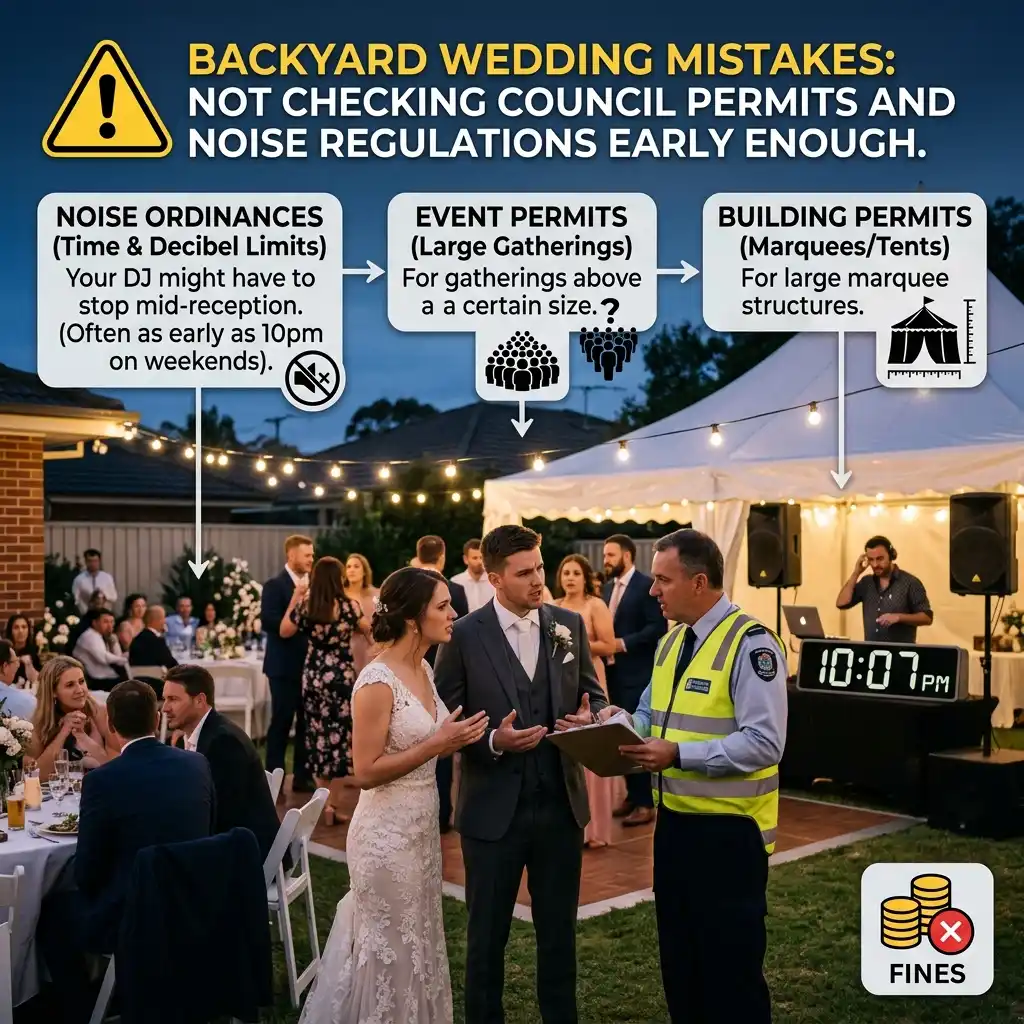
The fix: Contact your local council at least three months before the wedding and ask specifically about: noise ordinances, temporary structure permits, and any requirements for gatherings above your expected guest count. Get everything in writing. If you need to apply for anything, start the process immediately — council timelines rarely align with wedding timelines.
Mistake 2: Underestimating Power Needs
This one has ruined more backyard wedding evenings than almost anything else on this list. You’ve strung the fairy lights. The DJ has set up. The catering team has arrived with their equipment. And then someone switches something on and the entire property trips its circuit breaker.
A standard household power supply is not designed to run string lights across a large area, a professional sound system, catering warmers, a coffee station, fairy light canopies, and refrigeration units simultaneously. Not even close.
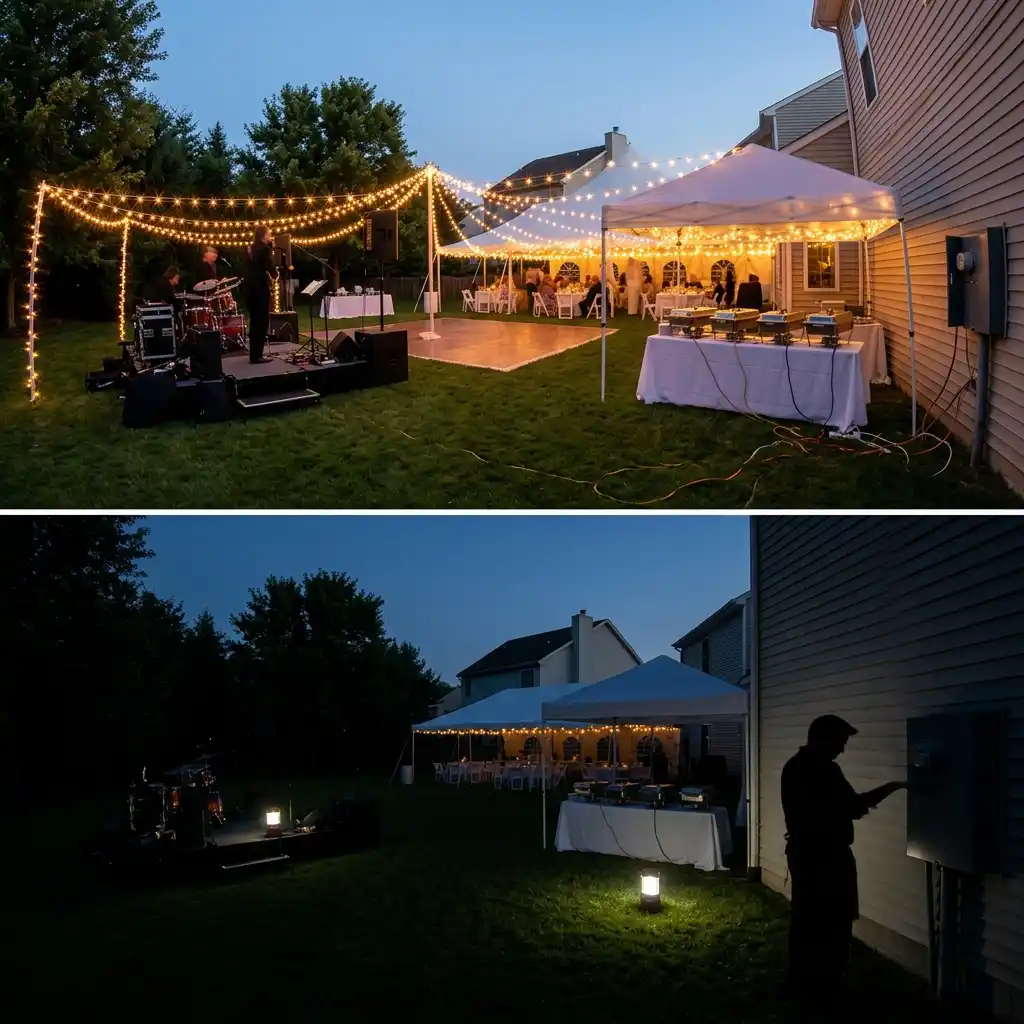
The fix: Before booking anything that uses power — your DJ, your caterer, your lighting hire — ask each supplier for their power draw in watts or amps. Add up the total. Then call an electrician to assess whether your property can handle that load, or whether you need a hired generator. A generator hire typically runs $150–$400 for the day and is one of the most straightforward problems to solve when you plan for it in advance.
Mistake 3: Skipping the Weather Contingency
Every couple planning an outdoor wedding thinks: we’ll be fine. It’s summer. It’s a beautiful property. The forecast looks clear.
I’ve spoken to couples who had their reception flooded by an unexpected afternoon storm, their ceremony cut short by wind that knocked over an unsecured arch, and their guest seating turned into a mud situation by rain the night before. None of them expected it. All of them wished they’d planned for it.
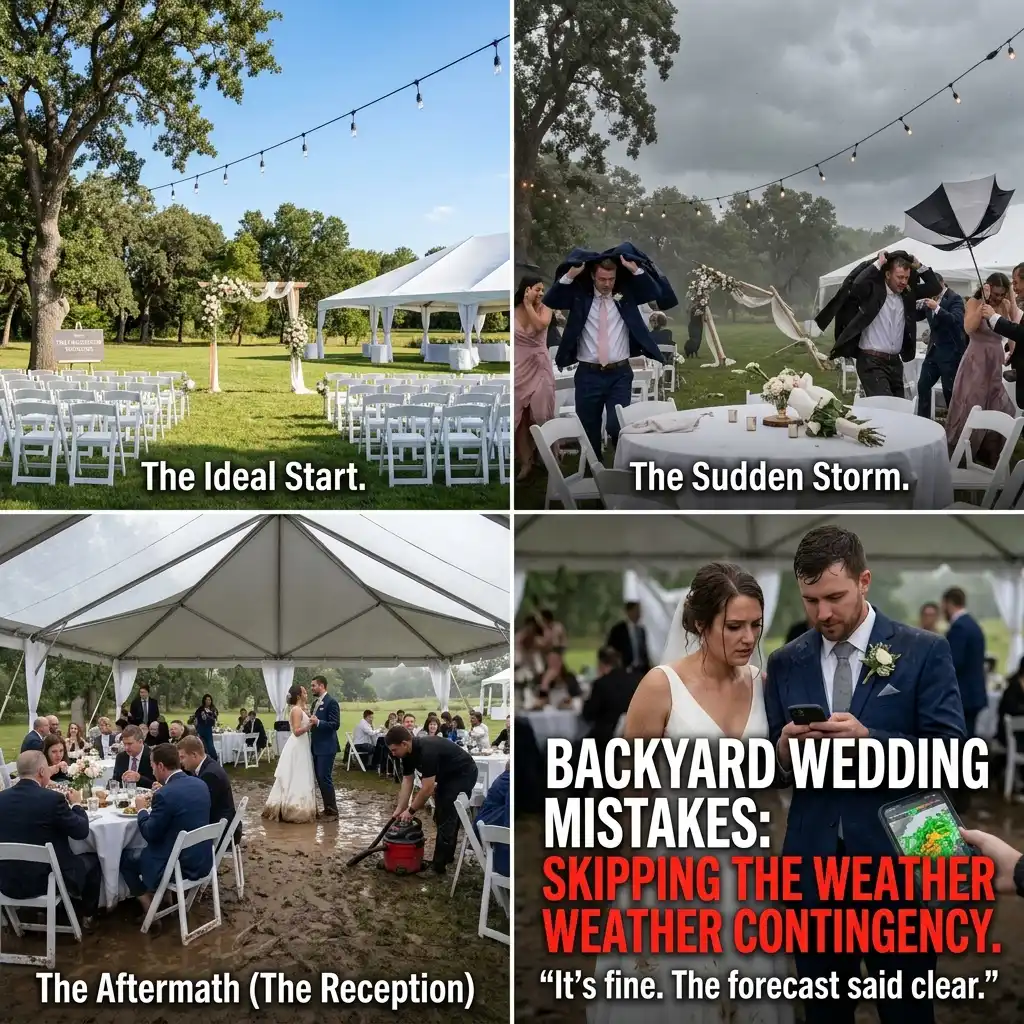
The fix: Book a marquee or stretch tent even if you don’t think you’ll need it. A tent with open sides preserves the outdoor atmosphere while providing cover for rain. For extreme heat, hire outdoor fans or a misting system. For wind, stake down or weight every piece of décor that could move. Check the forecast obsessively in the two weeks before the wedding, but plan as if the weather will be unpredictable regardless of what it says.
Mistake 4: Not Providing Enough Toilets
This is the one hosts feel awkward about and therefore avoid thinking about — and it’s always a problem when they do.
Your home bathroom is not equipped to serve eighty guests over a four-hour reception. The queue will form within the first hour. Guests will notice. Someone will complain. It creates a low-level logistical discomfort that runs through the entire event like background noise.
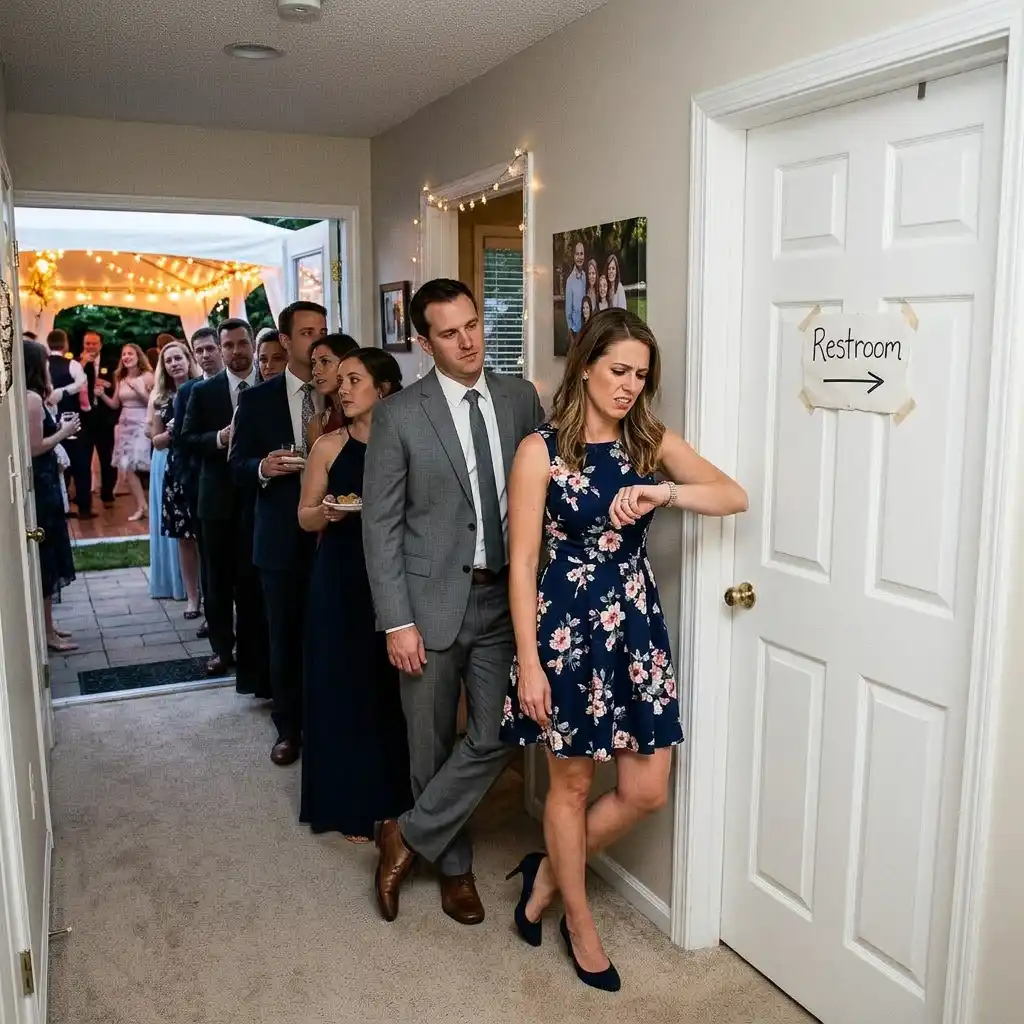
The fix: Hire portable toilets for any guest count above thirty to forty, and be specific with your hire company that it’s a wedding. Modern event-grade portable toilet units are clean, properly lit, and nothing like the plastic boxes you’ve seen at a construction site. Screen them from the main event space with a temporary fence, a row of potted plants, or a fabric panel. Budget $300–$800 depending on the number of units and the duration of hire.
Mistake 5: Forgetting About the Ground Surface
You’ve imagined the ceremony on that beautiful stretch of lawn. What you haven’t imagined is twenty women in heels trying to walk across it, the way damp grass in the morning creates muddy patches by afternoon, or the way an uneven surface makes dancing genuinely difficult and slightly dangerous by the evening.
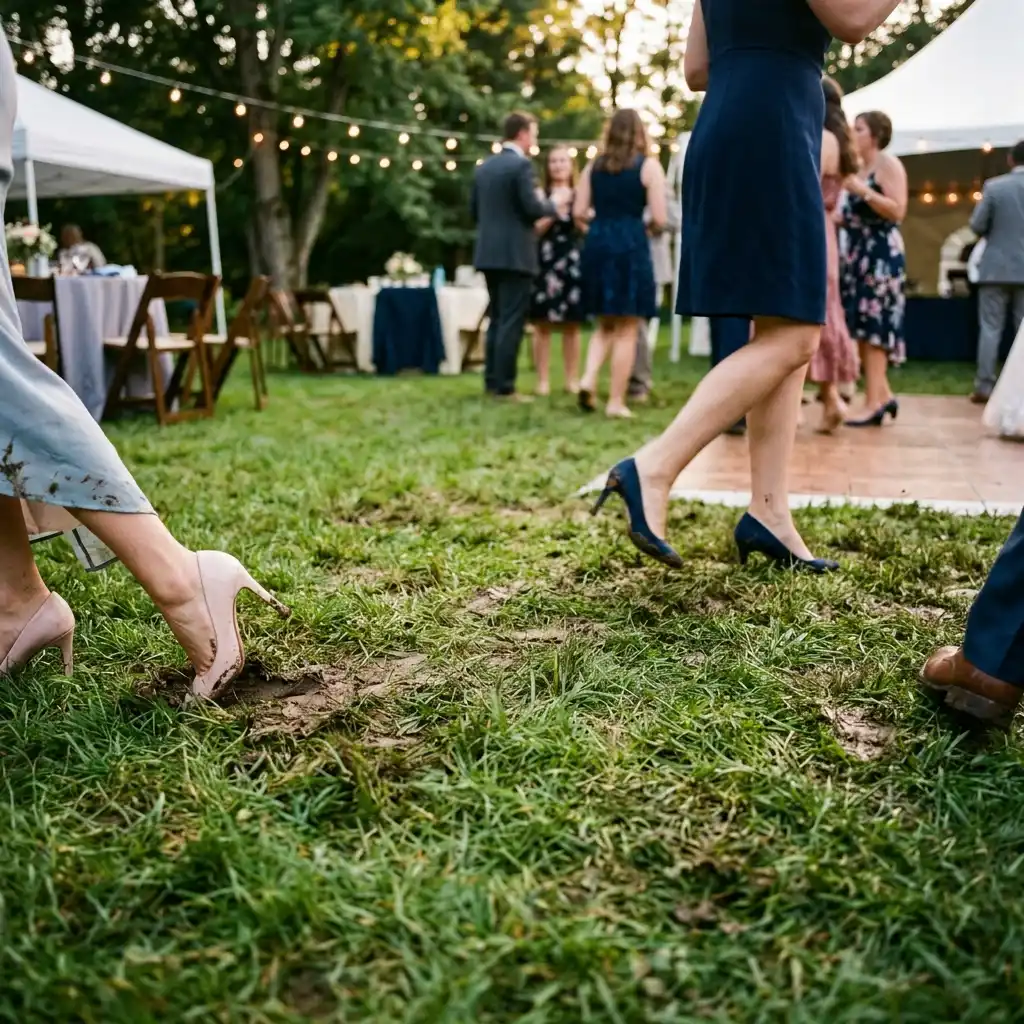
The fix: Walk the entire event space in the week before the wedding and assess the ground at every point: the aisle, the reception area, and especially the dancing space. Hire artificial turf sections or temporary flooring panels for the dance floor if the surface is uneven or soft. Lay cocktail-hour rugs on grass seating areas. If rain is likely the night before, hay bales or wooden pallets can elevate the ceremony area enough to keep guests out of mud.
Mistake 6: Letting the Décor Get Overwhelming
There is a particular trap that backyard weddings fall into more than any other wedding type: the couple starts DIYing everything — because they can, because they want to personalise every detail, because Pinterest has shown them forty-seven brilliant ideas — and the result is a space that looks cluttered rather than considered.
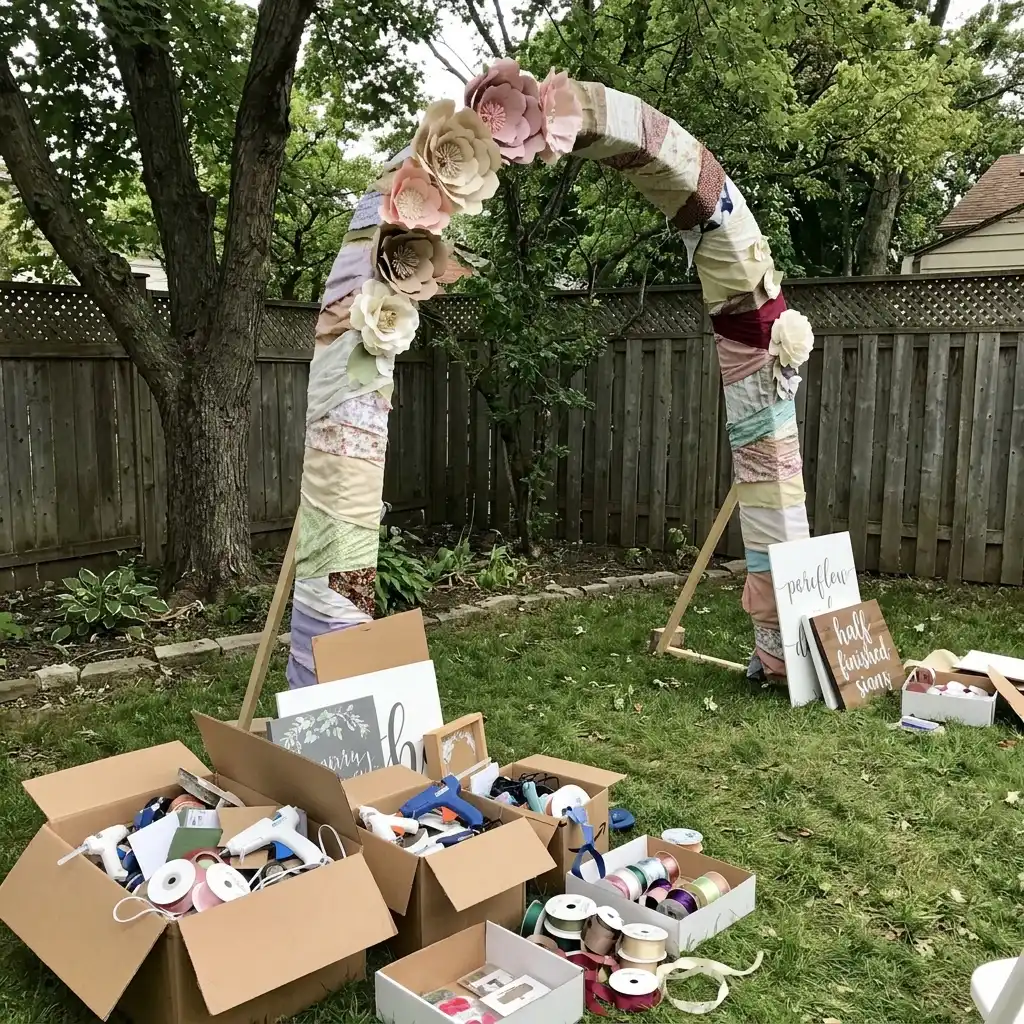
A backyard is not a blank venue. It already has character. Existing trees, garden beds, structures, and textures are all working with you. When you add too much on top of them, those elements fight each other rather than complementing each other.
The fix: Identify two or three décor anchors — a ceremony arch, a lighting canopy, a centrepiece concept — and let everything else breathe. For centrepiece ideas that work without overwhelming a space, my guide to mason jar wedding centrepiece ideas has thirty options that are beautiful precisely because they’re simple. If you’re working with a rustic aesthetic, rustic wedding details under $20 shows how small, well-chosen details do more than large, competing ones.
Mistake 7: Ignoring Lighting Until the Last Minute
Lighting is the single element that transforms a backyard from a daytime garden party into an evening celebration — and it requires more planning than most couples give it. You can’t simply plug in a string of lights from a hardware store and expect the effect you’ve seen in inspiration photos. Those photos are the result of deliberate light placement, warm colour temperature choices, and layering of different light sources at different heights.
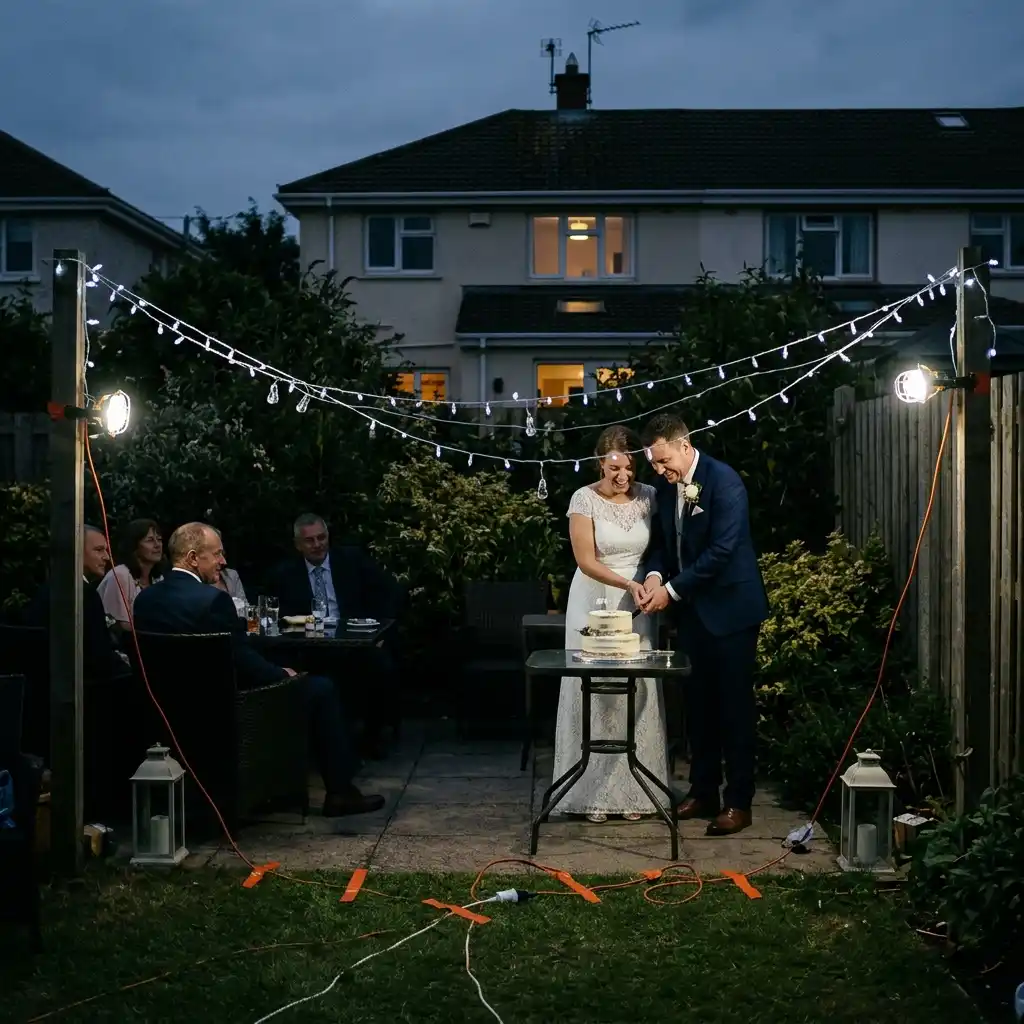
The fix: Plan your lighting before you finalise anything else. Where will the overhead canopy go? What structures will hold the light cables? Where will you plug them in — and is your power supply adequate (see Mistake 2)? Hire a lighting supplier if your vision requires more than basic string lights. Supplement with candles and lanterns for warmth at ground level. Choose warm white (2700K–3000K) rather than cool white for the most flattering, atmospheric result. I’ve covered lighting ideas in detail in the broader backyard wedding ideas guide if you want the full picture.
Mistake 8: Not Planning the Arrival and Parking Situation
Guests arrive excited. Then they drive past the property three times because they can’t tell where to park, end up blocking the neighbour’s driveway, and arrive at your ceremony flustered and slightly irritated. It’s a small thing that sets the wrong tone before anyone’s even sat down.
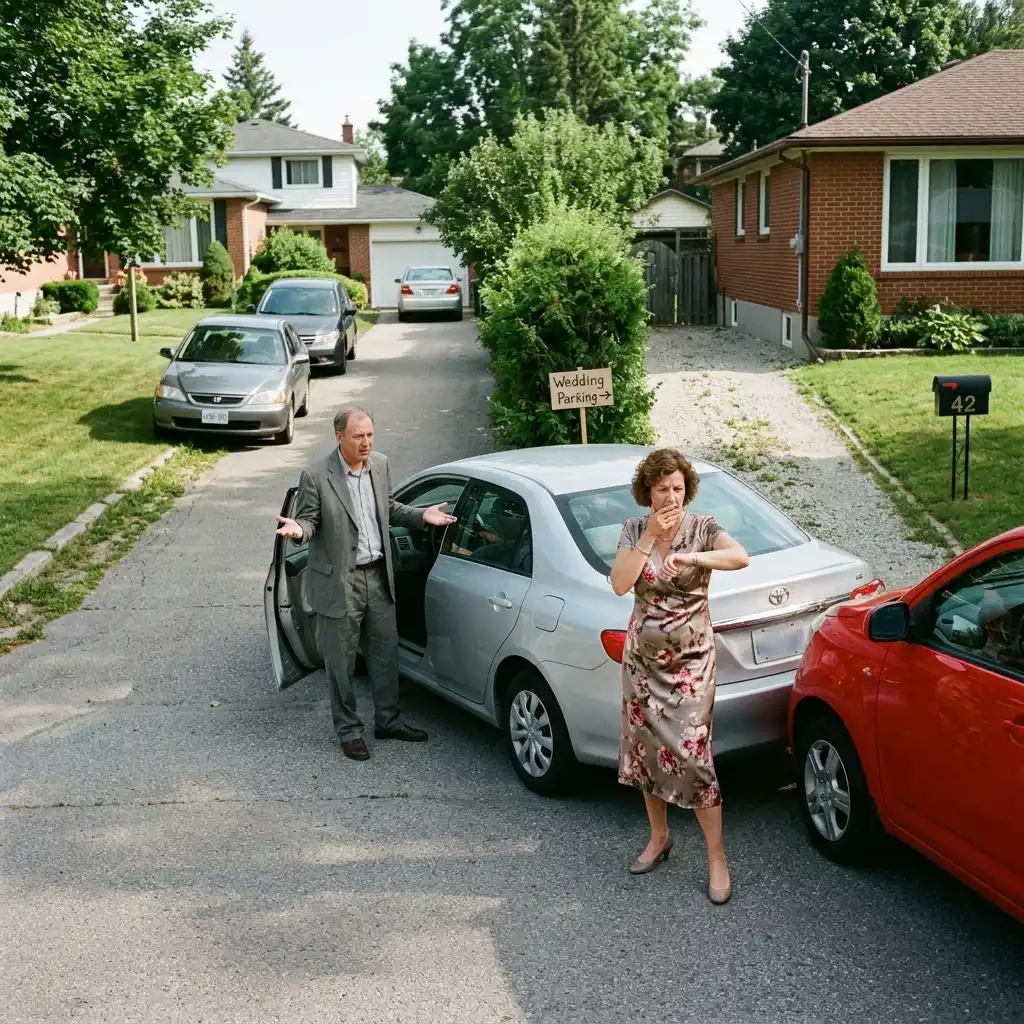
The fix: Arrange parking well in advance — whether that’s a neighbouring property, a nearby paddock, a church car park, or a street-by-street parking plan with clear instructions in the invitation. Station someone at the entrance on the day to direct arriving cars. Clear, early signage matters enormously here. My post on wedding sign ideas includes directional signage as part of the full suite — this is the first place I’d look for parking and arrival sign inspiration that matches your aesthetic.
Mistake 9: DIYing the Catering for a Large Group
For twenty guests, a couple capable in the kitchen can absolutely manage their own catering. For sixty guests, it becomes a genuine logistical and physical challenge. For eighty or more, attempting it yourself is one of the most reliable sources of wedding day stress that exists.
The problem isn’t the cooking itself — it’s the timing. Keeping food at the right temperature. Managing the flow of courses. Serving everything simultaneously. Being present at your own wedding while doing all of this. Professional caterers exist because this is genuinely difficult.
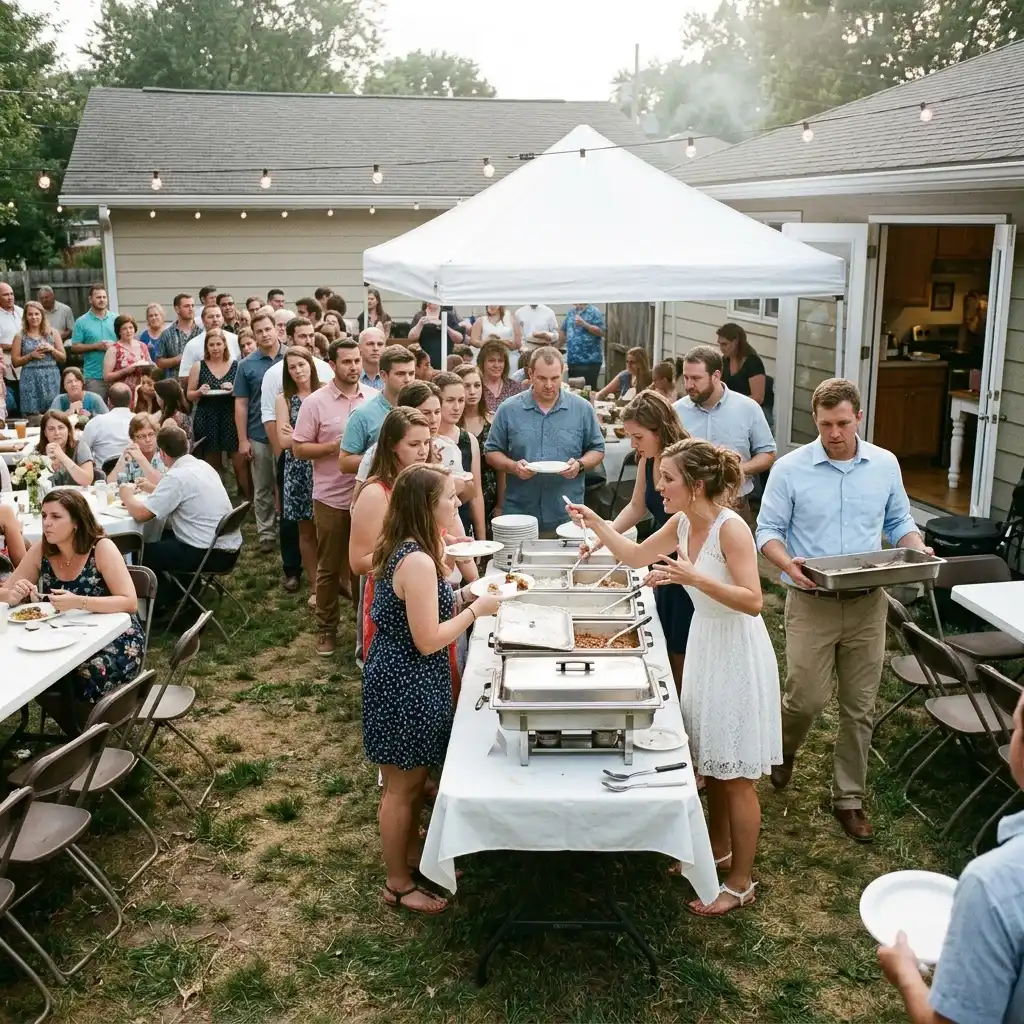
The fix: Set the threshold at thirty to forty guests. Below that, DIY catering is manageable if you prepare most things in advance and enlist reliable help. Above it, hire a food truck, a grazing table caterer, or a professional catering team. If budget is tight, a food truck is often the most cost-effective professional option and fits naturally with a casual backyard aesthetic.
Mistake 10: Neglecting the Neighbours
This one is mostly about relationships but partly about practical risk. A neighbour who discovers at 9pm on your wedding night that they’re living next to a 90-decibel sound system they weren’t warned about is a neighbour who might call the council. A neighbour who was told in advance, given the date, and perhaps invited to pop by for a drink is a neighbour who feels included rather than imposed upon.
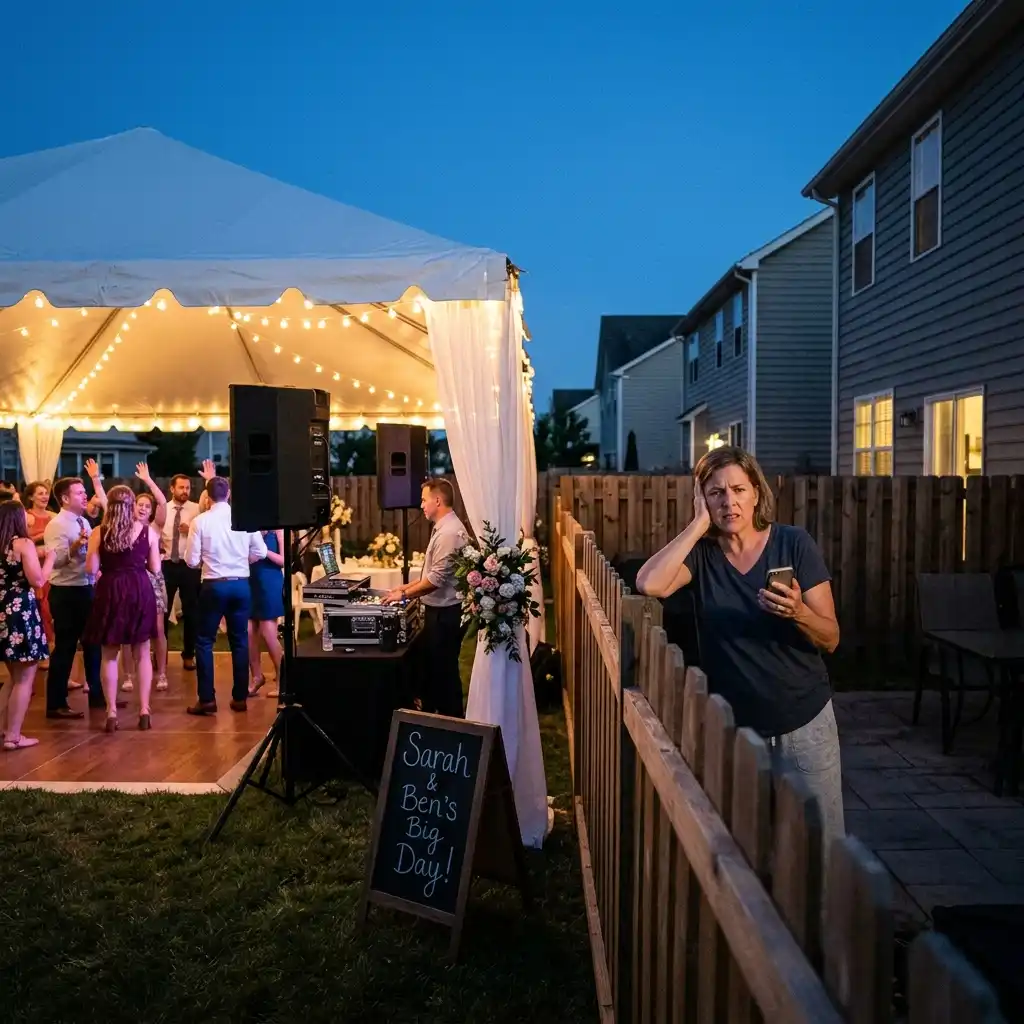
The fix: Knock on every adjacent neighbour’s door at least three weeks before the wedding. Tell them the date, the expected finish time, and that you appreciate their patience. If you have a good relationship, consider inviting them for a drink at the start of the evening. The cost of that conversation is almost nothing. The cost of a noise complaint mid-reception — both logistically and emotionally — is significant.
Mistake 11: Skimping on the Sound System
A speech nobody can hear. First dance music that cuts in and out. A ceremony where the guests in the back rows couldn’t hear the vows.
I’ve seen all of these happen at backyard weddings where the couple borrowed a Bluetooth speaker from a friend and assumed it would be adequate. Outdoors, sound disperses. Wind interferes. A speaker that sounds perfectly fine in your living room does not perform the same way in an open garden.
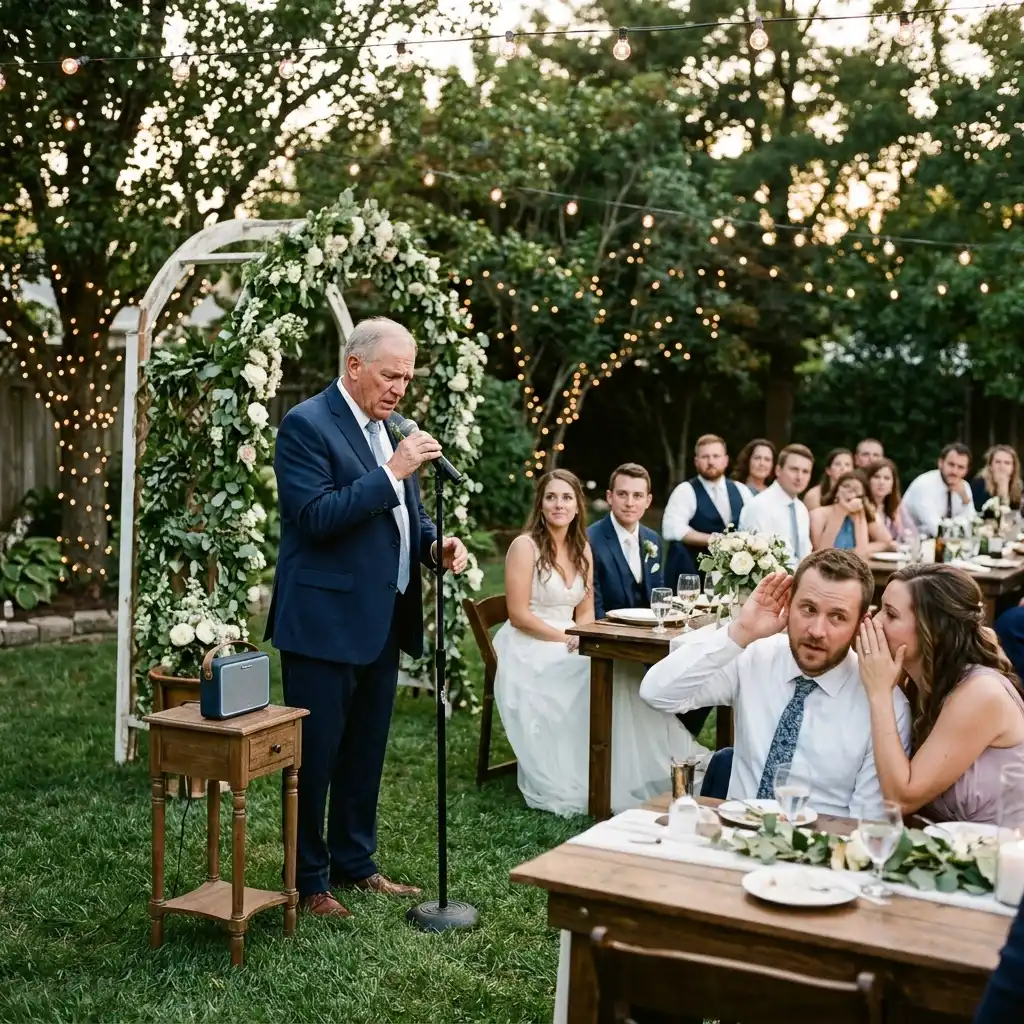
The fix: Hire a professional PA system and, ideally, a professional sound operator. This is not the place to cut costs. For the ceremony especially — where the spoken word is the entire point — adequate sound is non-negotiable. Ask your DJ or sound hire company specifically about outdoor setups and their experience with open-air events.
Mistake 12: Forgetting Shade and Comfort for Daytime Ceremonies
Guests seated in direct afternoon sun for a thirty-minute ceremony will be uncomfortable regardless of how beautiful everything looks. Children and elderly guests are particularly vulnerable to heat. And uncomfortable guests are distracted guests — they’re not fully present for the vows you’ve spent weeks writing.
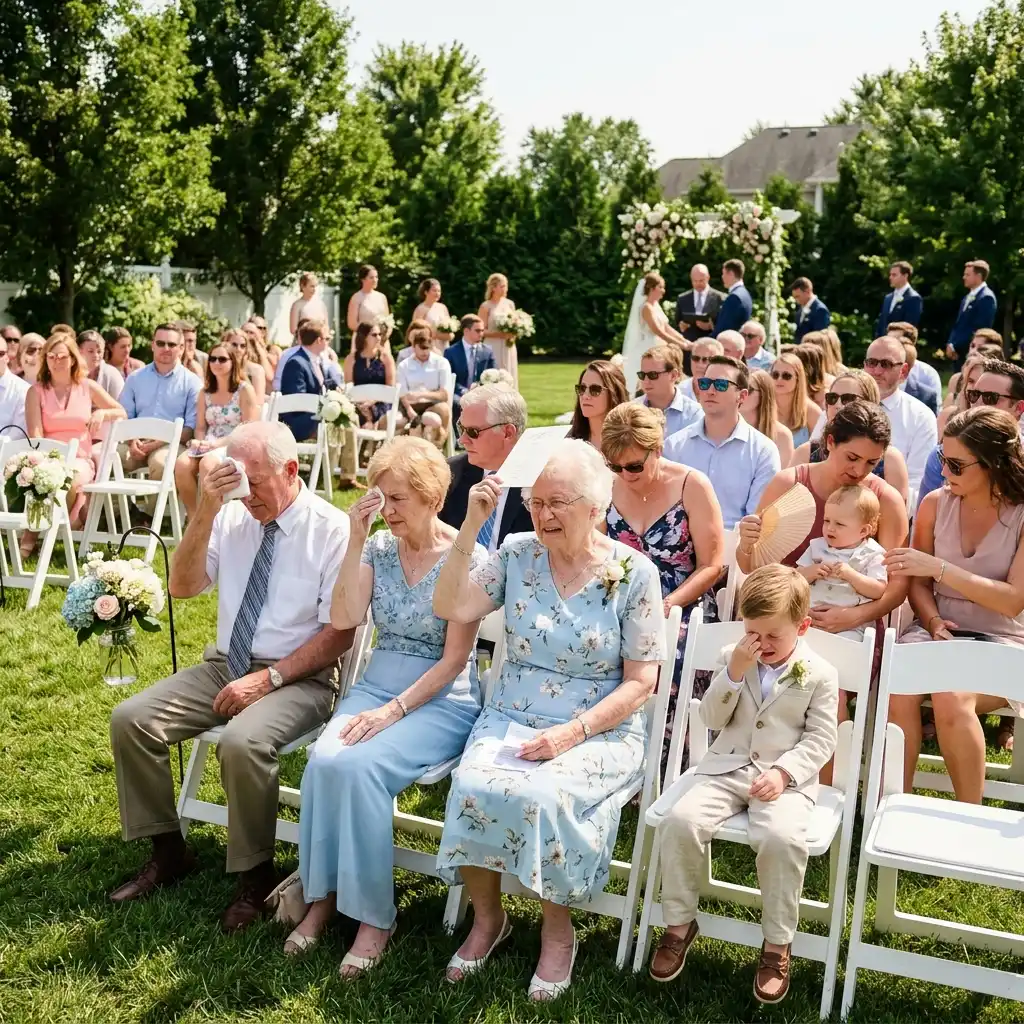
The fix: Plan the ceremony timing around the sun. Late afternoon (4–5pm) rather than midday is far more comfortable for outdoor ceremonies in summer. If timing isn’t flexible, hire market umbrellas or shade sails over the ceremony seating. Have chilled water available as guests take their seats. Consider small hand fans at each seat as both a comfort item and a detail that can be styled to match your aesthetic.
Mistake 13: Under-Budgeting Because It’s “Just a Backyard”
There is a widespread belief that a backyard wedding is automatically cheap. It isn’t — or rather, it doesn’t have to be expensive, but it’s very easy to accidentally make it so. The venue is free. But the marquee hire, the portable toilets, the generator, the furniture hire, the additional lighting, the sound system, the lawn preparation, and the professional catering can add up quickly to a figure that surprises couples who assumed “backyard” meant minimal spend.
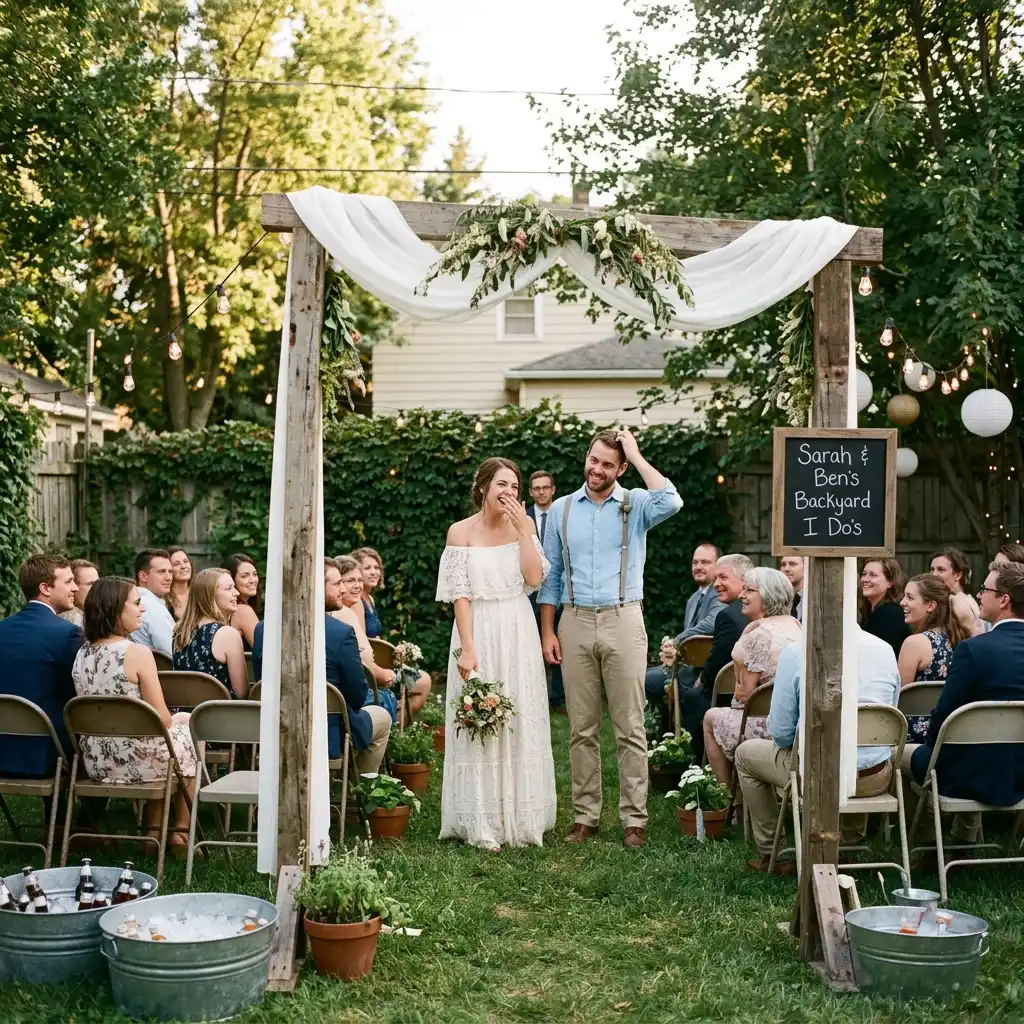
The fix: Build your budget from scratch rather than assuming the backyard setting means you’ll spend less. Start with a per-head figure and work outward. My guide to country wedding ideas on a budget has a detailed cost breakdown that translates well to backyard settings, and the dollar tree wedding hacks post covers décor categories where genuine savings are possible without sacrificing the look.
Mistake 14: Not Hiring a Day-Of Coordinator
The host and the couple cannot simultaneously greet guests, troubleshoot supplier issues, manage the ceremony timeline, direct the caterer, and be present in every moment of their own wedding. It’s a physical impossibility.
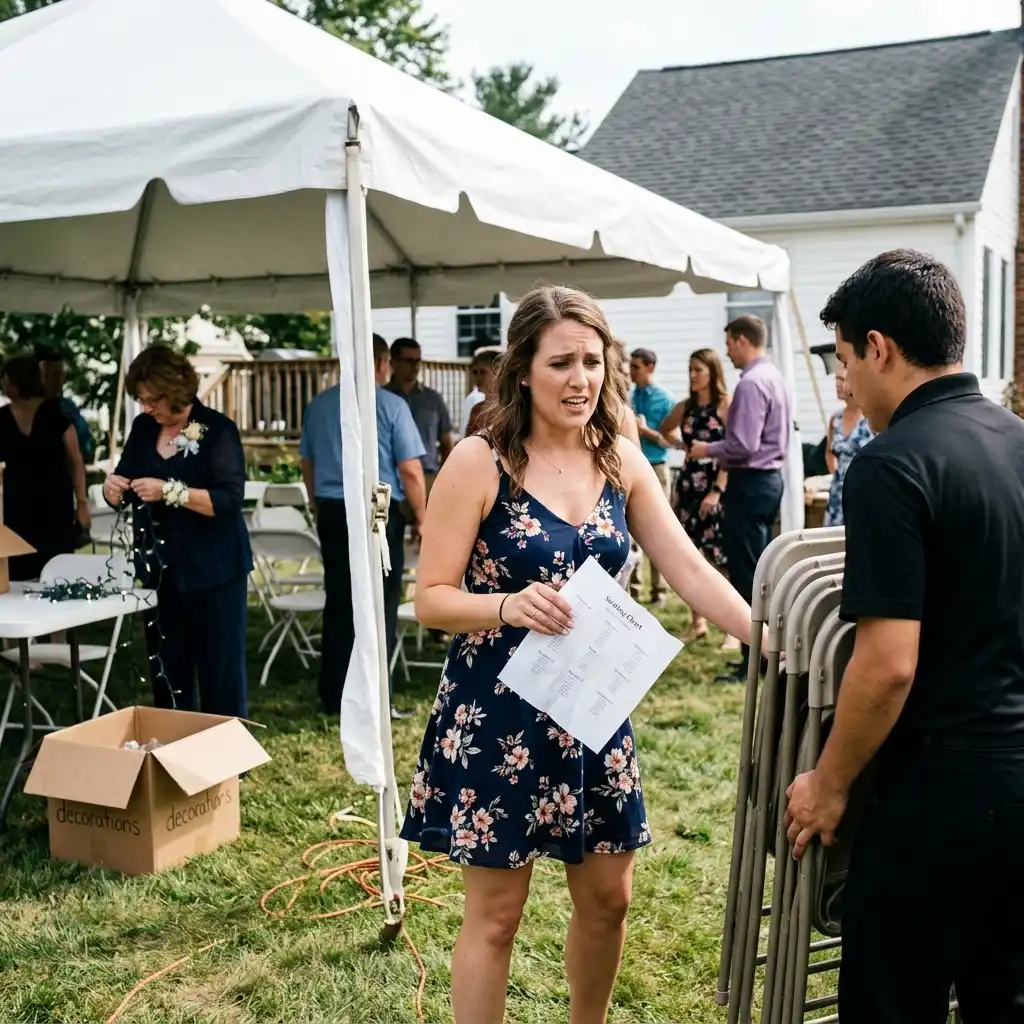
Without someone specifically responsible for managing the logistics on the day, these tasks fall to whoever is standing nearest — usually a family member who then misses large portions of the celebration themselves.
The fix: Hire a day-of coordinator, or designate one trusted, organised person specifically and explicitly as the logistics manager for the day. Give them a written run sheet, supplier contact numbers, and permission to make decisions without checking with you. Their single job is to ensure the day runs smoothly so you don’t have to think about it.
Mistake 15: Not Addressing the Insect Situation
An outdoor evening reception without any preparation for insects — particularly mosquitoes, midges, and flies in warmer climates — becomes uncomfortable for guests within an hour of sunset. Flies around the food. Mosquitoes around the ankles. The atmosphere you’ve worked so hard to create suffers.
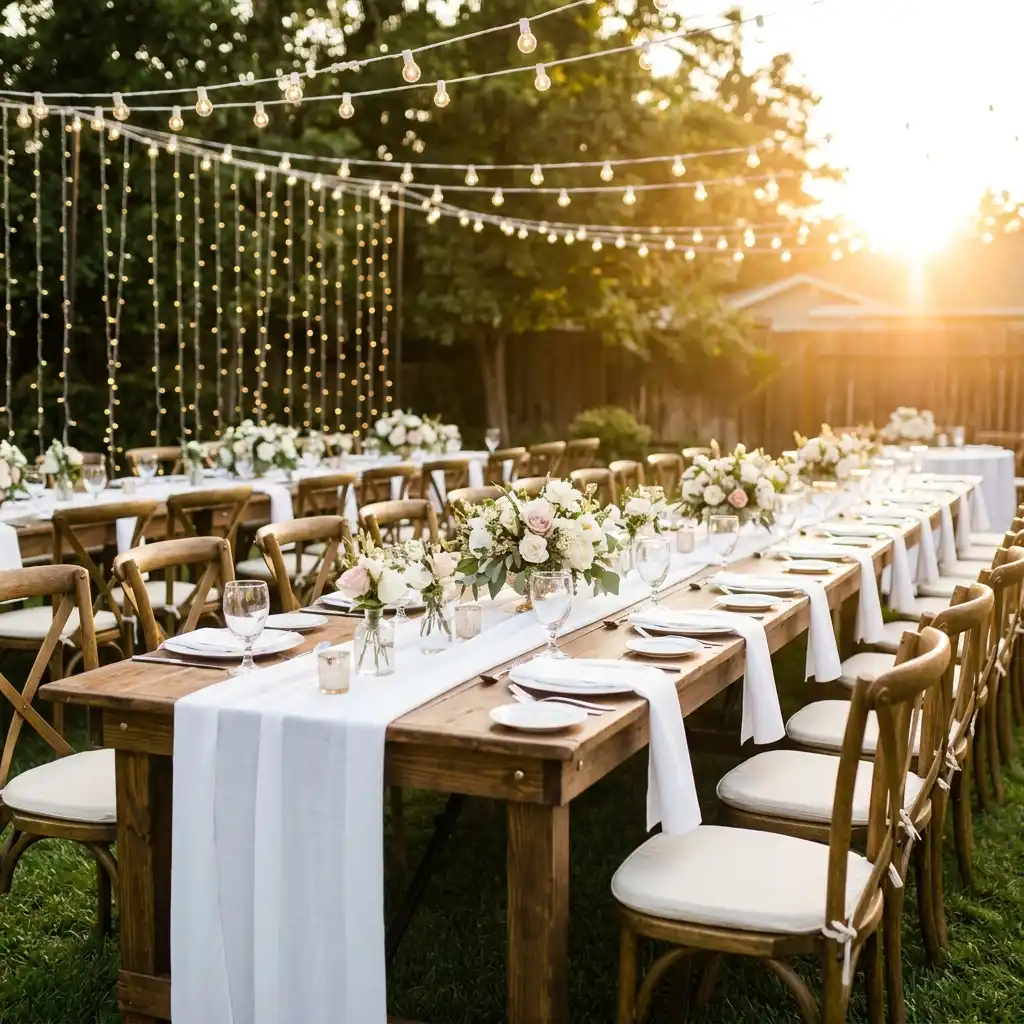
The fix: Address this proactively. Citronella candles and outdoor-grade insect repellent sprays in the bathroom area are a minimum. For a more complete solution, hire an outdoor mosquito misting system. Set out small baskets of personal insect repellent near the dance floor and bathroom area — frame it as a thoughtful amenity rather than an acknowledgement of a problem. Keep food covered between servings.
Mistake 16: Forgetting a Waste Management Plan
After sixty guests have eaten, drunk, and celebrated across your property for four hours, the amount of waste generated is significant. Bottles. Plates. Napkins. Decorative items. Food scraps. Without a plan for managing this, the cleanup falls to whoever is left standing — which, after a full wedding day, is not where you want to be.
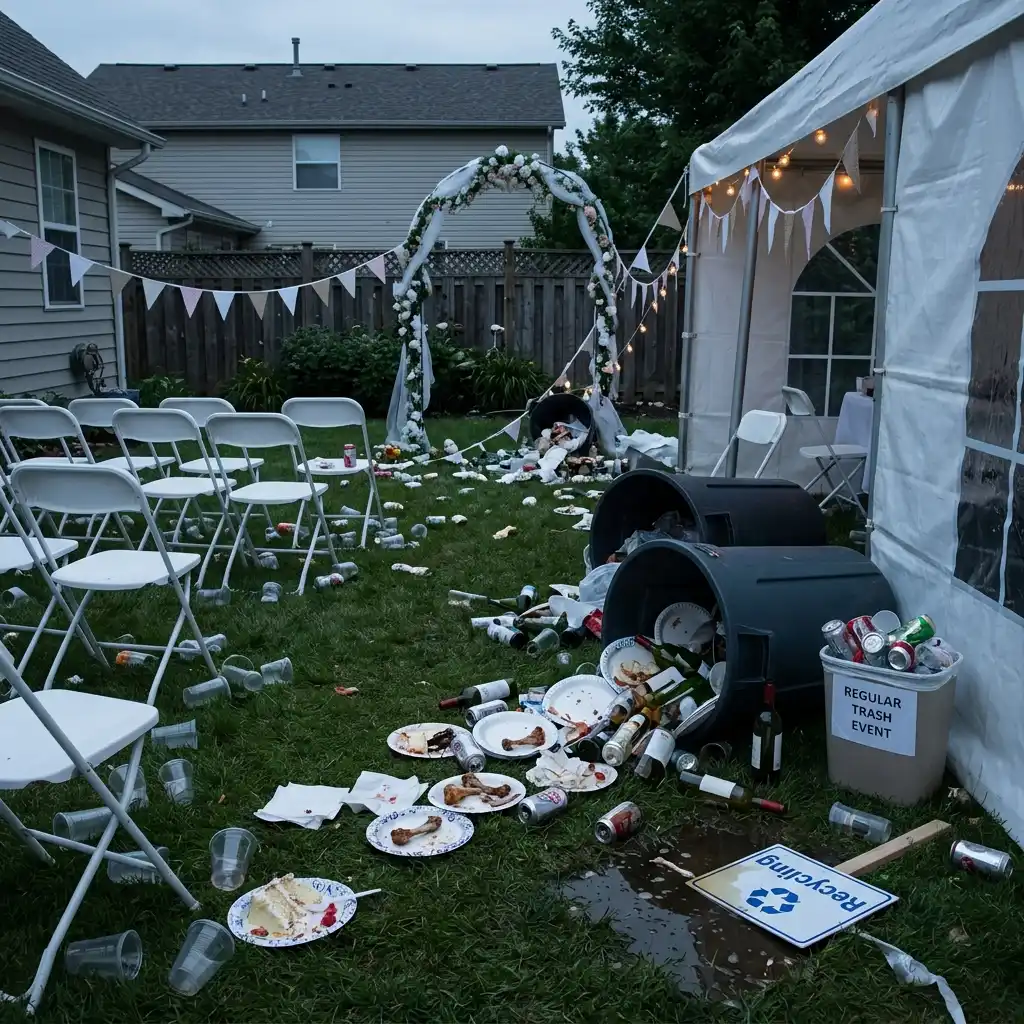
The fix: Hire an event cleanup crew for the next morning, or arrange for a specific group of helpers to return the following day. Set up clearly labelled recycling, compost, and general waste bins throughout the event space so guests and staff can sort as they go. Brief your catering supplier on waste management expectations before the day.
Mistake 17: Choosing Décor That Doesn’t Suit the Space
A colour scheme that fights the existing garden tones. Décor that’s styled for an indoor ballroom placed in an outdoor setting. Formal table styling on a casual lawn. When décor and setting are misaligned, neither looks its best — the setting seems messy and the décor seems out of place.
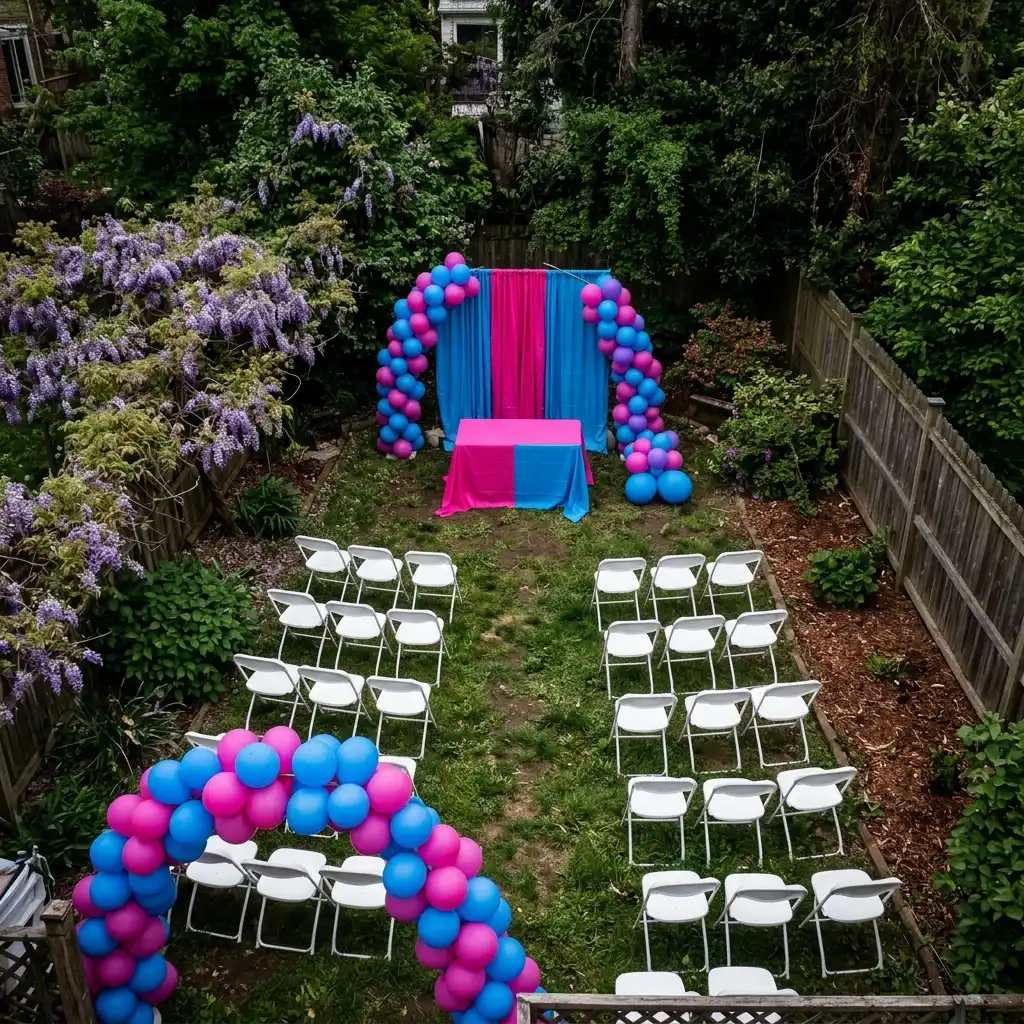
The fix: Work with the existing character of the space rather than imposing a completely different aesthetic onto it. A garden with warm timber fencing and native plants suits a terracotta and greenery palette — I have a full guide to rustic terracotta wedding decor if that’s the direction you’re heading. A property with weathered wooden structures suits wooden crate displays and natural dried florals. Read the space first, then choose the aesthetic.
Mistake 18: Not Thinking About the Vendor Access and Setup Time
Your florist arrives at 8am. The marquee team is still finishing setup. The caterer’s van can’t get through the side gate. The furniture hire company needs access to the back garden but the first guests are arriving in an hour.
Vendor logistics at a home venue require specific coordination that a professional venue handles automatically. At your backyard, it falls to you.
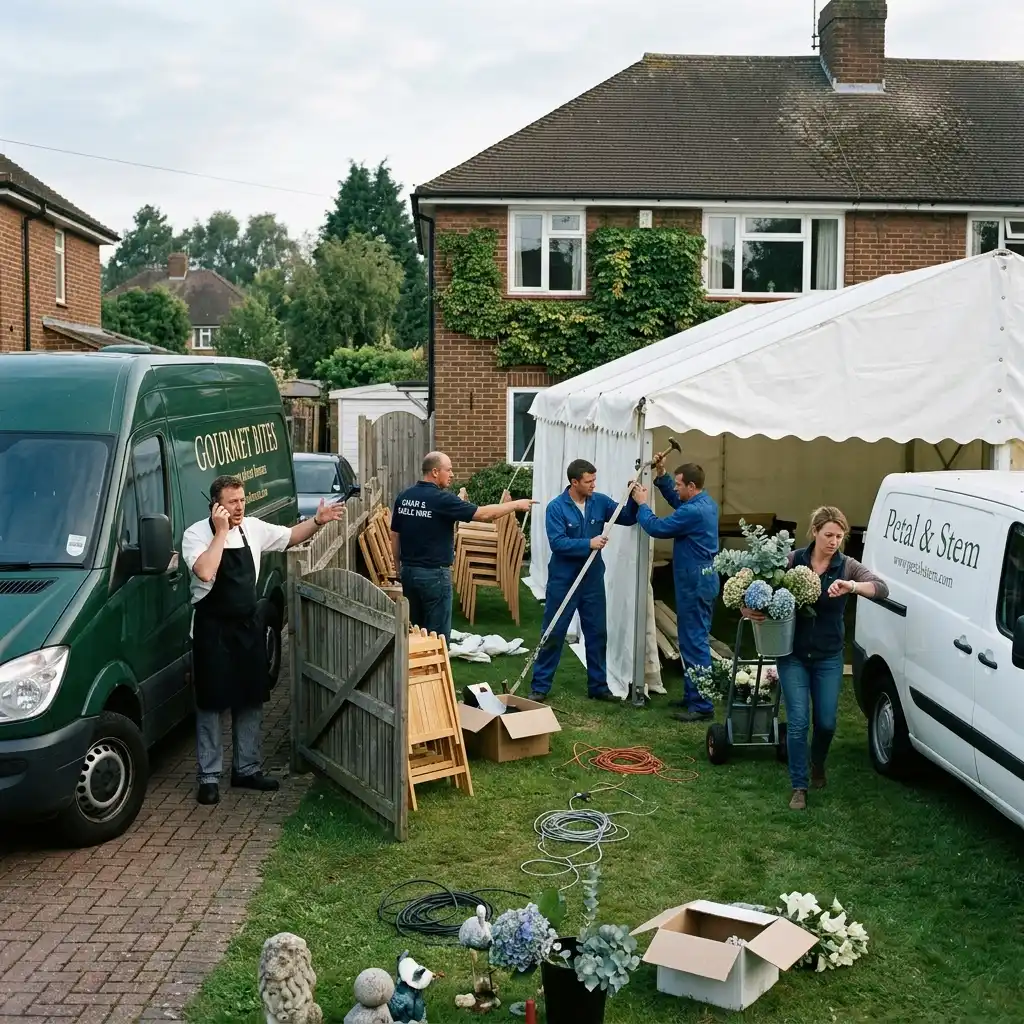
The fix: Create a supplier schedule at least two weeks before the wedding, listing every supplier’s arrival time, what they need to access, how long they need to set up, and who will let them in. Send each supplier their specific call time in writing. Walk the property and identify any access issues — narrow gates, steps, surfaces a heavy vehicle can’t drive on — and communicate these clearly to every relevant supplier in advance.
Mistake 19: Neglecting the Wedding Favours and Guest Details
In the busyness of planning the big structural elements — the venue logistics, the catering, the flowers — the small guest-facing details often fall away. Favours not ordered. Place cards not finished. A guest book left in a bag in the car.
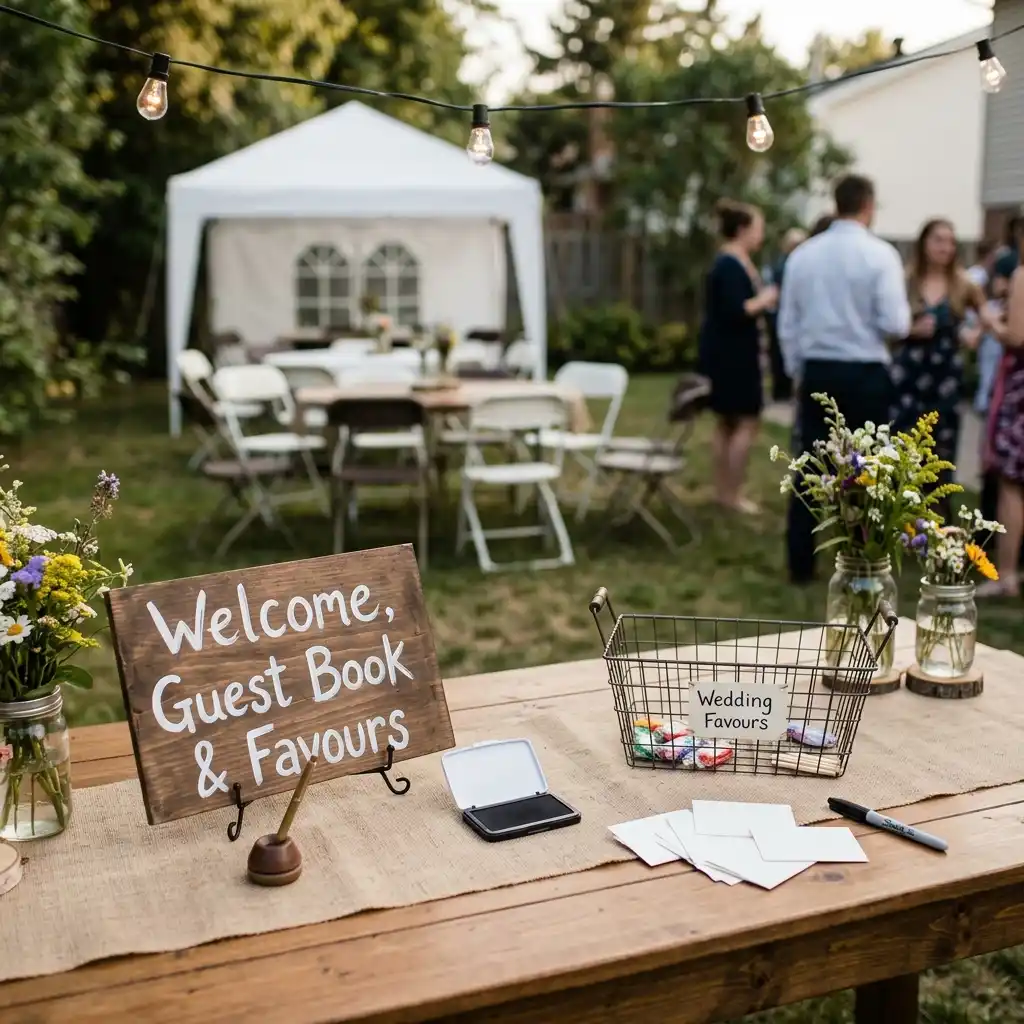
The fix: Give yourself a deadline of two weeks before the wedding for all small guest-facing details to be complete and packed. Favours, place cards, guest book, table numbers, and any small decorative items should all be assembled and boxed two weeks out — not two days. For favour inspiration that works at any budget, my post on wedding favour ideas covers everything from $0.50 seed packets to luxury candle gifts.
Mistake 20: Inviting Too Many Guests for the Space
Sixty guests in a space that comfortably holds forty is not a slightly crowded wedding. It’s an uncomfortable one. Guests can’t move between tables. The dance floor becomes impossible. The queue for the bar stretches into the seating area. The intimate feeling you wanted is replaced by a logistics problem.
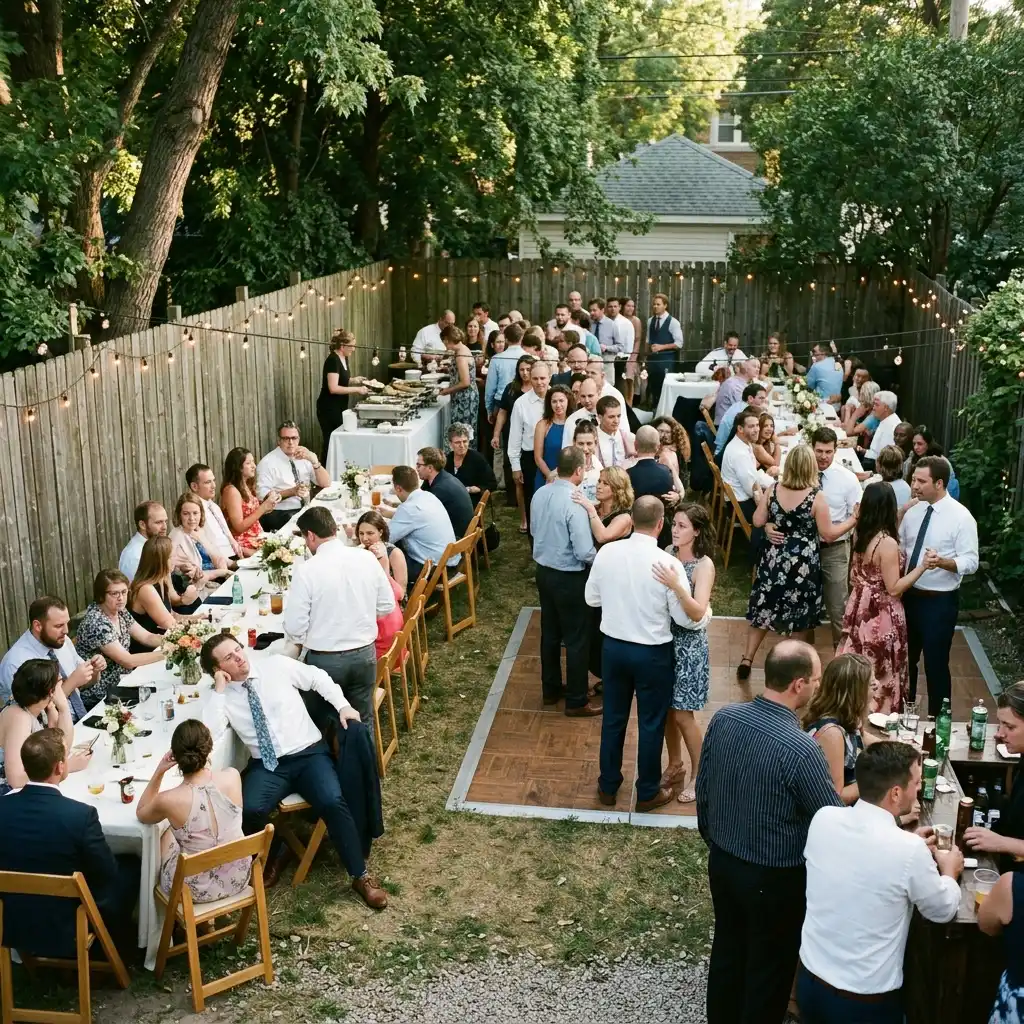
The fix: Measure your usable space before you finalise your guest list, not after. As a general guide, a seated dinner requires roughly 1.5–2 square metres per guest including service space and a dance floor. If your space can’t accommodate your original list comfortably, the guest list needs to reduce rather than the space being “made to work.” If this requires a difficult conversation about a smaller wedding, my post on small wedding ideas makes a genuine case for why a smaller guest list often produces a better day.
Mistake 21: Not Photographing the Space in Advance With Your Photographer
Your venue is a backyard. Your photographer has never been there. They arrive on the wedding morning and spend the first hour working out where the light is, where the best angles are, and what the background looks like from every direction.
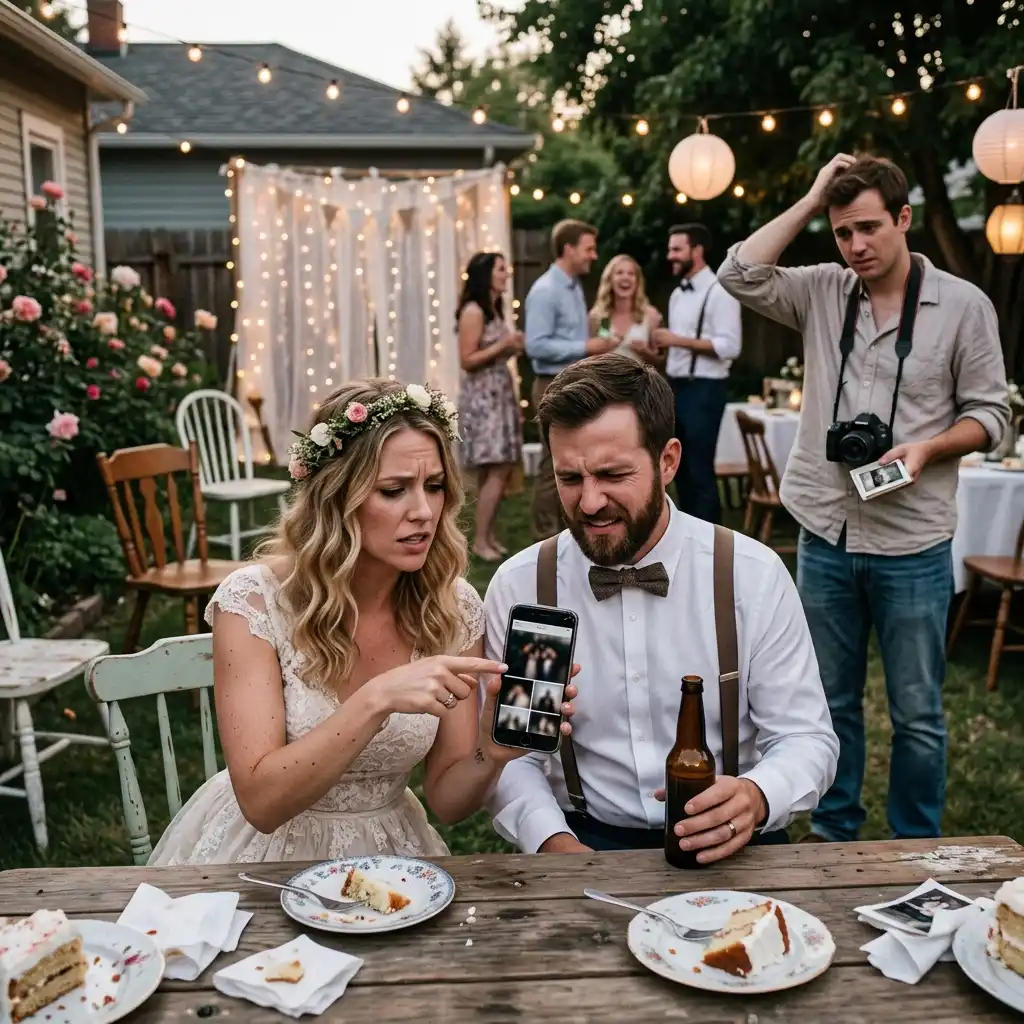
This is time that should have already been spent — at a pre-wedding location scout at the same time of day as your ceremony and reception.
The fix: Book a venue walk-through with your photographer at least six weeks before the wedding. Visit at the same time of day as your planned ceremony so you can both assess the light, identify the best backgrounds, and note any elements (an ugly fence, an air conditioning unit) that need to be worked around or temporarily concealed.
Mistake 22: Forgetting to Enjoy It
This one is softer than the others but I mean it genuinely. The couples who’ve told me afterward that they feel like they missed their own backyard wedding are almost always the ones who spent the day managing rather than celebrating — checking whether the caterer had arrived, supervising the setup, worrying about the weather.
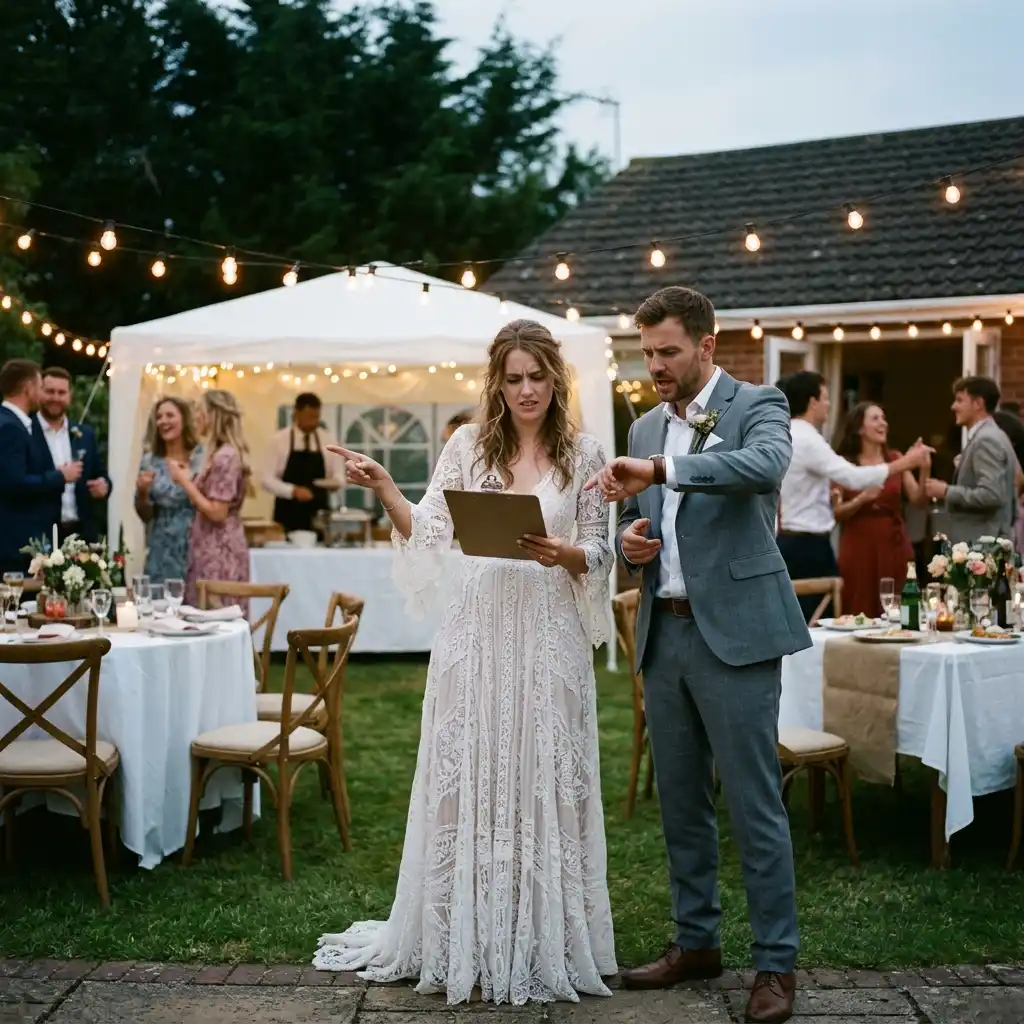
A backyard wedding takes more planning than a venue wedding precisely because you’re taking on responsibilities that a venue would normally handle. Do that planning thoroughly in the weeks before. Hire the coordinator. Brief the suppliers. Write the run sheet. And then — on the day — let it go. The marquee is up. The lights are strung. The food is coming. The people you love are in your garden.
Be there for that. It won’t happen again.
The Backyard Wedding Mistake Avoidance Checklist
| Mistake | Fix in place | Deadline |
|---|---|---|
| No permit check | Contact council | 3+ months before |
| Power underestimated | Electrician assessment / generator booked | 3+ months before |
| No weather contingency | Marquee booked | 3+ months before |
| Insufficient toilets | Portable toilets hired | 2–3 months before |
| Ground surface not assessed | Flooring/turf hired if needed | 2 months before |
| Neighbour notification | Knocked on all doors | 3 weeks before |
| Sound system inadequate | Professional PA hired | 2–3 months before |
| No coordinator assigned | Coordinator or logistics person confirmed | 2 months before |
| Budget underestimated | Full cost breakdown completed | At planning start |
| Vendor schedule missing | Written supplier schedule sent to all vendors | 2 weeks before |
| Décor details incomplete | All small items assembled and packed | 2 weeks before |
| Photographer walk-through missed | Location scout completed | 6+ weeks before |
Frequently Asked Questions
What are the biggest backyard wedding mistakes to avoid?
The most consequential backyard wedding mistakes fall into three categories: logistics, practicalities, and planning assumptions. Logistically, the most damaging mistakes are underestimating power needs (leading to electrical failures during the reception), skipping council permit checks (risking fines or forced early endings due to noise ordinances), and not hiring adequate portable toilet facilities for the guest count. Practically, the most common issues are neglecting a weather contingency, forgetting about the ground surface for the ceremony and dancing areas, and underestimating the sound system requirements for an outdoor setting. In terms of planning assumptions, the biggest mistake is believing a backyard wedding is automatically cheap and therefore under-budgeting for the hired services that make it functional.
What do people most often forget when planning a backyard wedding?
The most frequently overlooked elements in backyard wedding planning are vendor access logistics (how suppliers get in, where they set up, and how long they need), neighbour notification, insect management for evening receptions, waste management and post-event cleanup, and shade or comfort provisions for daytime ceremonies. These are all unglamorous, practical elements that don’t appear in inspiration photos and therefore don’t make it onto most planning lists — which is exactly why they catch so many couples off guard.
How do you avoid a backyard wedding disaster?
Avoiding a backyard wedding disaster comes down to planning the unglamorous logistics as thoroughly as the beautiful details. Specifically: confirm permits, assess and solve power needs, book weather contingency structures, hire adequate toilet facilities, arrange professional sound, appoint a day-of coordinator, and walk through the property with every major supplier before the day. The couples who have the most stressful backyard weddings are almost always the ones who spent all their planning energy on décor and invitations and assumed the logistics would work themselves out. They don’t. But they’re entirely manageable when addressed early.
Is a backyard wedding actually cheaper than a venue wedding?
It can be — but not automatically. The venue cost itself is eliminated, which is a significant saving. But a backyard wedding requires hiring many services that a venue provides as standard: marquee or tent, portable toilets, generator, furniture, additional lighting, and sometimes professional lawn preparation. For a wedding of 60–80 guests, these hires can add $3,000–$7,000 to the overall budget. The genuine savings come from having more flexibility over your catering supplier, décor choices, and the overall timeline of the day. Couples who do their budget honestly and plan carefully can achieve a beautiful backyard wedding for significantly less than a traditional venue — but it requires realistic expectations rather than assuming the savings will happen automatically.
Have you made one of these mistakes or managed to sidestep all of them? Drop a comment below — I’d love to hear how your backyard wedding planning is going.