From the first dance to the final song, these brilliant wedding reception ideas and planning tips will help you create a celebration your guests will talk about for years — beautifully styled, perfectly timed, and completely yours.
The ceremony is the substance of your wedding — the moment that makes it real, the words that make it legal, the exchange that makes it yours. But the reception is the celebration. It is the party that follows the promise.
It is where the dancing happens and the toasts are made, where old friends reconnect across tables and new friendships begin on the dance floor, where the food is shared and the laughter rises and the music plays and the night stretches out in all its joyful, generous abundance.
A great wedding reception does not happen by accident. It is the result of dozens of deliberate decisions — about timing and flow, about food and music, about décor and atmosphere, about the personal touches that transform a beautiful event into a genuinely memorable experience that belongs completely and unmistakably to you.
This comprehensive guide gives you 24 of the most important, most creative, and most genuinely useful wedding reception ideas and planning tips — covering every element of your celebration from the moment guests arrive to the moment they reluctantly say goodnight.
Why the Reception Deserves as Much Planning as the Ceremony
Most couples spend the majority of their planning energy on the ceremony — the venue, the florals, the dress, the vows. The reception often receives the remainder. This is understandable but misguided.
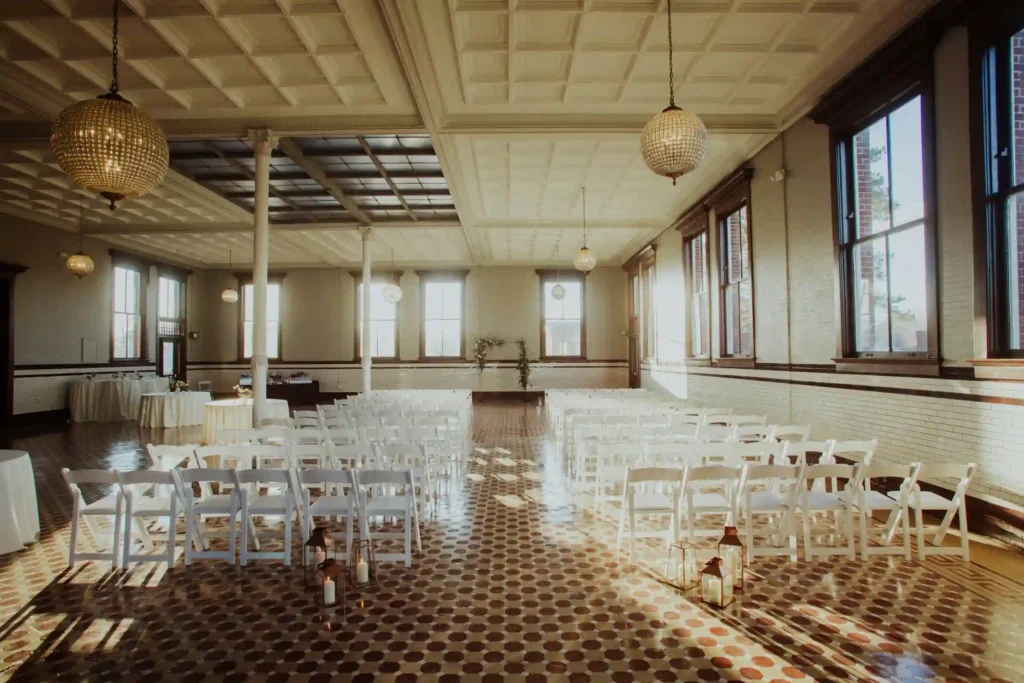
Your guests will spend approximately ninety minutes at your ceremony. They will spend five to six hours at your reception. The quality of that extended experience — how well they are fed, how well the music moves them, how warmly they are welcomed, how thoughtfully the evening flows — determines whether they leave your wedding saying it was lovely or saying it was unforgettable.
The reception is where most of your wedding budget goes, where most of your guests’ memories are formed, and where most of the genuine joy of your wedding day lives. Plan it accordingly.
24 Wedding Reception Ideas and Tips
ARRIVAL AND WELCOME
1. Create a Stunning First Impression at the Entrance
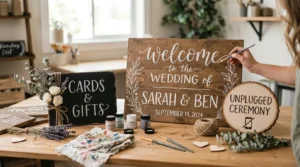
The first moment your guests enter your reception space sets an expectation for everything that follows. A beautifully styled entrance — a floral arch framing the doorway, a welcome sign with your names and date, ambient music already playing, and staff ready to greet guests with a welcome drink — communicates immediately that something genuinely special is about to happen.
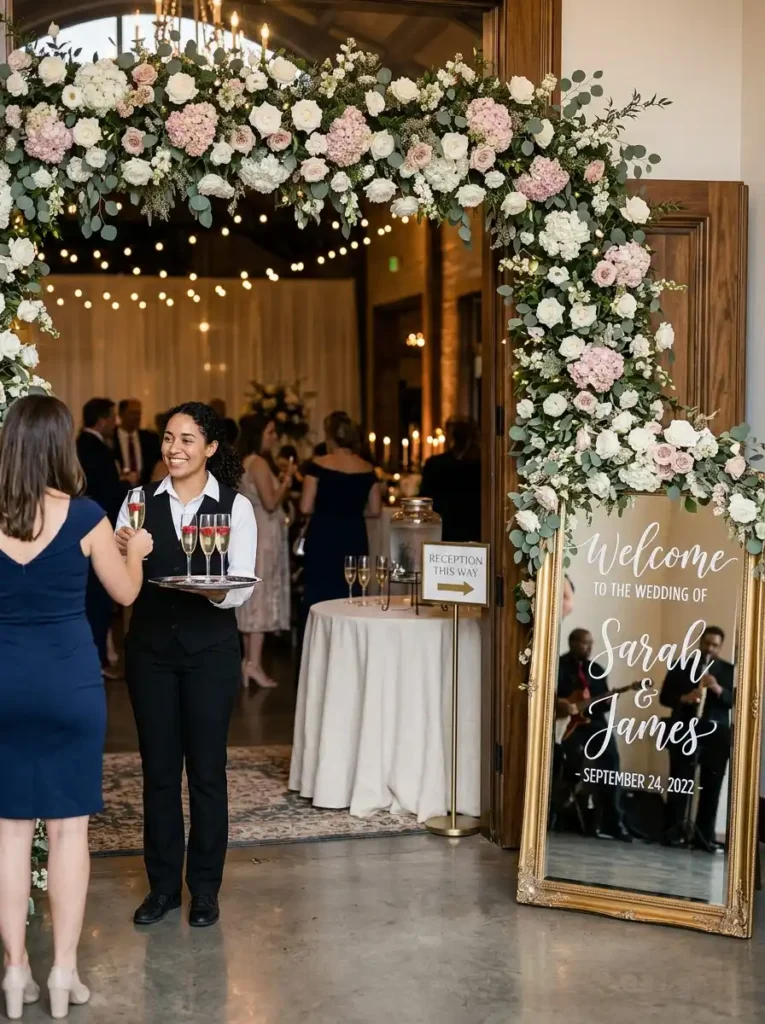
Elements of a Perfect Reception Entrance:
- A striking welcome sign that establishes your aesthetic (hand-lettered chalkboard, illuminated marquee letters, or a floral-framed mirror)
- A welcome drink station positioned just inside the entrance so guests have something in hand within the first thirty seconds
- Ambient background music already playing as guests arrive
- Clear directional signage so guests know immediately where to go
- Lighting that flatters and warms — never harsh overhead fluorescent light
Styling Tip: The entrance is one of the most photographed areas of any reception — your photographer will capture guests arriving, the welcome drink moment, and early candid interactions. Make it genuinely beautiful.
For a complete collection of beautiful and creative wedding sign ideas that work from the entrance through every area of your reception, these wedding sign ideas cover every sign your celebration needs with options at every budget level.
2. Nail the Cocktail Hour
The cocktail hour is the essential bridge between ceremony and reception — and it is one of the most enjoyable, most social, and most genuinely pleasant parts of any wedding for guests. It is also the time during which your couple portraits are being taken, which means you need your cocktail hour to run beautifully without you.
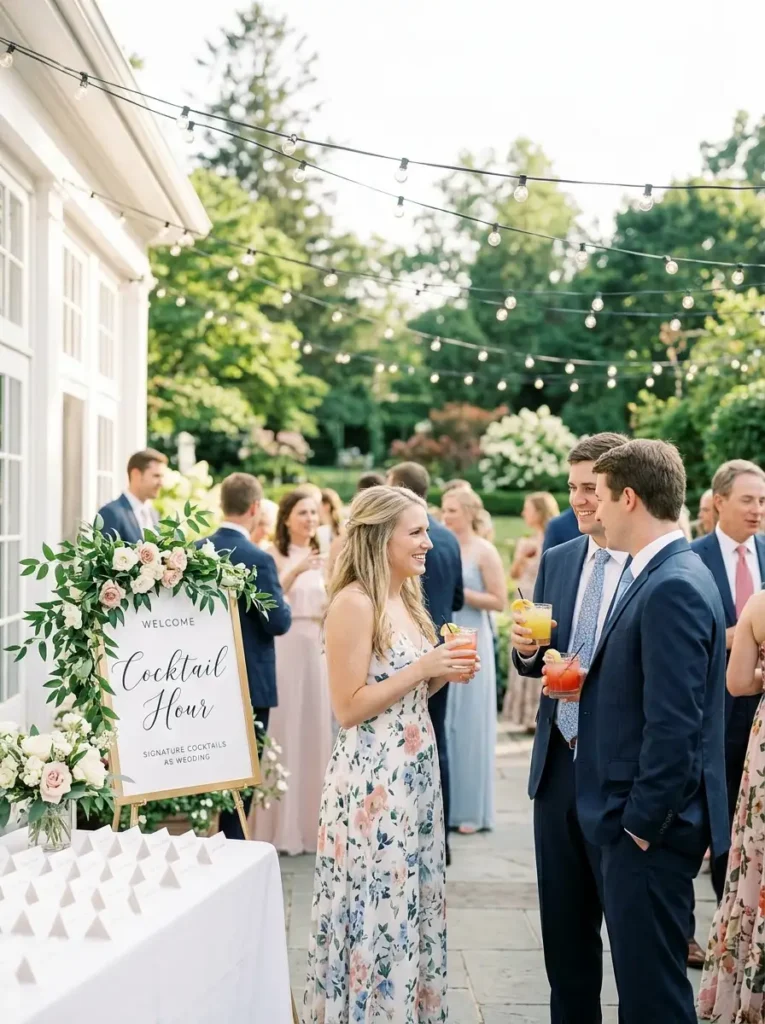
What Makes a Great Cocktail Hour:
Food: Light, varied, and sufficient. Guests who arrive at the cocktail hour have often been at the ceremony for ninety minutes without eating. Hungry guests are uncomfortable guests. Provide enough canapés or grazing options that no one feels they need to hold back. Aim for six to eight pieces of food per guest per cocktail hour.
Drinks: A welcome drink on arrival, followed by access to a drinks station or bar service. Ensure non-alcoholic options are genuinely appealing — not just water and orange juice, but a beautiful mocktail or sparkling elderflower alongside the alcoholic alternatives.
Entertainment: Background music that allows conversation — live acoustic guitar, a string duo, or a carefully curated playlist at a volume that supports rather than interrupts social interaction. Lawn games, a photo opportunity area, or a beautifully styled grazing display all give guests something to engage with while they mingle.
Duration: Sixty to ninety minutes is ideal. Less than sixty minutes feels rushed; more than ninety minutes feels like the main event is never arriving.
For creative and beautiful food station ideas that make your cocktail hour genuinely impressive, these wedding food bar ideas cover every canapé station, grazing concept, and drink display format available.
3. Have a Signature Welcome Drink
A signature welcome drink — one specially created cocktail (and a non-alcoholic version) served to every guest as they arrive — creates an immediate moment of personality, warmth, and celebration. It signals that thought and care has gone into this reception beyond the standard choices, and it gives guests an immediate conversation starter.
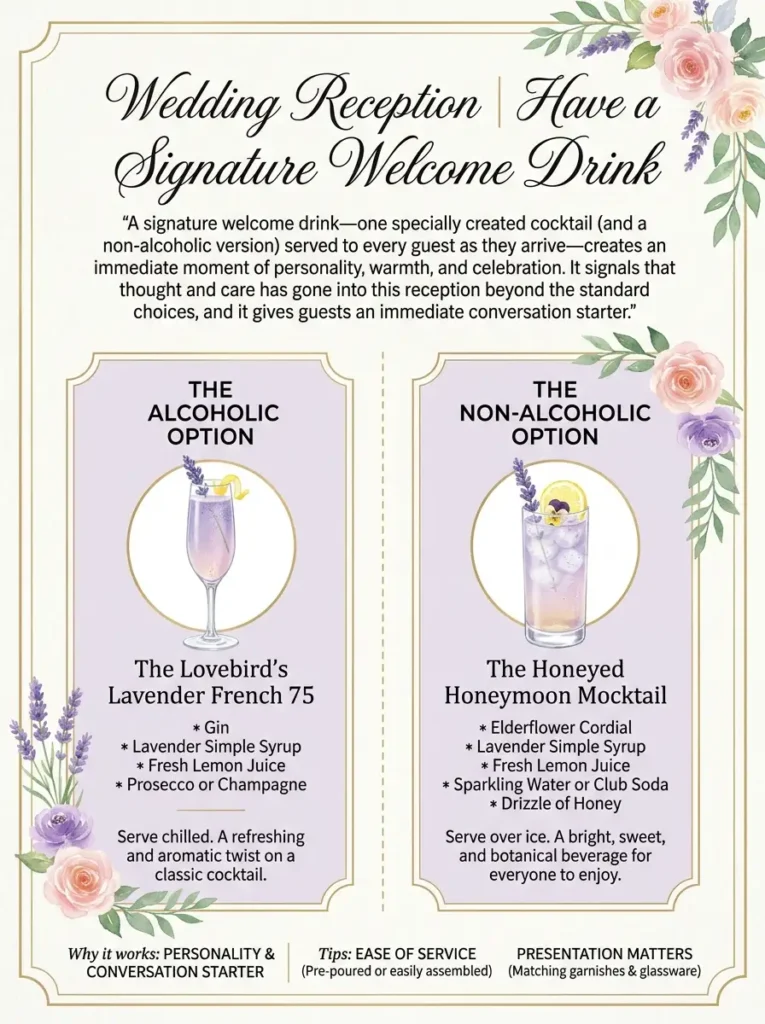
Great Signature Welcome Drink Ideas:
- A seasonal spritz (Aperol, elderflower, or berry-based) with a fresh herb garnish
- A signature punch served from a beautiful glass dispenser or bowl
- A named cocktail that tells the story of your relationship — the drink you had on your first date, or something connected to a meaningful destination
- A batch-made cocktail that incorporates flavors from your wedding season
Presentation: Serve in matching glassware on a beautifully styled tray. Label the drink with a small chalkboard card that includes its name and the ingredients. The name should mean something — guests love a story behind the drink.
4. Seat Guests Thoughtfully
Seating arrangements are one of the most underrated elements of reception planning — and one of the most impactful. The people a guest sits with for the duration of the reception dinner determines a significant portion of their experience. A guest seated at a table of strangers with nothing in common may have a perfectly polite but unmemorable evening. A guest seated beside someone who becomes a new friend may talk about your wedding for years.
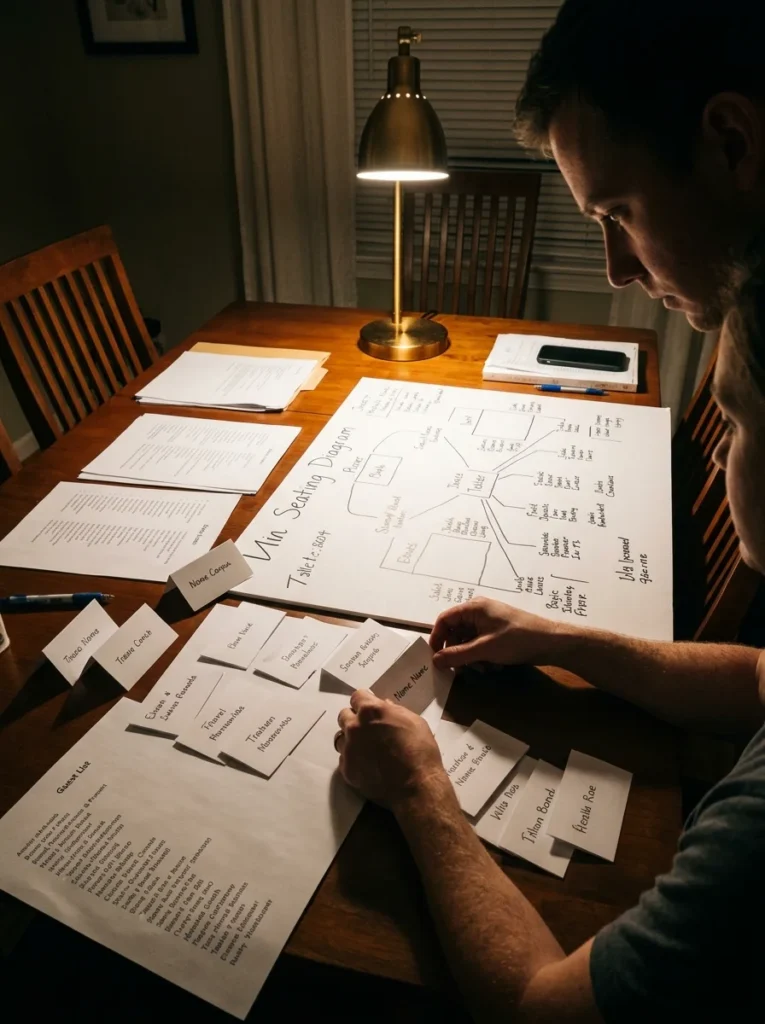
Seating Strategy Tips:
- Mix people who know each other with people who might genuinely enjoy each other — complete stranger tables feel uncomfortable; purely familiar tables feel like every dinner party they have already been to
- Seat elderly or mobility-impaired guests near restrooms, exits, and food service areas — never at the far end of a long venue
- Consider keeping children together at a table where they can be slightly louder without disrupting quieter guests
- Think about conversation compatibility — shared interests, professional connections, age ranges that complement rather than clash
- Never seat people with known interpersonal conflict at the same table — your reception is not the moment for resolution
Seating Display: The seating chart or escort card display is a visual element in its own right. A beautifully styled seating display — names on individual leaves, escort cards attached to small floral stems, or a chalk-lettered mirror — becomes a destination moment for arriving guests and sets the tone for the aesthetic of the entire reception.
FOOD AND DRINK
5. Choose a Food Format That Suits Your Celebration Style
The format in which food is served determines the atmosphere of your reception more than almost any other single decision. A formal plated dinner creates structure and elegance; a relaxed buffet creates movement and social interaction; a food station format creates excitement and choice; a family-style sharing meal creates warmth and intimacy.
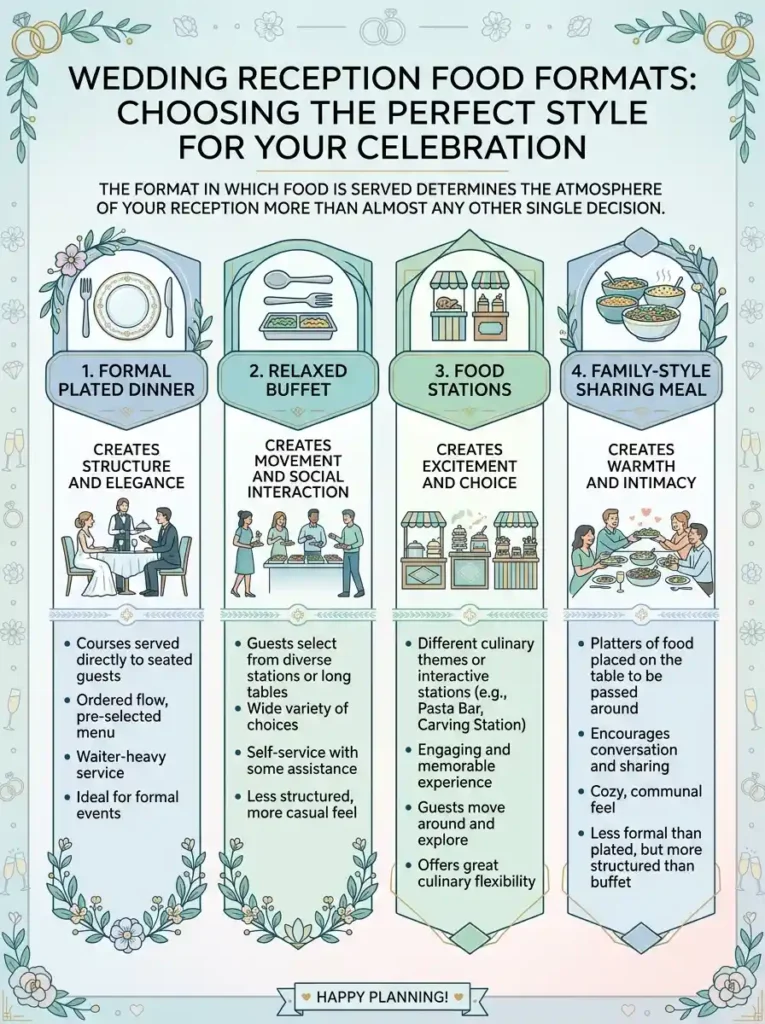
Match Your Format to Your Vision:
- Romantic and formal: Plated service with coordinated courses
- Relaxed and social: Buffet or food stations that guests visit freely
- Intimate and communal: Family-style sharing platters at long harvest tables
- Festive and interactive: Multiple themed food stations with live cooking elements
- Budget-conscious and joyful: A grazing table for cocktail hour followed by a food truck or buffet for the main meal
Whichever format you choose, the guiding principle is simple: feed your guests well, feed them generously, and feed them at the right time. Guests who wait more than ninety minutes after the reception begins to receive food become uncomfortable — and that discomfort colors everything that follows.
For a complete and detailed guide to every wedding buffet format, cuisine type, and food station concept, this comprehensive guide to wedding buffet ideas covers every approach with specific menus, quantity guides, and presentation tips.
6. Plan Late Night Snacks
Late-night food is one of the most consistently praised and most often overlooked elements of any wedding reception. Guests who have been dancing for three hours are genuinely hungry — and the arrival of casual, delicious comfort food at 10 or 11pm creates a wave of collective joy and energy that reinvigorates the dance floor and creates some of the most spontaneous and joyful moments of the entire evening.
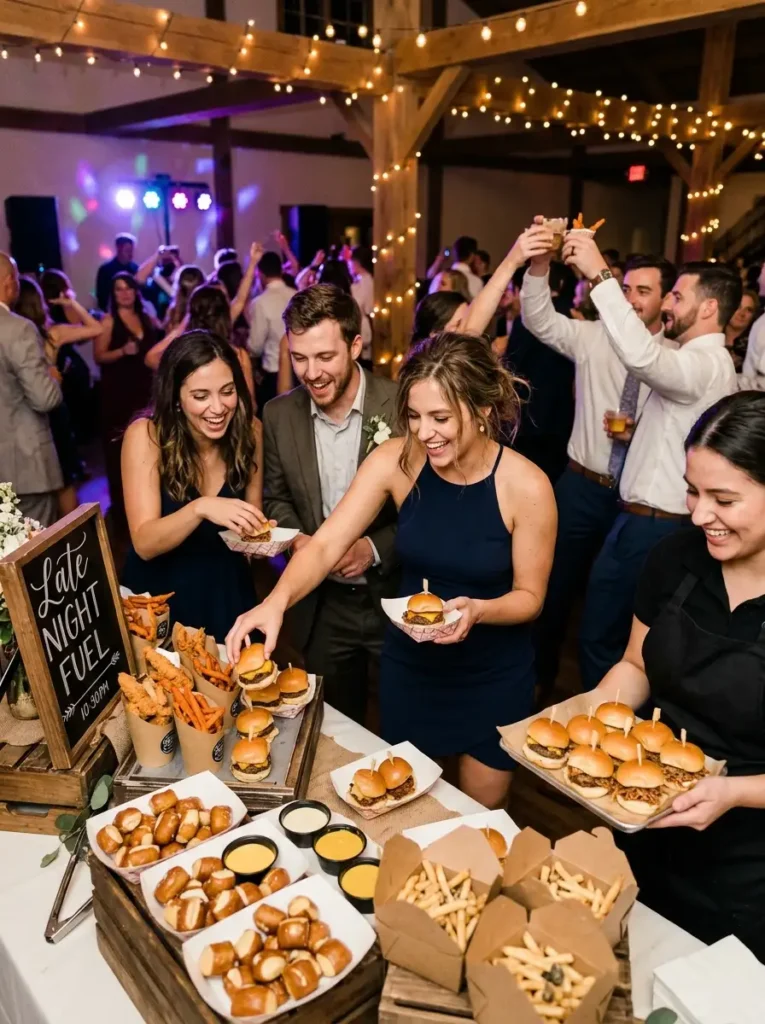
Best Late Night Snack Ideas:
- Mini sliders and fries — universally beloved, endlessly satisfying
- Pizza by the slice — simple, warm, and instantly celebratory
- Grilled cheese sandwiches — nostalgic, comforting, and perfect
- Tacos from a late-night station — festive and filling
- Mini hot dogs — crowd-pleasing and budget-friendly
- A noodle or ramen bar — quirky, unexpected, and absolutely loved
- Bacon sandwiches — particularly appreciated at UK and Irish receptions
Timing: Open the late-night snack station approximately two to two and a half hours after dinner service ends — typically between 10pm and 11pm. The announcement of late-night food is genuinely one of the most enthusiastically received moments of any wedding reception.
7. Create a Memorable Bar Experience
Your bar is one of the most-visited locations in your entire reception. Guests return to it multiple times throughout the evening. A beautifully styled bar — with a thoughtfully curated drinks list, beautiful glassware, quality garnishes, and genuinely skilled or enthusiastic service — creates an experience that guests notice and appreciate throughout the evening.
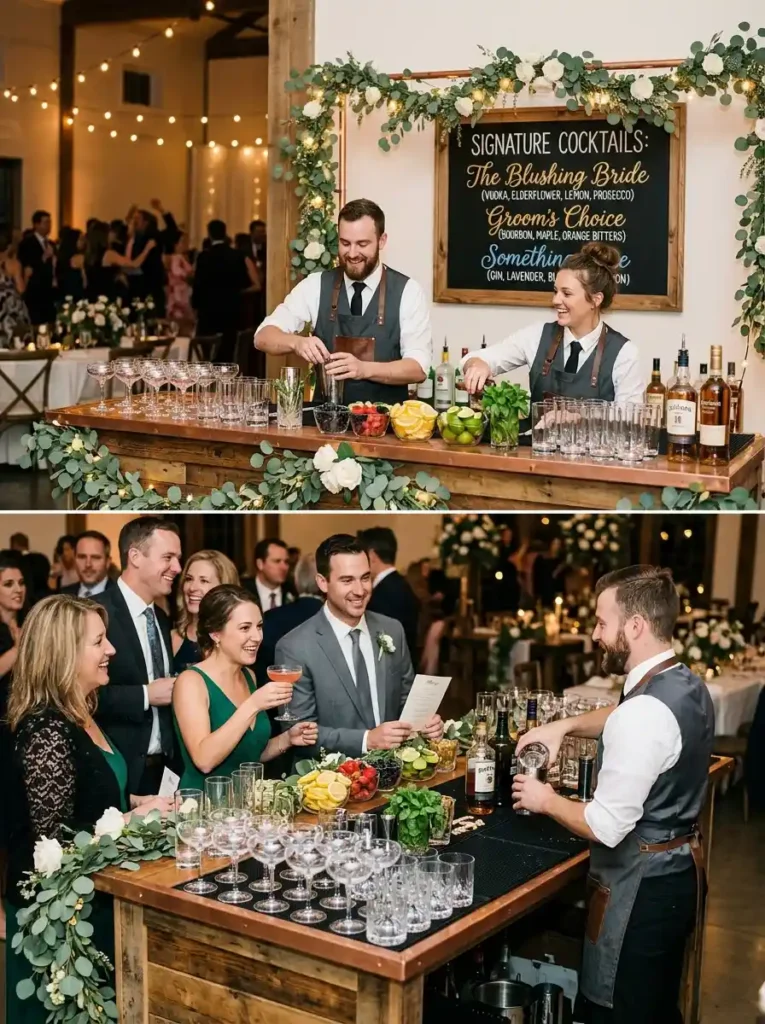
Bar Experience Elements:
The drinks list: Do not just offer “red, white, and beer.” Curate. Name the wines. Feature the local craft beer. Create a cocktail menu of two or three carefully chosen drinks that reflect your personality and the season.
The signature cocktail: One named cocktail that tells your story. Displayed prominently on a beautiful chalkboard sign. Served enthusiastically by your bartender.
Non-alcoholic options: Genuinely excellent, not an afterthought. A beautiful elderflower spritz, a fresh lemonade, a sparkling mocktail. Non-drinking guests should never feel second-class at your bar.
Styling: The bar backdrop — a greenery wall, a collection of vintage bottles, a neon sign, or a beautifully draped fabric backdrop — creates one of the most photographed areas of your reception. Style it accordingly.
8. The Wedding Cake Moment
The wedding cake cutting is one of the few genuinely universal reception traditions — guests expect it, it creates a natural focal moment in the timeline, and it provides both a dessert service opportunity and a memorable photographic moment.
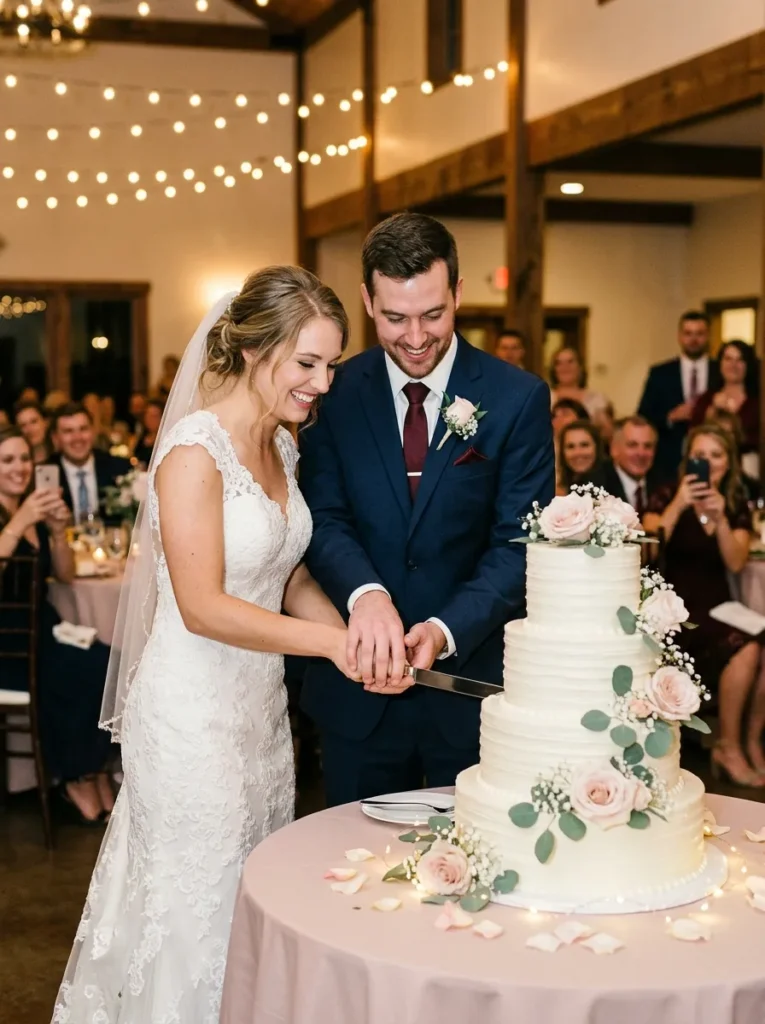
How to Make the Cake Cutting Memorable:
- Time it deliberately — typically 30 to 45 minutes after dinner service, before guests begin to leave
- Brief your DJ or bandleader to make a proper announcement, gather guests, and play your chosen song during the cutting
- Choose your song with care — something that means something rather than defaulting to generic “cake cutting song” playlists
- Keep the ceremony brief but genuine — one clean cut together, feed each other a bite, share a genuine laugh
- Ensure your photographer is positioned before the cutting begins
A Note on Wedding Cakes: The wedding cake does not need to be your only dessert — a beautifully styled dessert table with the cake as its centrepiece alongside two or three additional options creates a more generous, more impressive dessert moment for guests.
ATMOSPHERE AND DÉCOR
9. Get the Lighting Right
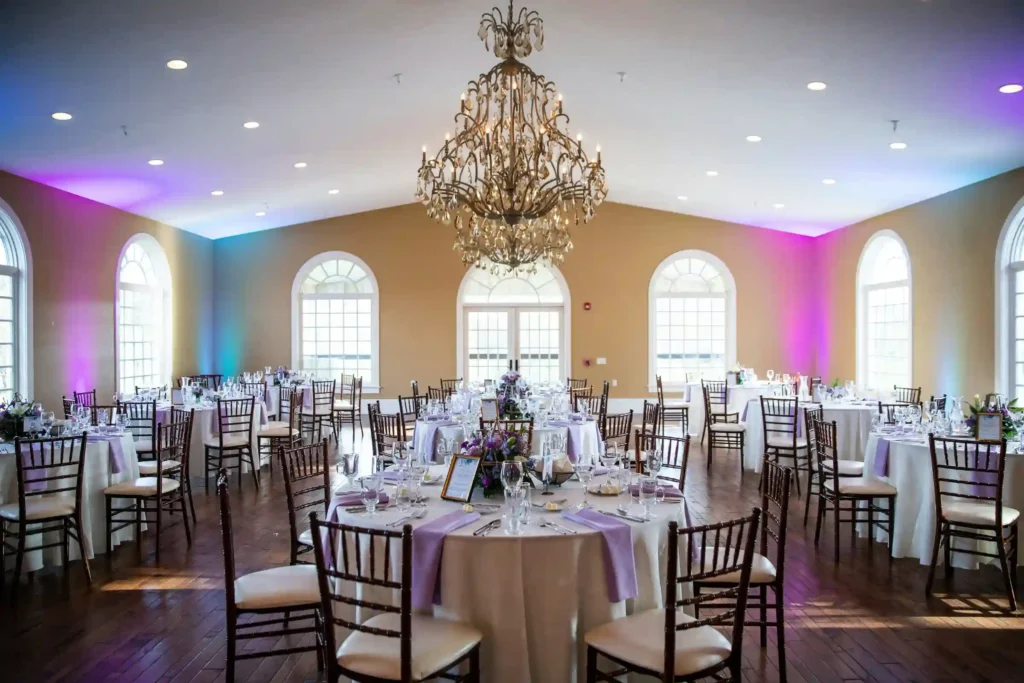
Of all the elements that determine how a reception space looks and feels, lighting is the single most powerful and most frequently underestimated. A beautifully lit room with simple flowers looks stunning. An elaborately flowered room with bad lighting looks flat. Always prioritize lighting above everything else in your décor planning.
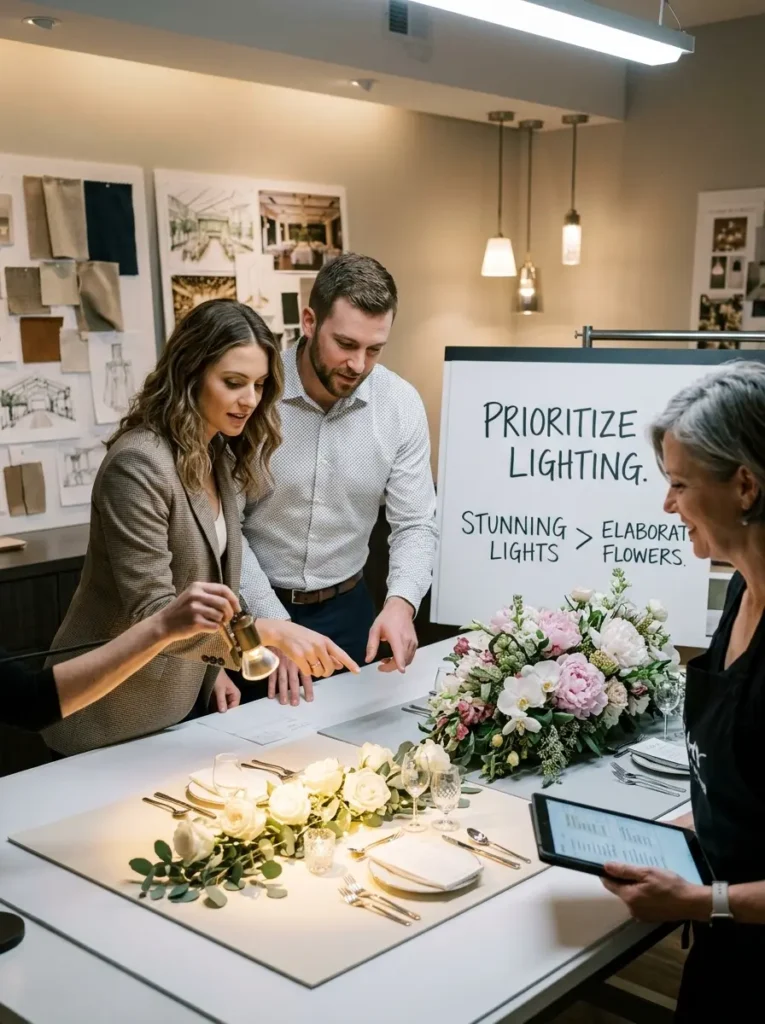
Lighting Layers That Transform a Reception Space:
Overhead ambient lighting: Edison bulb string lights, pendant lights, or a chandelier — warm, generous, and flattering. Never rely solely on venue overhead fluorescents.
Uplighting: Colored or warm white lights projected upward from the floor against walls, pillars, or drapery. Dramatically changes the mood and warmth of any space.
Candlelight: Tea lights, votives, tapers, and pillar candles on every table create a warm, flickering light quality that flatters every face and every photograph. Never underestimate candlelight.
Focal lighting: Spot or wash lighting directed at your ceremony backdrop, dance floor, or sweetheart table to draw the eye and create visual hierarchy in the space.
Fairy lights: String lights woven through greenery, wrapped around trees, or hung as a curtain backdrop create a magical, romantic quality particularly effective after dark.
Practical Note: Always confirm your venue’s power supply capacity before planning your lighting setup. Large lighting installations require significant electrical load — confirm this with your venue coordinator and your lighting supplier well before the wedding day.
10. Style Your Tables Beautifully
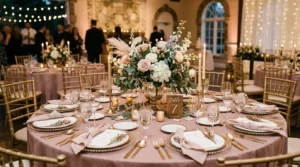
Your reception tables are where guests spend the majority of the evening. They eat at them, drink at them, laugh at them, and form their most intimate memories of your celebration around them. A beautifully styled table — with considered centrepieces, quality linens, thoughtful place settings, and personal details — communicates genuine care and attention that guests feel even if they cannot articulate exactly why.
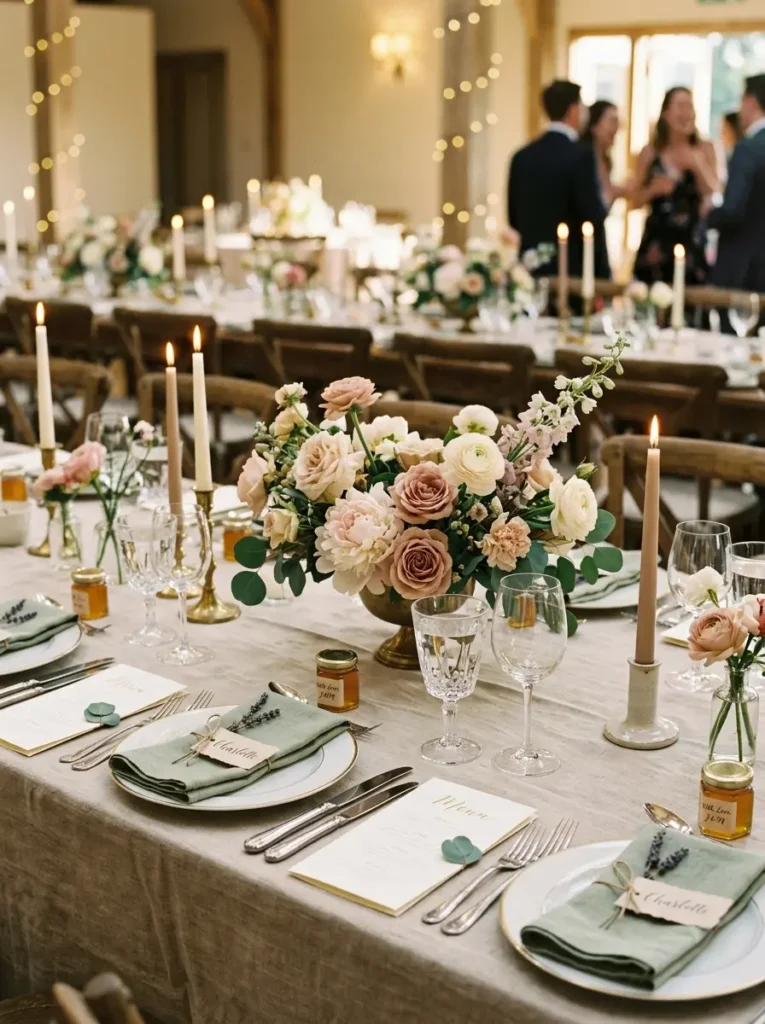
Table Styling Principles:
Centrepiece: The visual anchor of each table. It should be either very high (above eye level when seated) or very low (below eye level) to allow guests to see each other. Mid-height centrepieces create visual obstruction at exactly the wrong height.
Candlelight: Always. Every table. Even one small votive adds warmth that no other element can replicate.
Greenery: A runner of eucalyptus, herb stems, or seasonal foliage laid along the center of each table adds natural beauty at minimal cost.
Personal details: A menu card, a place card with a handwritten name, a small favor — these intimate details tell each guest that their seat was specifically and thoughtfully prepared for them.
For complete barn and rustic wedding table décor inspiration covering centrepieces, linens, place settings, and lighting, this comprehensive guide to rustic wedding ideas covers every styling element of a beautiful reception table.
11. Create a Photo Booth or Portrait Area
A dedicated photo opportunity area — whether a full photo booth setup, a beautifully styled backdrop with props, or simply a gorgeous corner of the venue that invites photography — gives guests a fun, interactive activity during the cocktail hour and early reception while producing candid images that capture the genuine joy of your celebration.
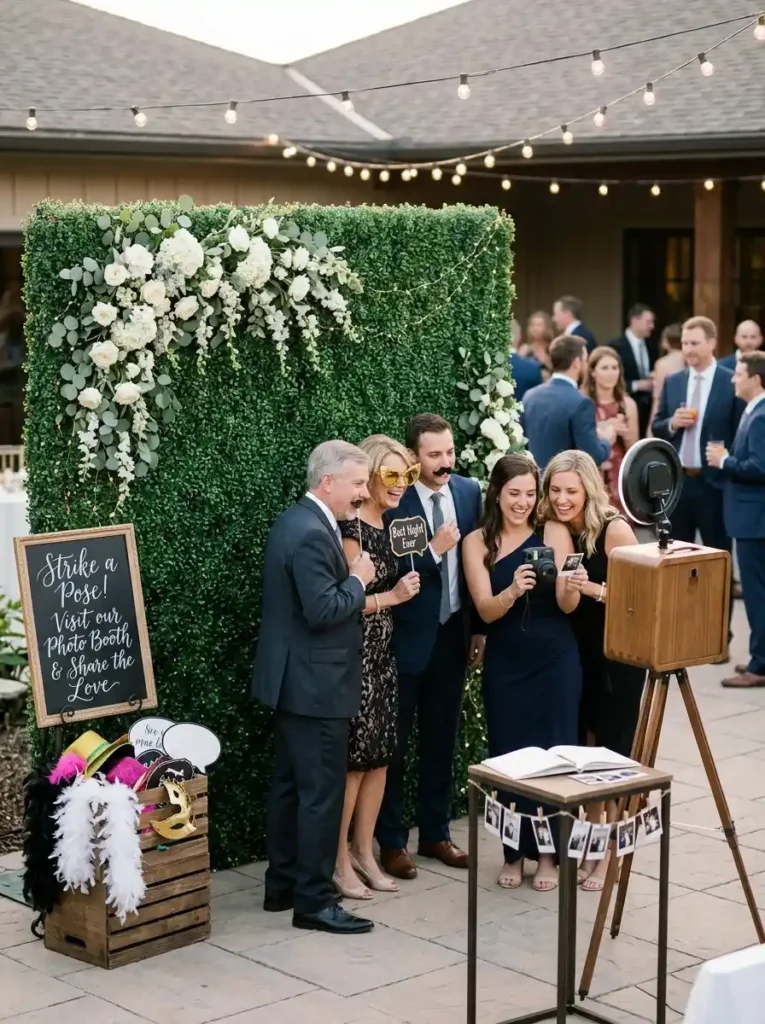
Photo Opportunity Area Options:
Classic photo booth: Camera or phone booth with instant printing, props, and a guestbook for printed strips. Cost: $800 to $2,000 for a full setup rental.
DIY backdrop with Polaroid camera: A beautiful backdrop (floral wall, greenery panel, or styled wooden frame) with a Polaroid camera left on a table for guests to use independently. Cost: $50 to $200.
Styled corner: A beautifully lit, beautifully decorated corner of the venue — a floral arch, a vintage chair, a string light backdrop — that guests naturally gravitate toward for portraits throughout the evening. Cost: varies widely depending on styling choices.
Props basket: A wicker basket containing fun props — sunglasses, signs, fake mustaches, speech bubbles — beside any backdrop. Cost: $20 to $50.
For creative and beautiful photo display ideas that extend the photography theme throughout your reception, these wedding photo display ideas offer dozens of inspiring approaches to showcasing your relationship story.
12. Use Your Guest Book Creatively
The traditional guest book — a white album where guests sign their names — ends up in a drawer within a year of the wedding, rarely opened and slowly forgotten. A creative guest book alternative turns the signing moment into a genuine experience and produces a keepsake you will actually display and return to.
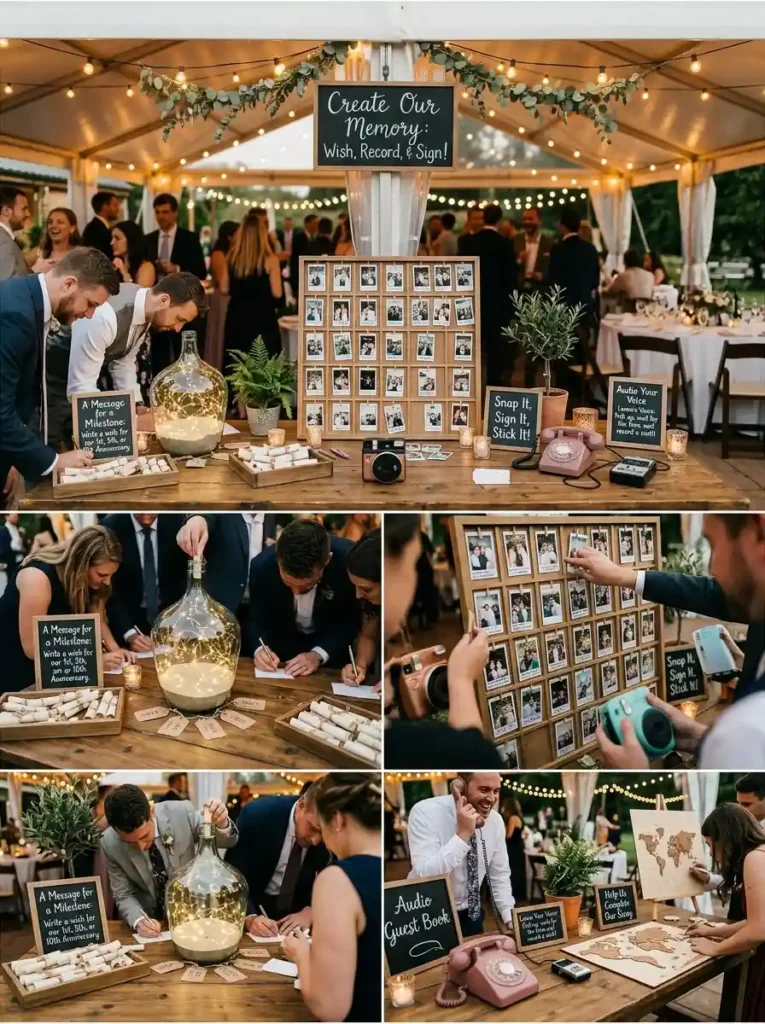
Creative Guest Book Ideas:
- A Polaroid photo album where guests take their photo and write beside it
- A fingerprint tree artwork where each guest adds their fingerprint as a leaf
- A wooden Jenga set where guests write on individual blocks — then play the game at every future dinner party
- A signed globe where guests mark their hometown
- A record sleeve collection signed by guests — displayed in a vinyl crate
- Advice cards collected in a beautiful keepsake box
For a complete guide to every creative guest book alternative with setup tips, materials lists, and display advice, these wedding guest book ideas cover thirty-two alternatives to the traditional sign-in book.
MUSIC AND ENTERTAINMENT
13. Get the Music Absolutely Right
Music is the engine of your reception. It determines the energy, the emotion, and the atmosphere of every moment from guest arrival through the final dance. Great music — whether live or DJ — makes an average reception exceptional. Poor music — the wrong volume, the wrong song at the wrong moment, a DJ who cannot read the room — can undermine even the most beautifully styled venue.
The Wedding Reception Music Structure:
Arrival and cocktail hour: Background music that facilitates conversation. Live acoustic, jazz, or a carefully curated playlist at 60 to 70 decibels. Guests should be able to talk without raising their voices.
Reception entrance: A specific, chosen song that announces the arrival of the newlyweds into the reception space. Make it something that genuinely excites you — this is a moment for energy and joy.
Dinner: Ambient background music at a conversational volume. Music that sets mood without dominating. Guests should be able to hear each other across the table.
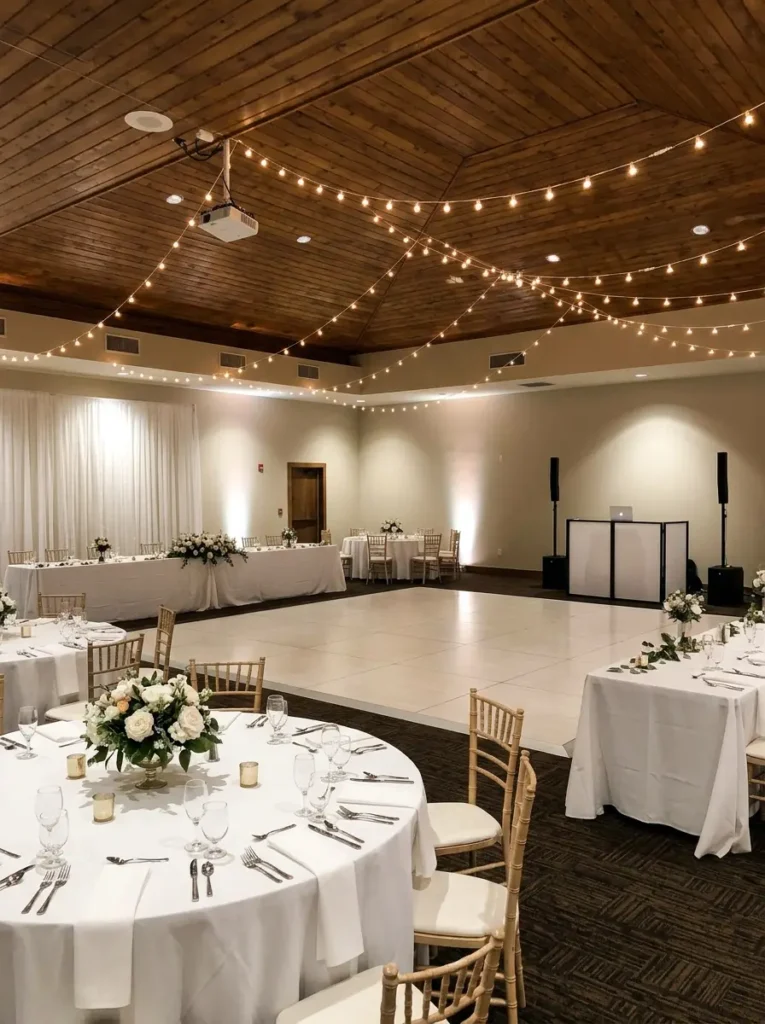
First dance: A song chosen for its personal meaning, not its popularity. The song you will both remember for the rest of your lives.
Open dancing: Progressive energy — build from slower, accessible songs early to peak dance floor energy in the middle of the evening, with a gradual wind-down toward the final song.
Final song: A song you choose deliberately — one that sends guests home with exactly the feeling you want them to carry with them.
Work With Your DJ or Band: The most important conversation you can have with your DJ or bandleader is about the musical journey of the evening — when to build, when to pull back, which songs are must-plays, and which are absolute vetoes. A DJ who understands the arc of the evening rather than just responding moment to moment will produce a dramatically better result.
14. Plan Your First Dance Thoughtfully
The first dance is one of the most universally anticipated moments of any wedding reception — and one of the most commonly mishandled. Too many couples choose a first dance song because it seems right rather than because it is genuinely their song, and perform a slow sway that they are visibly uncomfortable with because they spent six months learning a choreographed routine they do not enjoy.
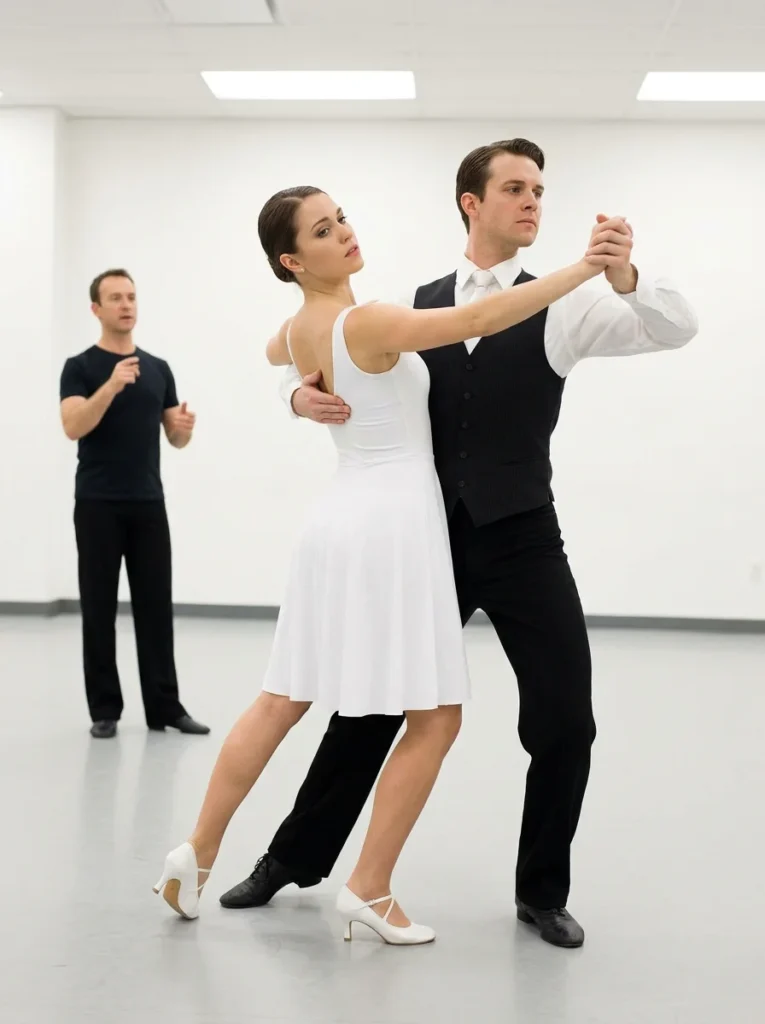
First Dance Options:
The simple slow dance: One song, together, just the two of you. A genuine hold, a genuine moment, a genuine smile. No choreography required — just presence.
A shortened version: Many couples have the DJ or band fade the song at the ninety-second mark rather than playing the full three to four minutes. This is completely acceptable and often produces a more focused, more powerful moment.
Invite guests to join you: Transition from your first dance into a general dance floor opening by inviting all couples to join you partway through the song. This transforms a sometimes awkward spotlight moment into an inclusive, joyful collective experience.
A surprise mid-song change: Begin with a slow, romantic song and transition — via a pre-arranged DJ mix — to an upbeat song that reflects your genuine personalities. This surprise consistently produces genuine laughter, joy, and a dance floor that fills immediately.
15. Structure the Speeches for Maximum Impact
Wedding speeches, handled well, are among the most genuinely moving and most joyfully entertaining moments of any reception. Handled poorly — too long, too many, at the wrong moment in the timeline — they drain energy from the room and create the awkward spectacle of guests checking phones and refilling glasses out of politeness.
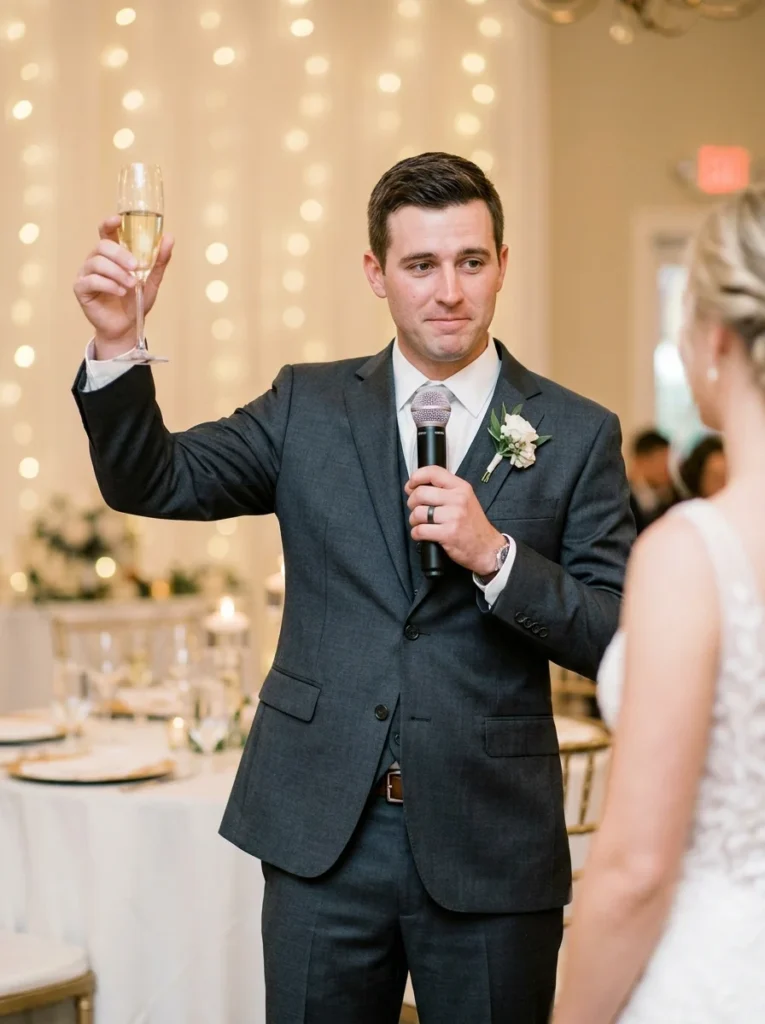
Speech Planning Principles:
Limit the number: Two to four speeches is ideal. More than four speeches, regardless of individual quality, collectively drain the room. Be firm with well-meaning relatives who want to add “just a brief word.”
Time them strictly: Five to seven minutes per speech maximum. Brief your speakers in advance — give them a specific time limit, not a guideline. A genuinely funny three-minute speech is dramatically more effective than a heartfelt twelve-minute speech that tests the room’s patience.
Choose the timing: After the main course is cleared and before dessert is served is the traditional and still most effective moment for speeches. Guests are comfortable, satisfied, and the natural break in service creates a moment of collective focus.
Brief your speakers in advance: Share the other speakers’ content categories so there is no duplication. Discuss appropriate content — this is not the moment for embarrassing stories that have not been pre-cleared with the couple.
End with the toast: Every speech should conclude with a clear, raisable toast to the couple. Brief your speakers on this — nothing kills the energy of a speech faster than an audience uncertain whether they are supposed to drink yet.
16. Plan Surprise Entertainment Elements
The most talked-about receptions are almost always those that contained an element of genuine surprise — something guests did not expect, something that created a moment of collective joy or astonishment that no one saw coming.
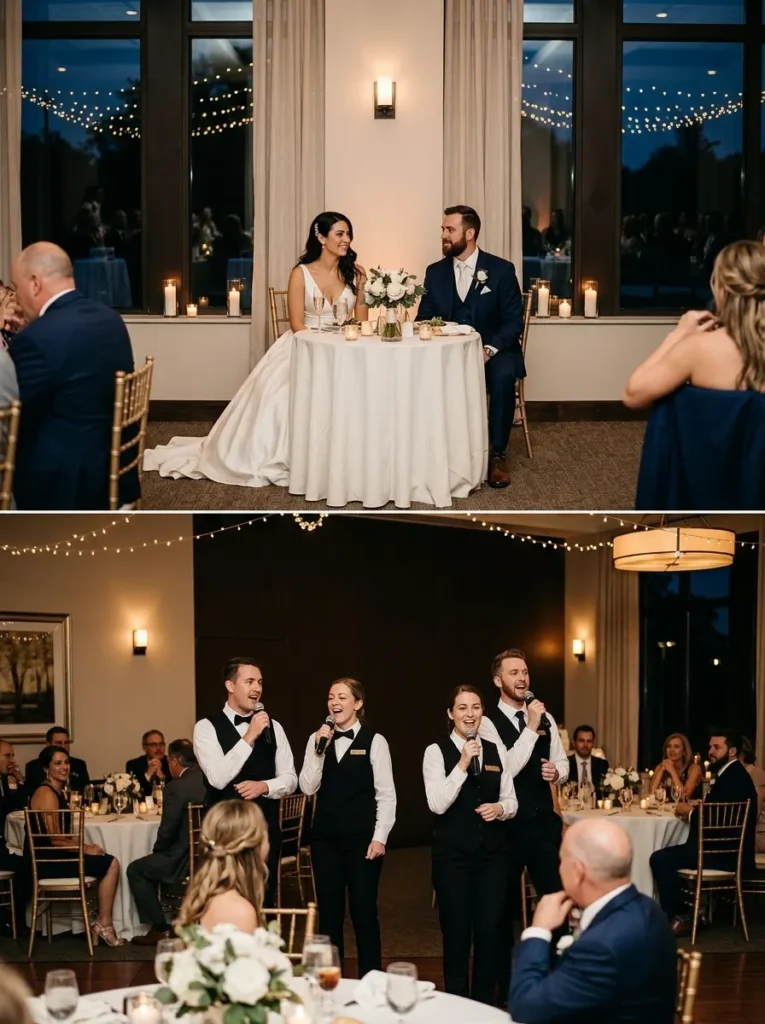
Surprise Reception Entertainment Ideas:
A surprise performance: A talented family member who performs a song, a dance, or a comedy routine that guests did not know was coming
A flash mob: Pre-rehearsed with willing guests during the cocktail hour — the groom’s side launches into a choreographed dance at a prearranged signal during the reception
A video message: A beautifully edited compilation video of messages from people who could not attend — friends overseas, elderly relatives, beloved figures from the couple’s shared history
A confetti or balloon drop: Timed to a specific moment — the first dance, midnight, or the first song of the open dancing
A fireworks display: Even a brief sparkler display or professional fireworks outside the venue creates a genuinely spectacular surprise moment
A midnight game or activity: A surprise late-night lawn game tournament, a karaoke moment, or an unexpected activity that revives energy in the final hour
TIMELINE AND FLOW
17. Build a Detailed Reception Timeline
The single most practical thing you can do to ensure a smooth, flowing, genuinely enjoyable reception is to build a detailed, realistic, and widely shared timeline — and then actively manage it throughout the day.
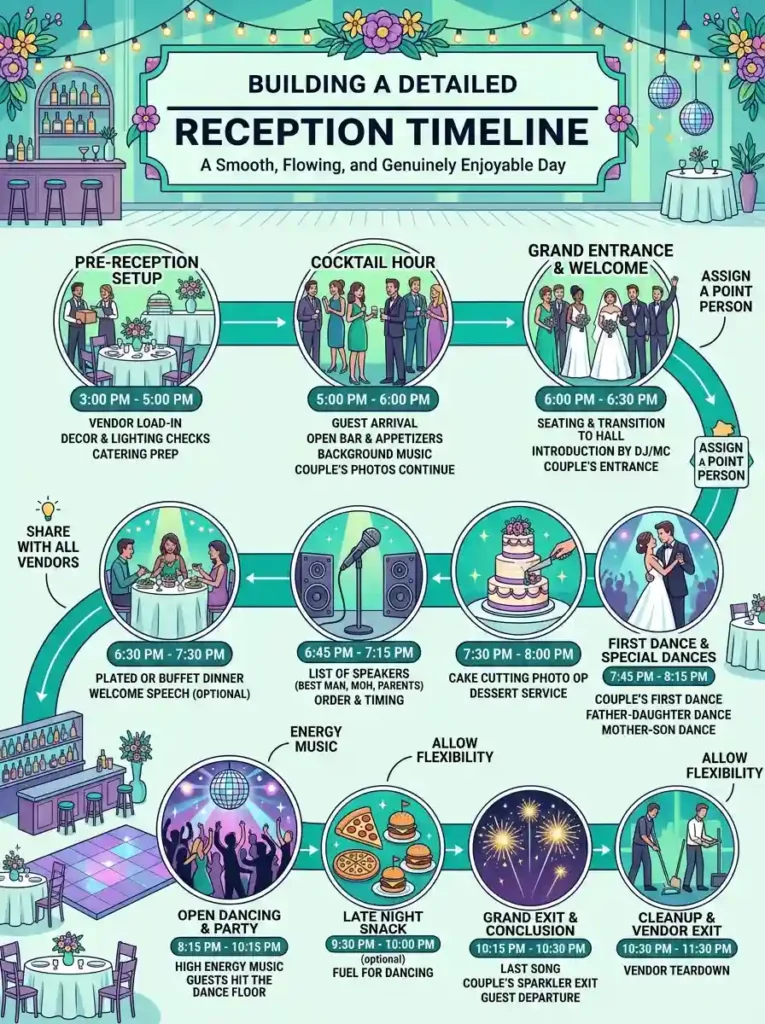
Sample Wedding Reception Timeline (Evening Ceremony):
| Time | Event |
|---|---|
| 5:00 PM | Guests arrive at reception, cocktail hour begins |
| 5:00–6:30 PM | Cocktail hour — drinks, canapés, mingling |
| 6:30 PM | Guests invited to be seated |
| 6:45 PM | Couple’s grand entrance into reception |
| 6:50 PM | Welcome speech (host or MC) |
| 7:00 PM | First course served |
| 7:30 PM | Speeches begin (between courses) |
| 8:15 PM | Main course served |
| 9:00 PM | Wedding cake cutting |
| 9:15 PM | First dance |
| 9:20 PM | Parent dances (if having them) |
| 9:30 PM | Dance floor opens to all guests |
| 10:30 PM | Late-night snacks revealed |
| 11:30 PM | Final songs begin |
| 12:00 AM | Last dance and farewell |
Build in Buffer Time: Every timeline needs buffer — the speeches that run five minutes long, the cake cutting that takes longer than expected, the guests who need extra time to find their seats. Build ten to fifteen minutes of buffer into every transition point.
Share Your Timeline Widely: Your venue coordinator, caterer, DJ or bandleader, photographer, and MC should all have a copy of your reception timeline at least two weeks before the wedding. Everyone managing an element of your reception needs to know exactly when their moment comes.
18. Hire a Wedding Coordinator or MC
The most undervalued investment in any wedding reception is a day-of coordinator or a skilled MC — someone whose entire role is to manage the logistics, make the announcements, handle the unexpected, and ensure the evening flows exactly as planned while you focus on enjoying your own wedding.
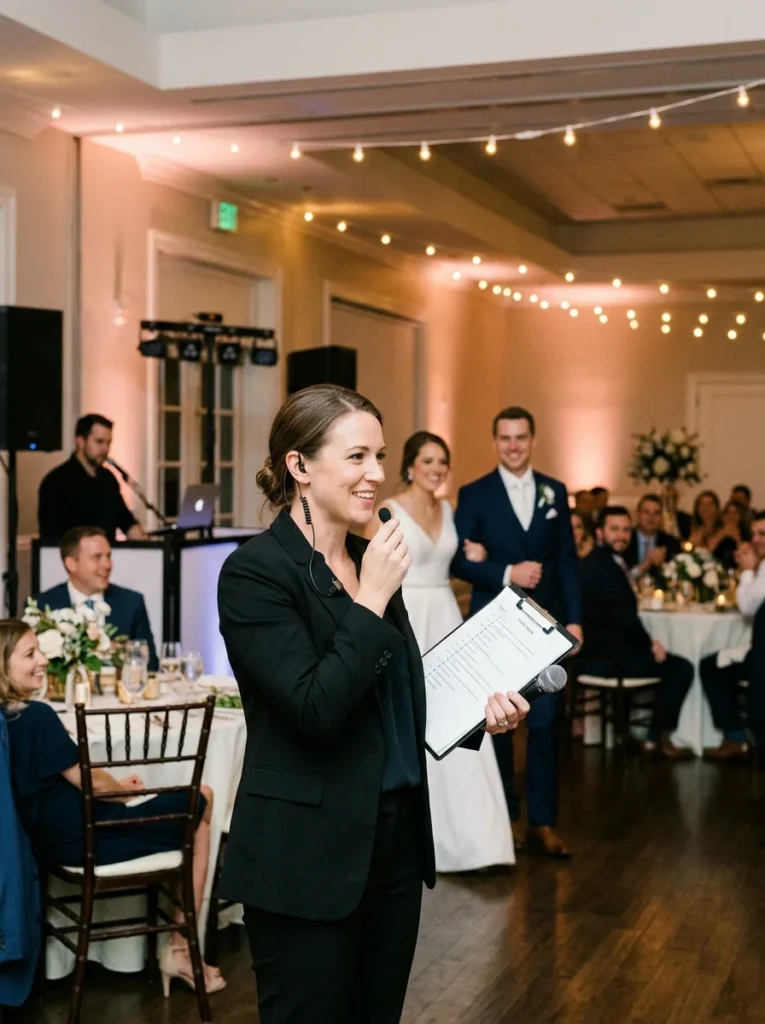
What a Day-Of Coordinator Does:
- Manages vendor arrivals and setup
- Keeps the timeline on track
- Handles unexpected problems without troubling the couple
- Coordinates between all vendors throughout the day
- Manages the flow of guests between ceremony, cocktail hour, and reception
- Ensures the couple gets to eat and drink at their own reception
What an MC Does:
- Welcomes guests formally into the reception
- Introduces speeches and speakers
- Announces the first dance, cake cutting, and other key moments
- Manages the transition between dinner and dancing
- Keeps the energy of the room alive throughout the evening
Cost: Day-of coordinators typically cost $500 to $1,500. An MC — often the DJ, a talented friend, or a professional — costs $200 to $800 separately or is included in a DJ package.
19. Plan the Grand Entrance
Your entrance into the reception — as a newly married couple — is one of the most energy-creating moments of the entire evening. A well-executed grand entrance sets the tone for the celebration that follows, generates a genuine wave of collective joy from your guests, and provides your photographer with one of the most dynamic and expressive images of the entire day.
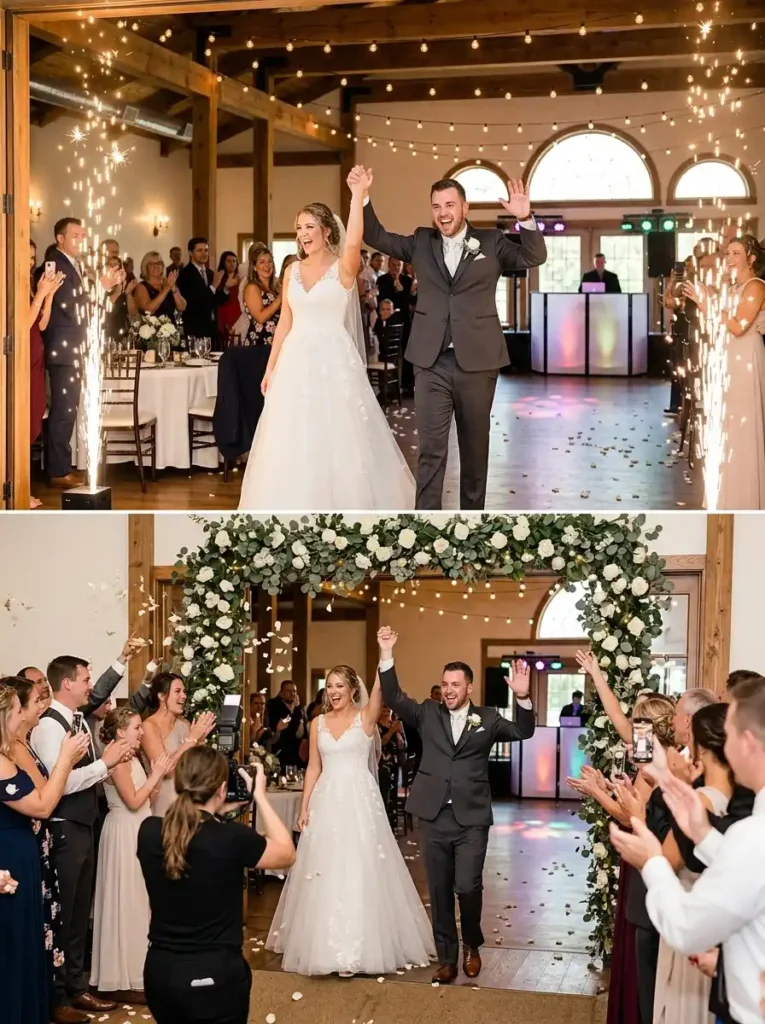
Grand Entrance Tips:
Choose your song carefully: The entrance song should be high-energy, personally meaningful, and immediately recognizable to your guests. It should make you want to walk — or run, or dance — into a room.
Brief your MC: The introduction — your names, your titles as newlyweds, any fun framing that sets up the moment — should be rehearsed and enthusiastic.
Bring genuine energy: This is the moment to be unguarded and joyful. Run in, dance, spin each other, wave to your people. Guests take their emotional cue from you — if you are genuinely excited, they will be too.
Position your photographer: Your entrance should be captured from the front — with the crowd visible behind you reacting — as well as from a position that captures the crowd’s response. Brief your photographer specifically on this.
20. Create a Comfortable Reception for Every Guest
A successful wedding reception makes every guest — every age, every background, every relationship to the couple — feel genuinely welcome, comfortable, and included. This requires thinking beyond the couple’s preferences and considering the full range of people in the room.
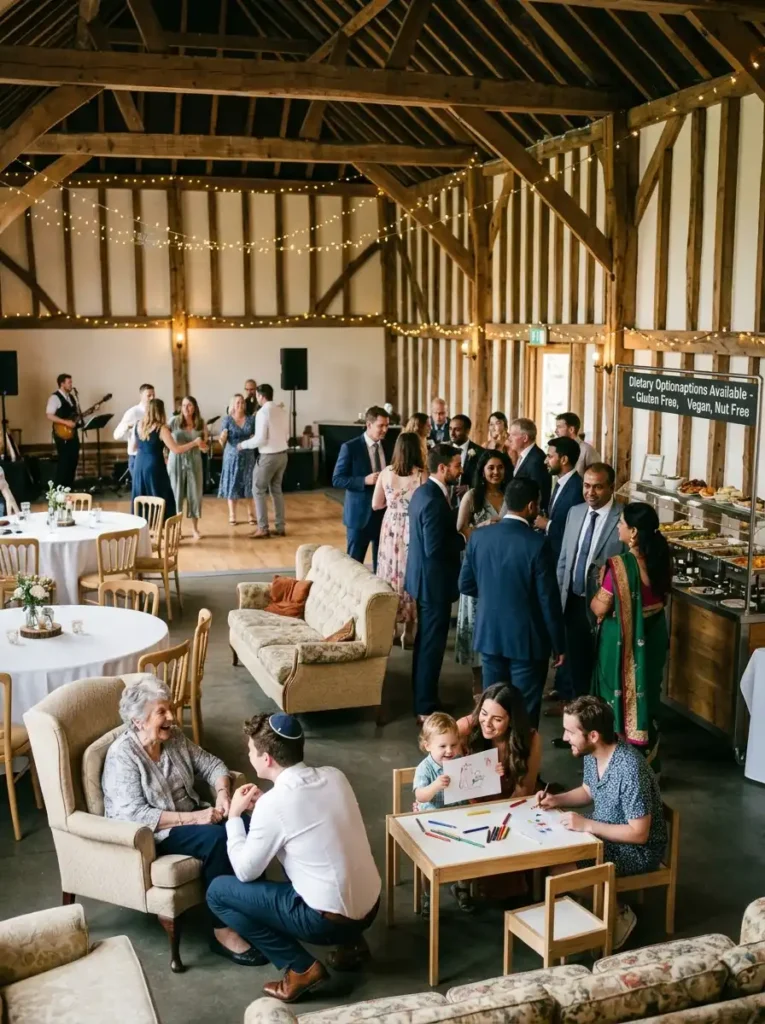
Guest Comfort Considerations:
Children: If children are attending, create a designated area with activities — colouring pages, simple toys, a film showing in a side room — that gives them something to do while adults celebrate. A children’s menu at dinner removes the anxiety of feeding small, picky eaters.
Elderly guests: Ensure seating is available throughout the cocktail hour. Position elderly guests’ tables near the exit, the restrooms, and the food service. Make sure someone checks in on elderly guests periodically throughout the evening.
Non-drinkers: Ensure non-alcoholic options are genuinely appealing and prominently available — not an afterthought at the far end of the bar. A beautiful mocktail or premium soft drink selection communicates inclusion rather than accommodation.
Guests with dietary requirements: Brief your catering team on all dietary requirements. Ensure that vegetarian, vegan, and allergy-specific guests are not served the default dish with the relevant element removed — create genuinely delicious options for every dietary need.
PERSONAL TOUCHES AND MEMORABLE MOMENTS
21. Add Personal Details That Tell Your Story
The personal details that distinguish a memorable wedding reception from a beautiful but generic one are almost always small — a table named for a meaningful place rather than numbered, a playlist that reflects your actual music taste, a menu that includes the dish from your first date, a reading chosen because it genuinely moves you. These details cost almost nothing and create the specific, individual character that makes a wedding feel like it belongs to specific people rather than to the concept of a wedding.
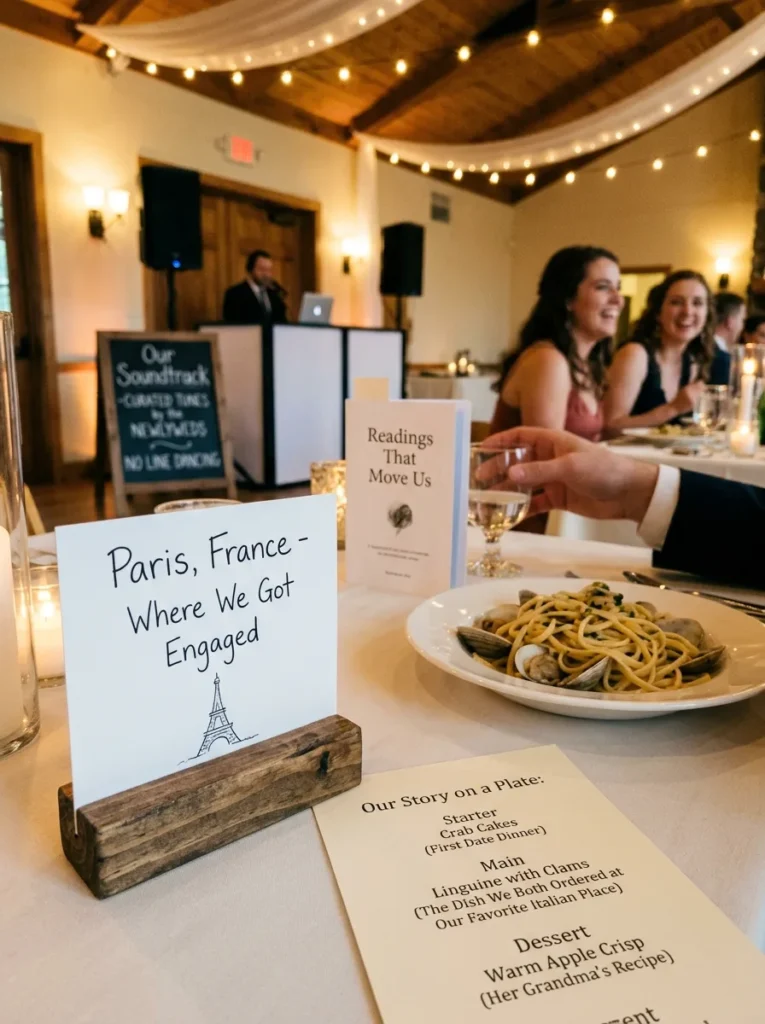
Personal Reception Details to Consider:
Tables named for meaningful places: Instead of Table 1 through Table 12, name tables for cities you have visited together, books you both love, films that matter to your relationship, or places from your shared history.
A relationship timeline display: A beautifully styled display of photographs from your relationship — first meeting, early dates, adventures, milestones — arranged chronologically as a visual journey through your story.
Meaningful readings or toasts: A reading at dinner from a book you both love, a song played live by a friend, or a toast made by someone who genuinely knows your story.
Personalized menus: Not just a list of dishes, but a menu that names each course after something meaningful — “The First Date Starter” or “The Rome Main Course” — a small, private joke that guests enjoy puzzling over.
A memory table: A display honoring loved ones who have passed — photographs, flowers, and a simple note that acknowledges their presence in spirit.
For creative and beautiful ways to display photographs and personal mementos throughout your reception, these wedding photo display ideas offer inspired approaches for every style and budget.
22. Plan the Perfect Send-Off
The farewell — the moment the couple leaves the reception — is the final image of the entire wedding day. For your guests, it is the last thing they will see; for your photographer, it is the final image of the gallery; for you, it is the transition into your first moments as a married couple alone together. Make it genuinely beautiful.
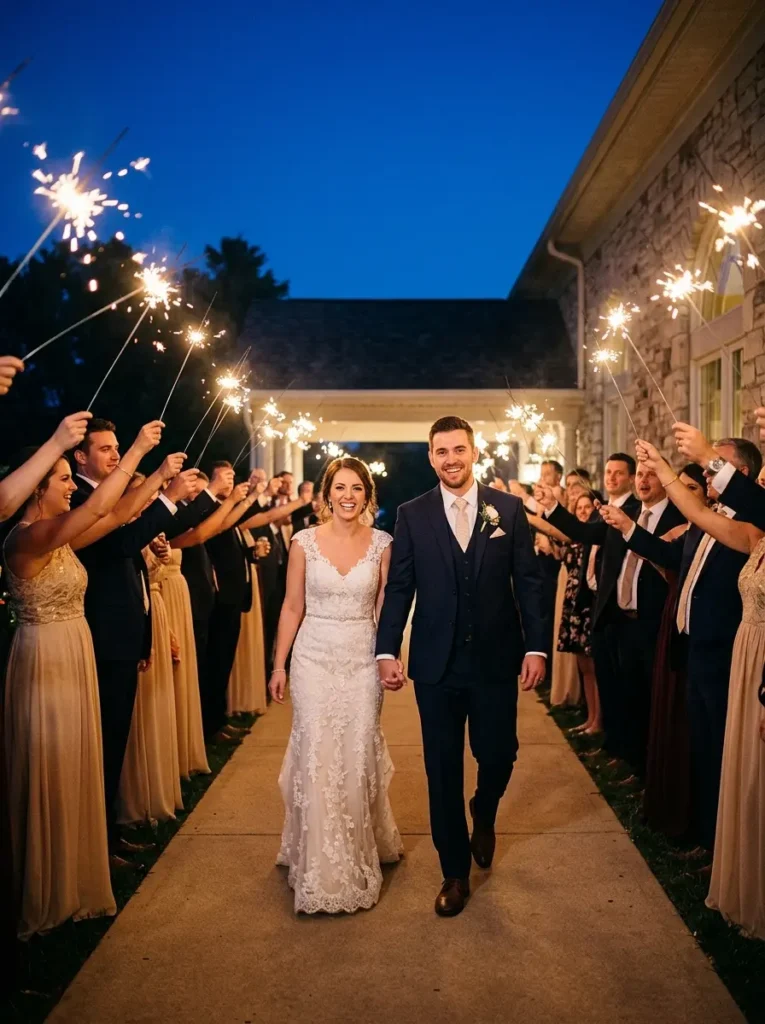
Wedding Send-Off Ideas:
Sparkler exit: Guests line up holding sparklers as the couple walks between them. Produces extraordinary photographs. Brief guests on sparkler safety and ensure a designated helper manages the lighting sequence.
Dried flower or petal confetti: A cascade of biodegradable dried petals or confetti thrown as the couple exits. Beautiful, natural, and genuinely joyful.
Ribbon wand exit: Guests wave colorful ribbon wands — simple, beautiful, and completely mess-free. Particularly lovely for daytime weddings.
Bubble exit: Guests blow bubbles as the couple exits — dreamlike, photogenic, and gentle.
Lantern release: Sky lanterns released as the couple departs — magical and visually extraordinary. Check local regulations before planning — lantern releases are restricted or prohibited in many areas.
A walk back through the reception: Simply walking back through the room — stopping to embrace, thank, and genuinely connect with guests as you leave — creates a warm, intimate farewell that produces some of the most emotionally genuine photographs of the entire day.
23. Take Time to Be Present
The most common regret expressed by couples in post-wedding surveys is not about the flowers or the food or the music. It is about presence — the feeling that the day passed too quickly, that they were too focused on logistics and photographs and managing the room to genuinely experience their own wedding.
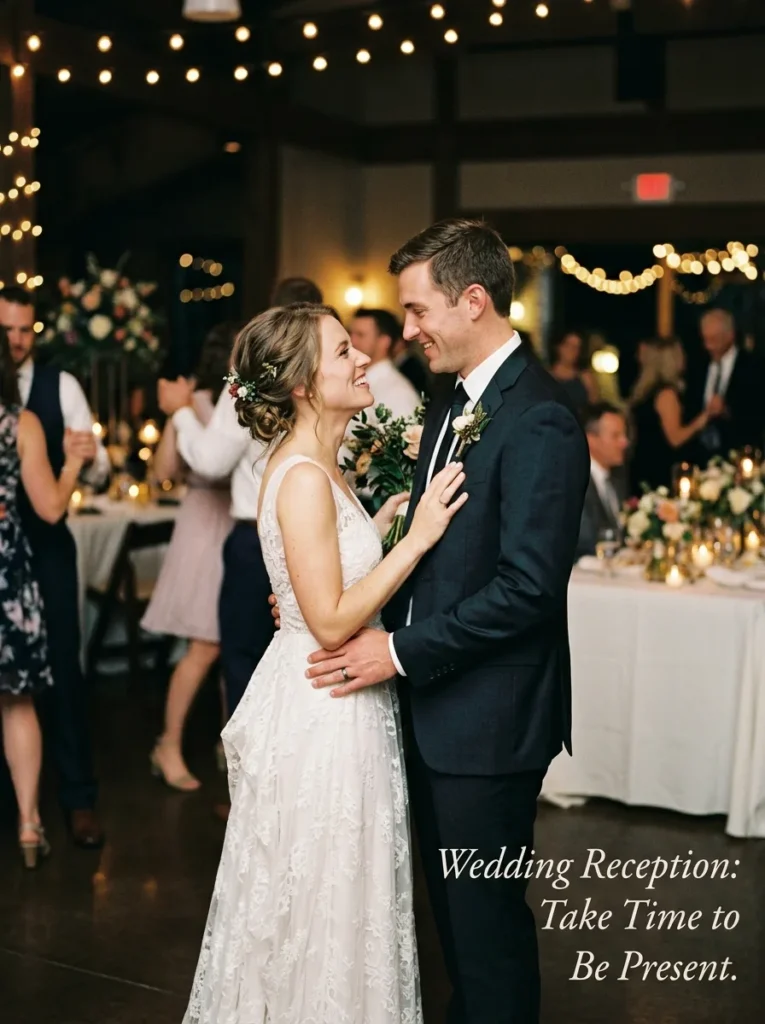
Strategies for Being Present at Your Own Reception:
Eat. Assign someone — your coordinator, a trusted bridesmaid — the specific responsibility of ensuring you get food and drink. Many couples go the entire reception without eating their own wedding meal.
Take five minutes alone together. Immediately after the reception dinner, before the dancing begins, slip away for five quiet minutes together. Just the two of you, together, in the middle of it all. It will be the moment you both remember most clearly.
Greet every table. Move through the reception during dinner service and spend two to three minutes at every table — greeting guests, hearing their stories, receiving their love. This physical journey through the room ensures you connect with every person who came to celebrate you.
Put your phone away. The temptation to document your own wedding on your phone is genuine and completely understandable — and completely counterproductive. Your photographer is capturing everything. Your job is to experience it.
Dance at your own wedding. This sounds obvious. It is surprisingly easy to forget. Get on the dance floor and stay there.
24. End the Evening Memorably
The final thirty minutes of a wedding reception are the ones guests carry home with them. The last song, the last dance, the last toast, the final send-off — these are the images and feelings that consolidate the entire evening into a lasting memory. Plan the ending with the same care as the beginning.
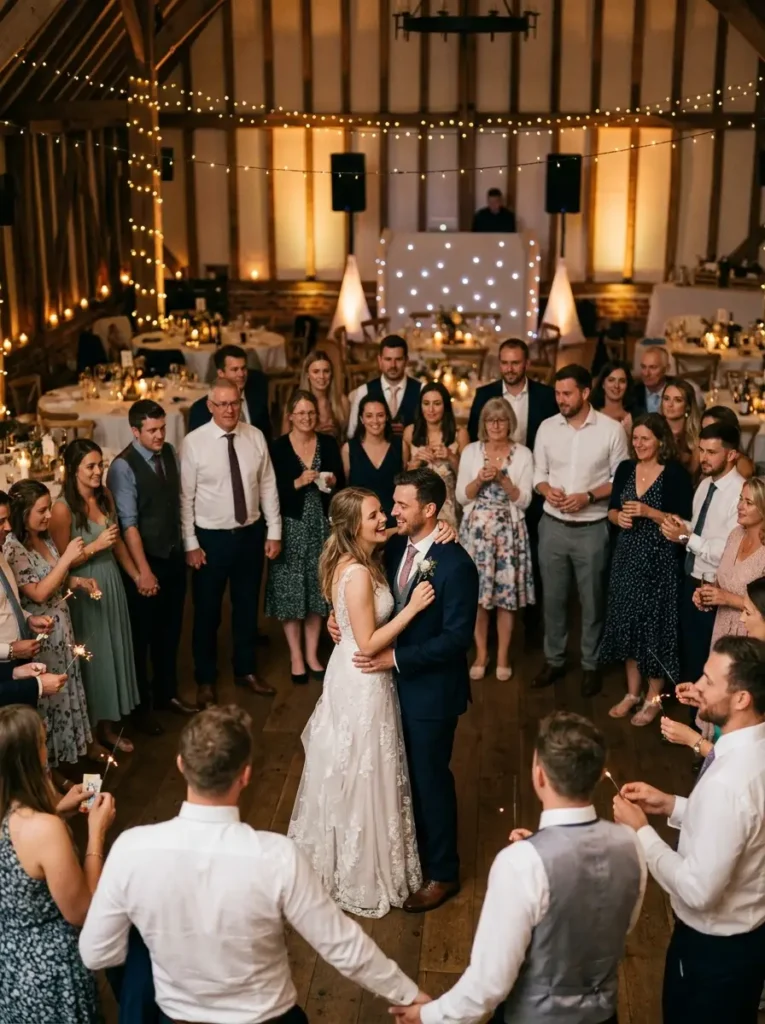
How to End a Wedding Reception Memorably:
Choose your final song deliberately: The last song of the evening sends guests home in a specific emotional state. A slow, emotional song creates a feeling of warmth and nostalgia. An upbeat, joyful anthem creates energy and celebration. Choose the feeling you want to leave people with and find the song that creates it.
Do a final toast: In the last fifteen minutes of the evening, take the microphone for a brief, genuine final toast — thanking your guests for being there, acknowledging that the evening is ending, and raising a glass to everything ahead. This creates a natural, felt conclusion rather than an arbitrary stop to the music.
Organize a final group photograph: Gather every guest for a final group image — outdoors or in the venue space — at the very end of the evening. This image, taken with every person who attended your wedding assembled together, becomes one of the most treasured photographs of the entire day.
Have your send-off perfectly timed: The send-off should happen after the last song, not before. Guests should be gathered and ready, sparklers or petals in hand, as the music ends — so that the farewell is the final, definitive image of the evening rather than an addition to it.
WEDDING RECEPTION PLANNING CHECKLIST
9 to 12 Months Before:
- [ ] Reception venue booked and confirmed
- [ ] Catering format decided and caterer contracted
- [ ] DJ or band booked
- [ ] Photographer reception coverage confirmed
- [ ] Bar format decided (full open bar, beer and wine, BYO)
6 to 9 Months Before:
- [ ] Reception menu finalized
- [ ] Dietary requirements collection system in place
- [ ] Entertainment plan finalized (speeches, first dance, entertainment)
- [ ] First dance song chosen and rehearsed (if choreographing)
- [ ] Seating plan strategy developed
3 to 6 Months Before:
- [ ] Seating plan drafted (adjust as RSVPs arrive)
- [ ] Welcome drink and cocktail hour plan confirmed
- [ ] Décor and table styling plan developed
- [ ] Photo booth or portrait area planned
- [ ] Guest book alternative decided and materials ordered
1 to 3 Months Before:
- [ ] Final guest count confirmed with all vendors
- [ ] Reception timeline drafted and shared with all vendors
- [ ] Speeches briefed — speakers know their time limit and content boundaries
- [ ] Late-night snack plan confirmed with caterer
- [ ] Send-off plan confirmed (sparklers, petals, or alternative)
2 to 4 Weeks Before:
- [ ] Final timeline distributed to venue coordinator, caterer, DJ, photographer, and MC
- [ ] Seating chart finalized and displayed
- [ ] Place cards completed
- [ ] Centrepieces and décor elements confirmed
- [ ] Dietary requirements list finalized and shared with caterer
Week Before:
- [ ] Final vendor confirmations sent
- [ ] Sparklers or send-off supplies confirmed and collected
- [ ] Emergency kit packed (safety pins, stain remover, pain relief, phone charger, lip balm, breath mints)
- [ ] Designated person confirmed for each key coordination role (keeping couple fed, managing timeline, handling unexpected issues)
WEDDING RECEPTION FAQS
How long should a wedding reception last?
Most wedding receptions run for five to six hours — enough time for a cocktail hour, a sit-down dinner with speeches, a first dance, and two to three hours of open dancing. A reception shorter than four hours can feel rushed; longer than seven hours risks exhausting both the couple and the guests. The ideal timeline depends on your guest list age range (older guests typically leave earlier), your venue’s closing time, and how important the dancing portion of the evening is to you.
What is the most important element of a wedding reception?
Food and music, consistently, in post-wedding surveys. Guests who are well fed and moved to dance have an extraordinary time regardless of what the centrepieces look like or whether the napkins are linen or cotton. Protect your catering budget and your entertainment budget above all else.
How do I keep guests entertained during the couple portrait session after the ceremony?
The cocktail hour exists precisely for this purpose — drinks, canapés, background music, and optional activities (lawn games, a photo opportunity area, a grazing table to explore) keep guests genuinely comfortable and entertained for sixty to ninety minutes while portraits are taken. Brief your guests in advance via your wedding website that portraits will follow the ceremony — guests who expect this are relaxed about it.
Should we have a receiving line at the reception?
A receiving line — the couple and their parents greeting every guest individually as they arrive at the reception — is traditional and ensures every guest receives a personal welcome. It also takes considerable time (a receiving line for 100 guests takes approximately forty-five minutes) and can create a logistical bottleneck at the reception entrance. An alternative is for the couple to move from table to table during dinner service, spending two to three minutes with every table — achieving the same personal connection more organically.
What should be on the wedding reception timeline?
A complete reception timeline should include: guest arrival time, cocktail hour start and end time, seating time, couple’s entrance, first course service, speech schedule (specific order and allocated time for each), main course service, cake cutting, first dance, parent dances (if having), dance floor opening, late-night snack service, last song, and send-off time. Every key vendor should have a copy of this timeline at least two weeks before the wedding.
How do I handle unexpected problems on the day?
Designate a trusted person — your coordinator, your maid of honor, a reliable family member — as your day-of problem solver. Brief them in advance that their job is to handle anything unexpected without bringing it to you unless it is absolutely unavoidable. Give them a list of all vendor contact details, a copy of the timeline, and the authority to make decisions on your behalf. Then trust them to do their job and let yourself enjoy your wedding.
FINAL THOUGHTS
A great wedding reception is not the sum of its details — the flowers, the food, the music, the lighting, the favors, the send-off. A great wedding reception is the feeling those details create collectively: the feeling that arrives when everyone you love is in the same room, celebrating something genuinely worth celebrating, fed and warmed and moved by music and connected by joy.
That feeling does not require a large budget. It does not require a premium venue. It does not require a professional florist or a five-piece band or a five-course dinner. It requires thoughtfulness — genuine, specific, caring thought about what will make every single person in that room feel welcomed, celebrated, and glad they came.
Use these 24 wedding reception ideas and tips as your planning foundation. Take the strategies that resonate, adapt them to your specific vision, and build something that is completely and confidently yours.
Your guests are coming to celebrate you. Give them something genuinely worth celebrating.
Found this guide helpful? Save it to your planning board and share it with your partner, your wedding coordinator, and your key vendors — because a great reception is always a team effort.
You Might Also Love:
- Wedding Food Bar Ideas for a Memorable Reception
- Wedding Guest Book Ideas
- Wedding Sign Ideas
- Wedding Photo Display Ideas
- Rustic Wedding Ideas: Complete Style Guide
- Wedding Backdrop Ideas
- Wedding Aisle Décor Ideas
- Non-Traditional Wedding Ideas
- Small Wedding Ideas
- How to Save Money on Your Wedding
- Wedding Favour Ideas
- Backyard Wedding Ideas
- Boho Wedding Ideas
- Wedding Registry Guide
- Romantic Marriage Proposal Ideas